

 GMA Brandtalk
 Tracking
 Archives

Philippines pauses rate cuts
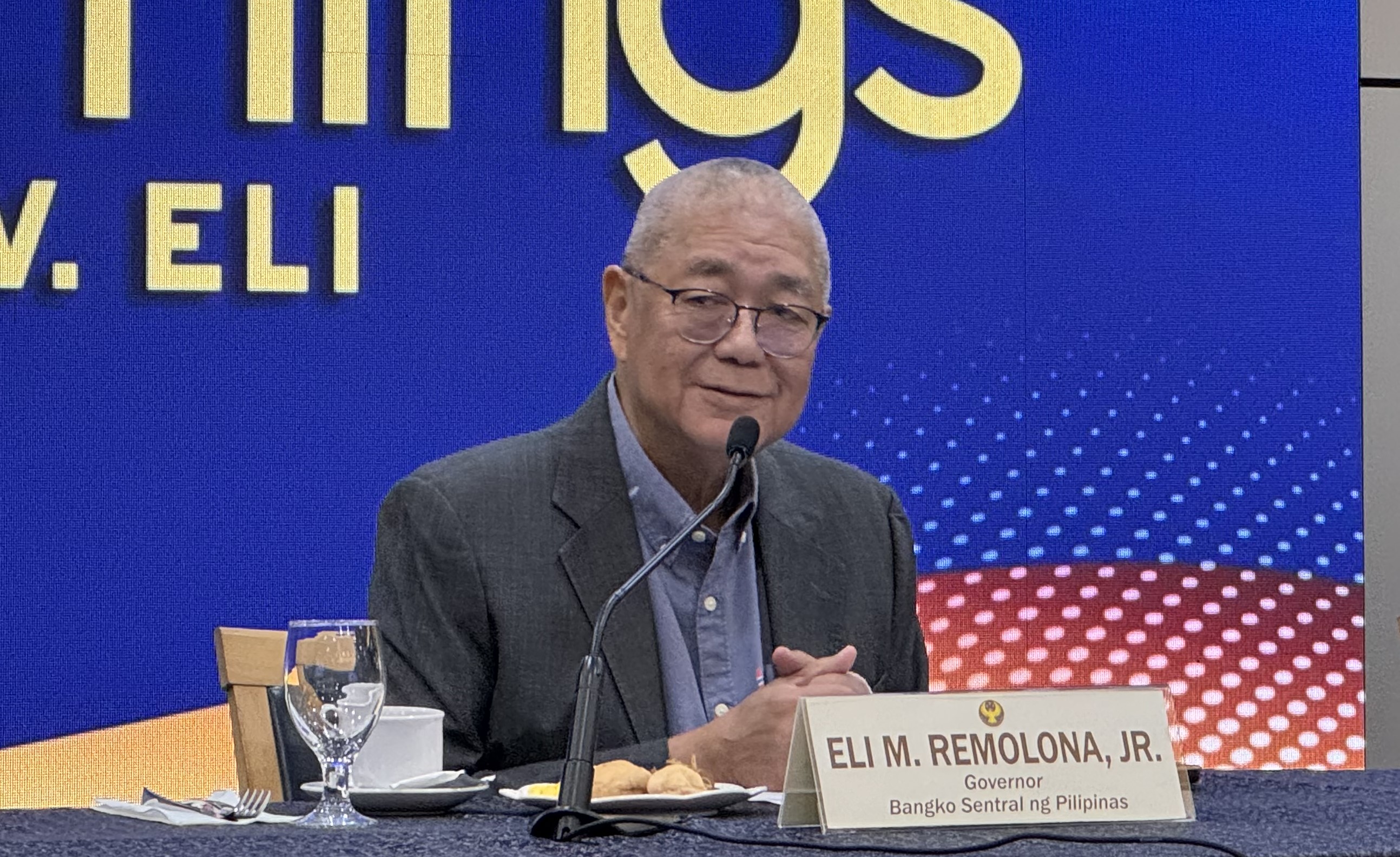
The Monetary Board of the Bangko Sentral ng Pilipinas (BSP) on Thursday decided to pause on policy easing, citing global uncertainties, especially on trade, after cutting rates in the last three meetings.
In a briefing in Manila, BSP governor Eli Remolona Jr. said the Monetary Board decided to maintain the target reverse repurchase (RRP) rate at 5.75%, the overnight deposit rate at 5.25%, and the overnight lending facility rate at 6.25%.
This follows a reduction of 75 basis points made in 2024—25 basis points each in August, October, and December.
“On balance, uncertainty about the outlook for inflation and growth warrants keeping monetary policy settings steady,” Remolona told reporters at the central bank headquarters.
“Before deciding on the timing and magnitude of further reductions in the policy interest rate, the Monetary Board deems it prudent to await further assessments of the impact of global policy uncertainty and the potential effects of the actual policies,” he said.
Remolona in January said a rate cut was on the table for Thursday’s policy meeting, after the economy expanded by 5.6% in 2024, falling short of the 6.0% to 6.5% target range.
He also earlier hinted at the possibility of easing rates further by another 50 basis points this year, with a 25-basis-point cut in the first half and another 25-basis-point cut in the second half.
Economists have widely anticipated a rate cut as January inflation clocked in at 2.9%, within the target range of 2.0% to 4.0%, but the BSP said its models have yet to reflect global uncertainties.
“Normally we would have cut, but something has changed. The thing that has changed is the uncertainty going on globally, especially the uncertainty over trade policy. We’re not quite comfortable with evaluating the impact of that, the uncertainty itself,” Remolona said.
This comes amid pronouncements from US President Donald Trump, who repeatedly spoke about tariffs and immigration during his presidential campaign last year.
The Monetary Board adjusted its risk-adjusted inflation forecast for 2025 to 3.5% from 3.4% in December, while keeping its 2026 forecast unchanged at 3.7%, citing wage increases in the second half of the year.
“The risks to the inflation outlook have become broadly balanced for 2025 and 2026. Nonetheless, upside pressures are seen to come from the utilities sector. The impact of lower import tariffs on rice remains the main downside risk to inflation,” Remolona said.
Moving forward, Remolona said the BSP is still in an easing cycle and is just working out the timing of the rate cuts with five more meetings this year.
“We don’t want to lose output unnecessarily. If we can manage, we want to reduce inflation without reducing output, so it’s a balancing act. This time, the balancing act is more difficult than usual,” he said.
Remolona also hinted at a reduction of the reserve requirement “maybe sooner than the middle of the year,” as he earlier said he is looking at cutting the ratio for big banks by 200 basis points this year.
The reserve requirement is the amount of cash a bank must hold in its reserves against deposits. It is currently set at 7% for big banks, among the highest in the world. It is at 4.0% for digital banks, 1.0% for thrift banks, and 0% for rural and cooperative banks.
Economists react
According to Capital Economics senior Asia economist Gareth Leather, the surprise move of the central bank is likely to be followed by further cuts over the coming months for a total reduction of 100 basis points this year, should inflation remain under control.
“While we think the US trade policy will remain uncertain for some time, the central bank clearly needs some time before it decides on its response,” he said.
“Our assumption is that the Philippines will be hit by a 10% universal tariff, but the impact will be relatively small (on the currency, inflation, and growth),” he added.
For his part, Rizal Commercial Banking Corp. (RCBC) chief economist Michael Ricafort said the BSP could match moves set to be made by the Federal Reserve.
“(A)ny future possible Fed rate cut/s, especially from 2025 to 2027, could be matched locally to maintain healthy interest rate differentials that also help stabilize the peso exchange rate, import costs/prices, and overall inflation,” he said in a separate commentary. —VBL, GMA Integrated News

