

 GMA Brandtalk
 Tracking
 Archives

Tamban's inclusion in fisheries products codex to widen market for PH key fish export
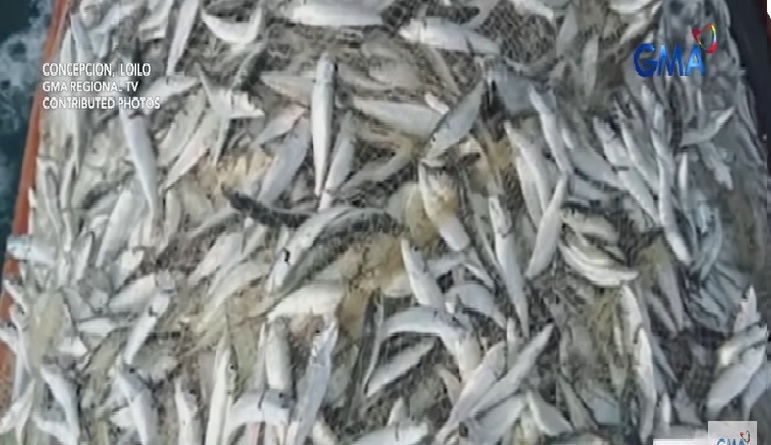
The inclusion of Sardinella lemuru, locally known as tamban, in an international set of standards for food trade is seen to widen the reach of the Philippines’ key fish export.
In a statement on Tuesday, the Department of Agriculture (DA) said that the Codex Alimentarius Commission (CAC), at its 47th session, decided to include tamban in its “codex” for fish and fishery products.
CAC was established by the Food and Agriculture Organization and World Health Organization to develop and adopt international food safety standards to protect consumers and ensure fair practices in international food trade.
"This is welcome news for the local fishery industry, a major export earner for the Philippines. This should stimulate new investments in the sector and create new jobs," said Agriculture Secretary Francisco Tiu Laurel Jr.
The DA said tamban’s inclusion in the codex follows six years of advocacy and technical discussions led by the agency, through the Bureau of Fisheries and Aquatic Resources and the National Fisheries Research and Development Institute (NFRDI).
The Agriculture Department said NFRDI's Subcommittee on Fish and Fishery Products chairperson Ulysses Montojo spearheaded the initiative to complete the technical requirements for the wild stocks of Sardinella lemuru in the Philippines.
The study, supported by a P17 million funding from the BFAR and the DA's Bureau of Agricultural Research, fulfilled the technical criteria necessary for the species’ inclusion in the codex, according to the agency.
Tamban, a sardine species native to the Eastern Indian Ocean and the Western Pacific, had previously faced setbacks in European markets, the DA said.
It said that between 2016 and 2017, several European Union (EU) countries rejected imports of canned sardines labeled as Sardinella lemuru, citing its non-inclusion in the EU’s Codex Standard for Canned Sardines and Sardine-Type Products (CXS 94-1981).
This rejection resulted in the loss of hundreds of metric tons in exports, underscoring the need for the Codex to be updated, according to the DA.
The DA said the process to include the species began in 2018 when the EU Fisheries Agency encouraged the Philippines to pursue adding Sardinella lemuru to the Codex Standard.
After years of technical reviews and deliberations, the Codex Committee on Fish and Fishery Products approved the fish species’ inclusion in 2024, highlighting the tamban’s comparable sensory qualities to other sardine species and the sustainability of its fish stocks.
"We thank the European Union for supporting this effort, which will significantly benefit our fisheries and the sardine industry," said Agriculture Undersecretary for Fisheries Drusila Ester Bayate.
In 2022, sardines ranked as the Philippines' seventh-largest fish export, accounting for 2.7% of the total 282,674 metric tons of fish exports, according to the DA.
Key European markets — Germany, the Netherlands, and Spain — made up 12% of the country's sardine exports.
With the new inclusion in the Codex, the DA said that Philippine sardine products are expected to gain wider access to these markets, ensuring a sustainable future for local fishermen and exporters while contributing to global sustainability goals.
Data from the Philippine Statistics Authority revealed that in 2024, sardine export volume reached 9,154.31 metric tons, valued at $19.5 million.
This represents a significant increase from 6,095.77 metric tons worth $14.7 million in 2023. —KG, GMA Integrated News

