

 GMA Brandtalk
 Tracking
 Archives

Inflation rate slows down to 2.1% in February 2025
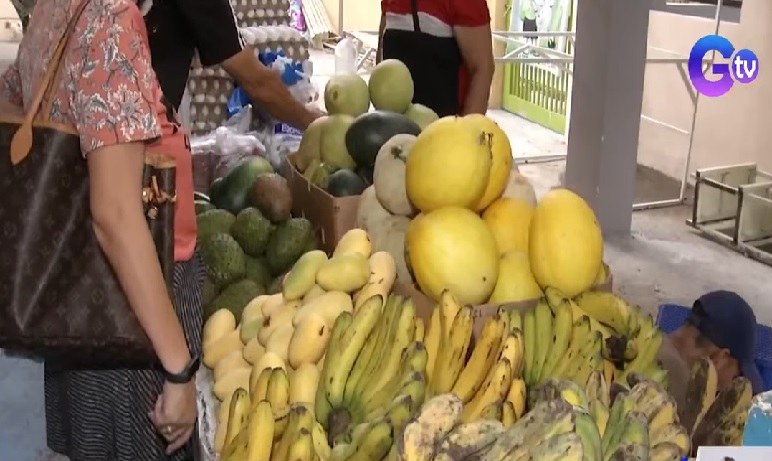
The country’s inflation rate slowed down in February 2025 amid the easing of growth in food and utilities costs, the Philippine Statistics Authority (PSA) reported Wednesday.
At a press conference in Quezon City, Deputy National Statistician and PSA Assistant Secretary Divina Gracia del Prado reported that lats month’s inflation —which measures the rate of increase in the prices of consumer goods and services— stood at 2.1%.
This was slower than the 2.9% inflation print seen in January this year.
Last month’s inflation figure was also the slowest since September 2024 when it clocked in at 1.9%.
February’s inflation rate brought the year-to-date rate to 2.5%, well within the government’s target ceiling of 2% to 4%.
“Ang pangunahing dahilan ng mas mababang antas ng inflation nitong Pebrero 2025 kaysa noong Enero 2025 ay ang mas mabagal na pagtaas ng presyo ng Food and Non-Alcoholic Beverages sa antas na 2.6% [from 3.8%],” del Prado said.
(The main contributor to the slower inflation rate in February 2025 compared to January 2025 was the slower inflation rate increase in Food and Non-Alcoholic Beverages at 2.6%%.)
The PSA official said the Food and Non-Alcoholic Beverages index contributed 58.8% to the overall down trend.
This was due to the easing in the increase in the prices of vegetables, tubers, etc. to 7.1% from 21.1%.
Cereals and other cereal products, which includes rice, saw a deflation rate of -3% from a contraction of -1.1% month-on-month.
The second contributor to the inflation slowdown in February was the index of Housing, Water, Electricity, and other Fuels with a rate of 1.6% from 2.2.2% and a share of 16.7% to the overall inflation decline.
In particular, inflation for electricity contracted by 1% from a growth rate of 0.2%; while rentals slowed down to 1.6% from 2% and LPG eased to 3.7% from 4.7%.
The third contributor to the easing of inflation in February was Transport. which contracted to -0.2% from 1.1% month-on-month due to the reductions seen in gasoline (at -4.7% from -0.8%) and diesel (at -3.4% from 1.2%%).
Moreover, lower annual increments were seen in the indices of the following commodity groups during the month:
- Alcoholic beverages and tobacco - 3.4% from 3.5%
- Clothing and footwear - 2.1% from 2.3%
- Furnishings, household equipment and routine household maintenance - 2.3% from 2.6%
- Health - 2.%% from 2.5%
- Restaurants and accommodation services - 2.8% from 3.2%
- Personal care, and miscellaneous goods and services - 2.6% from 2.8%
“The government will sustain its efforts to keep inflation low and manageable to protect the purchasing power of Filipinos. As we expect six to 13 typhoons to develop from March to August 2025, the Department of Agriculture (DA) will implement the La Niña action plan to restore agricultural productive capacity in areas likely to be affected by continuous rainfall, flooding, and landslides,” National Economic and Development Authority (NEDA) Secretary Arsenio Balisacan said in a statement.
“The action plan includes water management, financial assistance and credit support, and a massive information campaign on La Niña,” said Balisacan.
Food inflation
Food inflation, which tracks the price movements of food items in a "basket" commonly purchased by households, also eased to 2.6% in February from 4% in January.
The deceleration of food inflation last month was due to the slower rates of vegetables, tubers, plantains, cooking bananas and pulses at 7.1% during the month from 21.1% in January.
This was followed by the faster year-on-year contraction of rice inflation at 4.9% during the month from -2.3% deflation in January.
“The downward trend in headline inflation indicates that our efforts to combat inflationary pressures are working. However, we will not be complacent in addressing causes of commodity price increases, particularly for food, to help uplift the lives of poor and vulnerable Filipino families, especially” said Balisacan. — RSJ, GMA Integrated News

