

 GMA Brandtalk
 Tracking
 Archives

NEDA: Current US tariffs net positive for PH, but ‘very minimal’
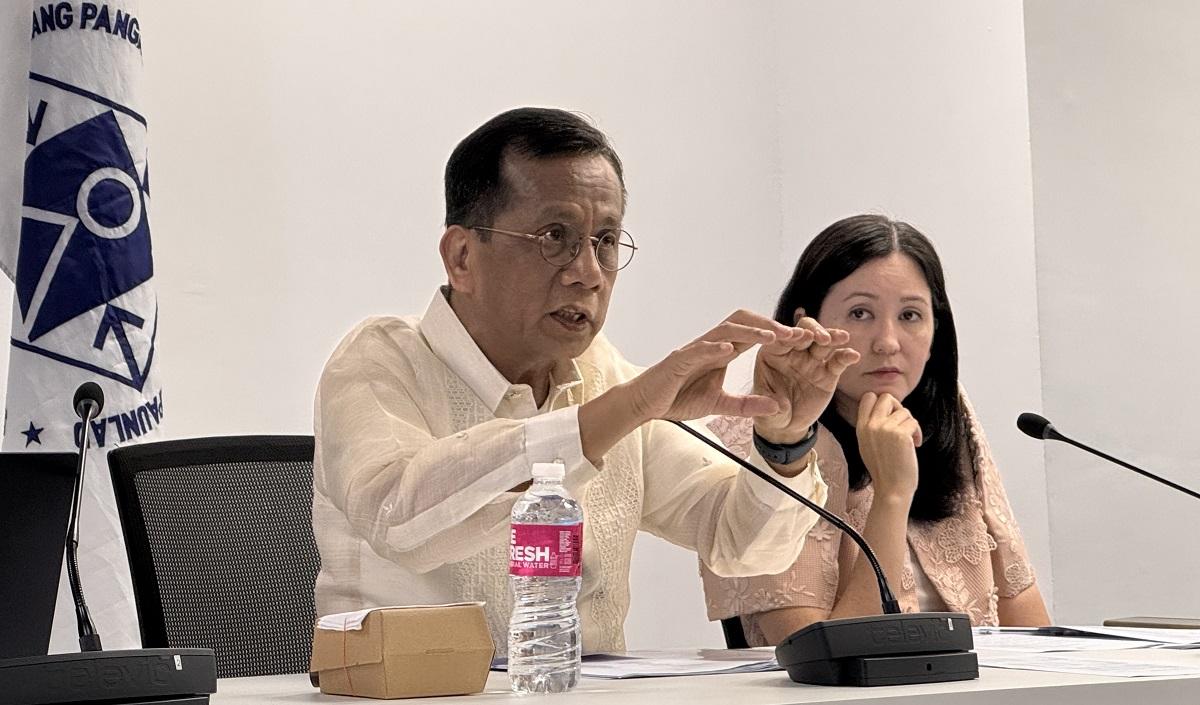
The latest iteration of the United States’ tariffs could still mean a net positive for the Philippines, but this will only be very minimal and the country is still unlikely to hit the upper band of its target economic growth range of 6.0% to 8.0% this year, the National Economic and Development Authority (NEDA) said Monday.
In a briefing in the agency’s headquarters, Balisacan said simulations done by the NEDA indicate that a 10% levy on goods from Southeast Asian countries and a 125% rate on Chinese goods could drive the Philippine economy up, although very minimally—less than 0.5% of the gross domestic product (GDP).
“This time around it’s roughly something like 1.5% increase in our exports, but then again, because exports as a contributor to our economy is quite small, the overall impact on GDP is still quite small,” Balisacan told reporters in Mandaluyong City.
During what US President Donald Trump termed “Liberation Day” policy, the US planned to slap a 17% reciprocal tariff on Philippine goods, which compares with the 34% rate that Manila charges against American goods. This was set to take effect on April 9, but Trump on Thursday announced a 90-day pause on most countries except China, while countries such as the Philippines could still face a baseline 10% tariff.
“We need to keep our house on guard and ensure that we are able to respond quickly to developments. I think the point is, as I keep on saying, whether there are tariffs or no tariffs, we should keep pushing for the strengthening of our economy and competitiveness, putting in place things that can improve our productivity, so that when opportunities come again, we are ready to seize those opportunities,” Balisacan said.
Given the uncertainties, Balisacan said investors have so far postponed business decisions, and this may impact economic growth , as he said the Philippines is unlikely to hit 8% this year, the upper band of the target range the economic managers set in December 2024.
“The 8% may not be a realistic assumption. The only reason we had a wide range at that point when we were looking at, when we were deciding at the target growth assumptions, was the realization that the global economy is more uncertain than it used to be,” he said.
“We wanted to have some flexibility in the way we do this, but as things will solidify in the coming months, we hope [that we can have] a firmer and more realistic trajectory,” he added.
He noted, however, that growth of 6.0% to 7.0% is “still within the realm of possibility,” given the slower inflationary environment and the lower interest rates, after the economy expanded by only 5.6% in 2024.
For the first quarter of 2025, Balisacan said a 6.0% growth is “still not far-fetched,” as the impact of the US tariffs has not yet been fully priced in, but this could impact the second quarter during which he said consumption may not be as strong compared to previous election seasons.
“The election is I think one of those unintended consequences for a higher growth than otherwise, but I think there’s a big difference between the election this time and even previous elections,” he said. — BM, GMA Integrated News

