

 GMA Brandtalk
 Tracking
 Archives

Marcos: Fuel subsidies to be provided in expected oil price hike
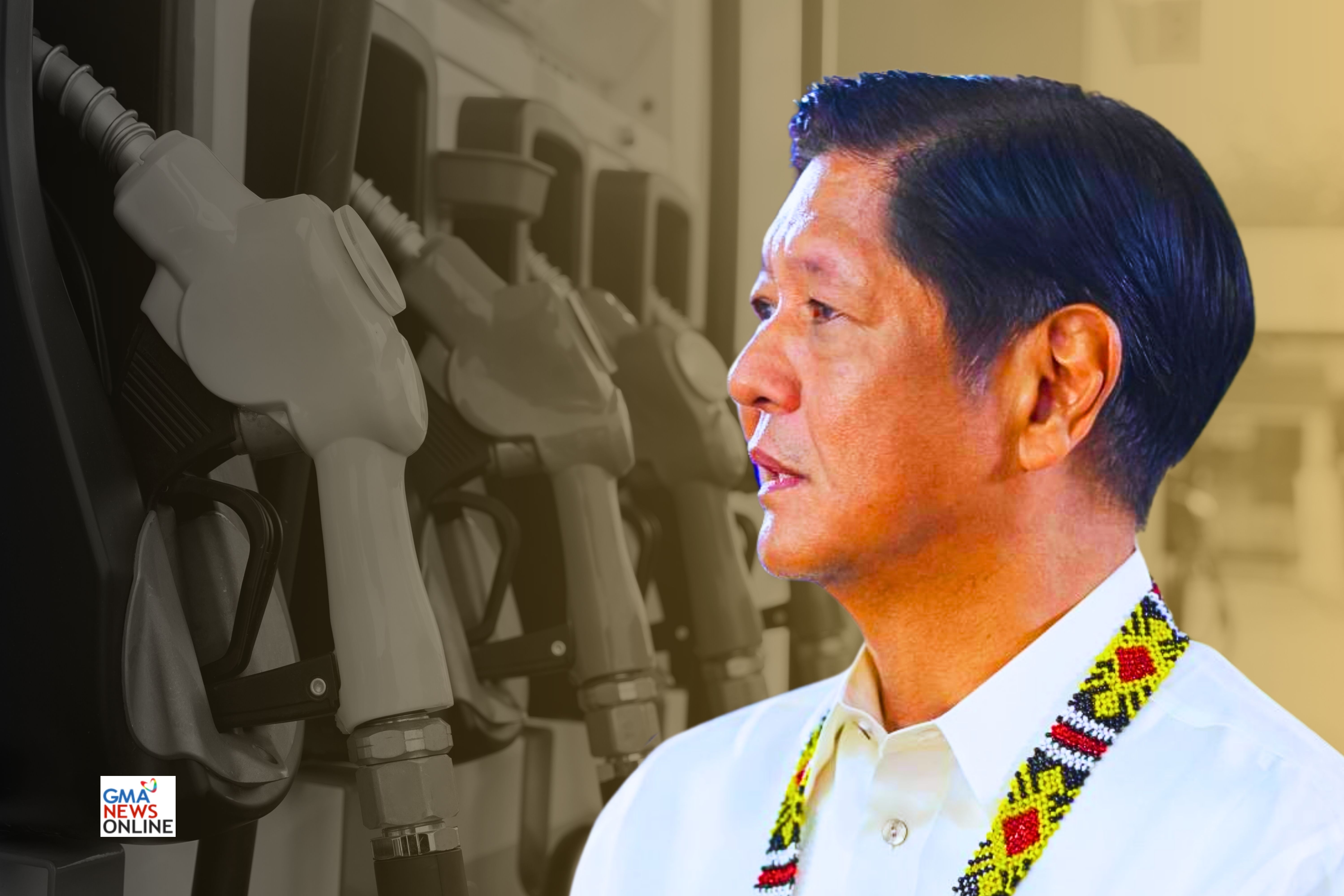
President Ferdinand ''Bongbong'' Marcos Jr. on Wednesday said that fuel subsidies would be given as oil prices are expected to rise amid the tension between Israel and Iran.
In an interview with reporters, Marcos was asked how the Philippine government is bracing for the expected impact of the conflict.
''We are starting already with the assumption that the oil prices will in fact go up and I cannot see how it will not. Because the Strait of Hormuz will then be blocked if it escalates. The oil cannot come out of its sources. So the prices will certainly be affected,'' Marcos said.
''So the subsidies that we have always given, fuel subsidies, that we gave to, if you remember during the pandemic, lalong-lalong na 'yung mga napapasada, 'yung mga may hanap-buhay naman sila, binigyan nating fuel subsidies (We gave fuel subsidies to drivers during the pandemic)," he added.
The president also said that the fuel subsidy will also include others who will be "severely affected."
"Now we will have to do the same for those who are severely affected, stakeholders, by any instability in the price of oil. Yes, it's a serious problem,'' said Marcos.
Under the existing policy, fuel subsidies for public transport drivers and farmers are automatically activated when the price of Dubai crude breaches $80 per barrel.
Fuel prices
The 2025 General Appropriations Act (GAA) provides an allocation of P2.5 billion through the Department of Transportation for fuel subsidies to drivers of public utility vehicles, taxis, ride-hailing services, and delivery platforms across the country.
The President earlier tasked the Department of Energy to strictly monitor the tension in the Middle East as this is expected to affect fuel prices. The conflict between Iran and Israel began last Friday when the latter attacked Iran with air strikes.
The Department of Energy-Oil Industry Management Bureau (DOE-OIMB) earlier projected pump price hikes this week, citing gains on positive US-China trade signals, the stall in nuclear negotiations between US and Iran, and the expected oil demand growth in the next two and a half decades.
The DOE is already on alert and is implementing proactive and targeted measures to shield the economy and Filipino consumers against the negative effects of the escalating tensions between the two countries.
DOE Officer-in-Charge (OIC) Sharon Garin said that the immediate priority is to ensure that the fuel supply remains stable and sufficient and that any local price adjustments are managed in a way that minimizes disruption to the Philippine economy.
The agency also called on industry players to “implement staggered fuel price adjustments, especially in cases of sudden and significant spikes in global oil prices, in order to cushion the impact on local consumers."
As of June 16, the price of Dubai crude reached $73 per barrel, according to the DOE.
Meanwhile, Marcos also said that there is no need yet for mandatory repatriation despite the ongoing conflict between Iran and Israel. —VAL, GMA Integrated News

