

 GMA Brandtalk
 Tracking
 Archives

Economists say 19% Trump tariff to have limited impact on PH GDP
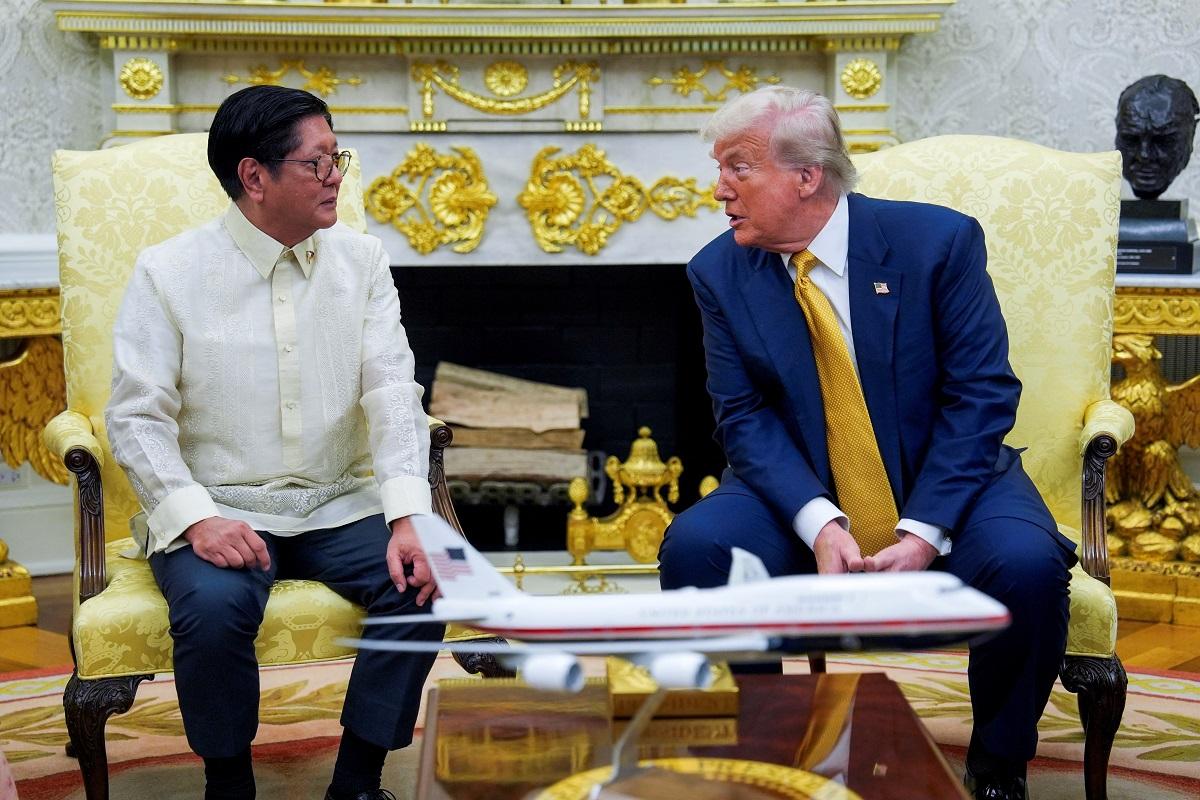
While Philippine exports to the United States are still set to face a 19% tariff, economists expect only limited impact on the country's economy given its relatively low dependence on American demand compared with other Asian economies, with local exporters bearing the brunt.
Early morning on Wednesday (Philippine time), US President Donald Trump announced a new 19% tariff rate for Philippine goods. This is lower than the 20% announced in a letter earlier this month, but higher than the 17% rate announced last April on what the US president referred to as Liberation Day.
"The impact on the Philippines economy from the trade deal is unlikely to be huge—the country is one of the least dependent economies in Asia on US final demand," Capital Economics senior Asia economist Gareth Leather said in a commentary.
"The fact that it has had to settle for tariffs of 19%, suggests other countries still in negotiations with the US will have difficulty negotiating tariff rates much below 20%, which looks set to become the benchmark for the rest of the region (excluding China)," he added.
Latest data available from the Philippine Statistics Authority (PSA) show that Philippine exports stood at $7.288 billion in May, with the United States accounting for $1.109 billion or 15.2%. Imports for the month were recorded at $10.578 billion, of which $647.34 million or 6.1% came from the US.
According to Leather, the latest rate removes some downside risks facing the Philippines, as it remains close to what other countries in the region are likely to face, and that the country is not expected to see a loss of competitiveness against other countries in the region.
Compared to others
Based on Trump's recent announcements, the Philippines' 19% tariff compares with Japan's 15%, Indonesia's 19%, Vietnam's 20%, South Korea and Malaysia's 25%, China's 30%, Thailand and Cambodia's 36%, and Laos and Myanmar's 40%.
"Unlike the deals that were announced with Vietnam and Indonesia, there was no mention of the Philippines being required to clamp down on rerouting from China. We suspect this is probably something that will be inserted into a final agreement, but it was notable that Trump sounded relatively relaxed about the relationship between the Philippines and China, noting 'your dealing with China wouldn't bother me at all,'" Leather said.
Posting on his Truth Social media platform, Trump initially said the Philippines is going open market with the United States with zero tariffs, while the Philippines would pay a 19% tariff.
However, President Ferdinand "Bongbong" Marcos Jr., who had a meeting with Trump before the 19% rate was announced, has since clarified that the zero tariffs on US products would only apply to certain markets such as automobiles.
Marcos also committed to increase imports of soy, wheat, and pharmaceuticals from the US.
Exporters to bear brunt
Leather's remarks were echoed by Rizal Commercial Banking Corp. (RCBC) chief economist Michael Ricafort, who said the adjustment does not come as a complete surprise as other economies in the Association of Southeast Asian Nations (ASEAN) regional bloc were also slapped with tariffs higher than those reported in April.
"Limited drag on Philippine GDP, as the Philippine economy is less reliant on exports as a source of economic growth. Philippine merchandise exports are three to five times lower compared to major ASEAN countries on a yearly basis," he said in a separate commentary.
"Philippine exports are not that huge compared to other ASEAN/Asian countries, so more limited adverse impact on the Philippines by the US reciprocal tariffs," he said in a separate commentary.
Ricafort noted, however, that exporters would still bear the brunt of the impact, and that the Philippines could still be affected indirectly.
"The biggest hit would still be on Philippine exporters with the 19% tariffs/tax (except for electronics; according to the leading Philippine negotiators), since the US is the Philippines' biggest export market, accounting for 17% of the total, thereby could slow down Philippine exports sales/demand that, in turn, could indirectly slow down the overall economy," he said.
He added that the higher reciprocal tariffs and uncertainties could slow demand for exports to the US, slow down global investments, global trade, employment, and the overall world economy, dragging down Philippine growth.
Philippine Exporters Confederation (PhilExport) president Sergio Ortiz-Luis Jr. earlier said a 17% or 20% tariff rate for the Philippines would still be okay "on face value," but this would also depend on rates being imposed on other countries.
"Initially, we expected that when we were 17%, the manufacturers would move to the Philippines. Actually, they haven't moved yet… Even now, even at 17%, we have difficulty competing with Vietnam," he said.
No relative advantage
For Aris Dacanay, ASEAN economist of Hongkong and Shanghai Banking Corporation Ltd. (HSBC), the latest rate is in line with Indonesia and Vietnam, removing the relative advantage that the Philippines earlier stood to gain from a substantially lower tariff, which could have potentially led to manufacturers relocating to the country.
"Without the relative advantage of a lower tariff rate, economic growth will face headwinds, and it will also be harder to attract FDI (Foreign Direct Investments) to the Philippines," he said in a separate report.
"The Philippine economy gained only a minimal competitive advantage compared to its ASEAN peers during this period due to the strong peso and high inflation. A reciprocal tariff of 19% would erase this advantage and risks putting Philippine exports at a disadvantage in the US market," he added.
Dacanay expects the Philippines to rely on its playbook of maintaining a "robust reform narrative" to attract investments and technologies, and push through with its ambitious infrastructure agenda, and liberalizing different sectors.
The Philippine economic team last month slashed its economic growth targets for this year and the next three years, citing heightened global uncertainties including the implementation of reciprocal tariffs.
The Development Budget Coordination Committee (DBCC) now targets economic growth to average between 5.5% to 6.5% this year, down from the previous target range of 6.0% to 8.0%. It also lowered its target range for 2026 to 2028 to 6.0% to 7.0% from the previous range of 6.0% to 8.0%.
Moving forward, Philippine officials are expected to continue negotiating with the US in the hope of decreasing the tariff rate further.
One-sided?
However, Sonny Africa, executive director of the nonprofit economic research group IBON Foundation, described the US-Philippines trade deal as "grossly one-sided in favor of the most powerful economy in the world against a country that is still in the poorest one-third of the world."
"There are virtually no benefits for the Philippines and only costs," Africa said.
Africa said the government should be transparent about the whole package of economic, military and any other commitments it made.
"As it is, looking at just the tariffs, this is a bad deal and President Marcos Jr is coming home empty-handed but the public deserves to know everything else the country committed to," the IBON executive director said.
Regional integration
The ASEAN+3 Macroeconomic Research Office (AMRO) chief economist Dong He said that “by strengthening regional cooperation while maintaining openness to the world and standing firm on rules-based multilateralism, ASEAN+3 can build resilience against external shocks and create new growth opportunities."
ASEAN+3 refers to countries in the Southeast Asian regional bloc plus China, Japan, and South Korea.
He said that “deeper regional integration is both urgent and necessary,” noting that outlook for the region remains clouded by significant uncertainties, with escalating US tariffs posing the most salient risk.
The AMRO economist added that regional policymakers have acted preemptively to cushion the trade shock.
"Since April, central banks in half of ASEAN+3 economies have eased monetary policy amid moderating inflation and rising growth concerns stemming from US tariffs," He said.
"The Philippines initiated the first cut in April and, along with Indonesia, has eased twice this quarter. Thailand, China, Korea, Lao PDR and Malaysia have also lowered rates. Other central banks held rates steady, maintaining caution amid ongoing uncertainty," He added. — VDV, GMA Integrated News

