

 GMA Brandtalk
 Tracking
 Archives

PH envoy says 19% tariff by Trump still 'subject to review'
The 19% tariff on Philippine goods earlier announced by US President Donald Trump is still subject to negotiations, Manila’s top diplomat to Washington said Thursday.
In a radio interview, Philippine Ambassador to Washington Jose Manuel Romualdez said bilateral talks will take place in Manila “in the next couple of days” to finalize a trade deal.
“There’s still room for negotiations,” Romualdez said in an interview on dzRH.
Romualdez said US Trade officials will be in Manila for a “continuing meeting” with Philippine counterparts to discuss the tariffs.
“We will clarify exactly what we need to finalize in our agreement,” he said.
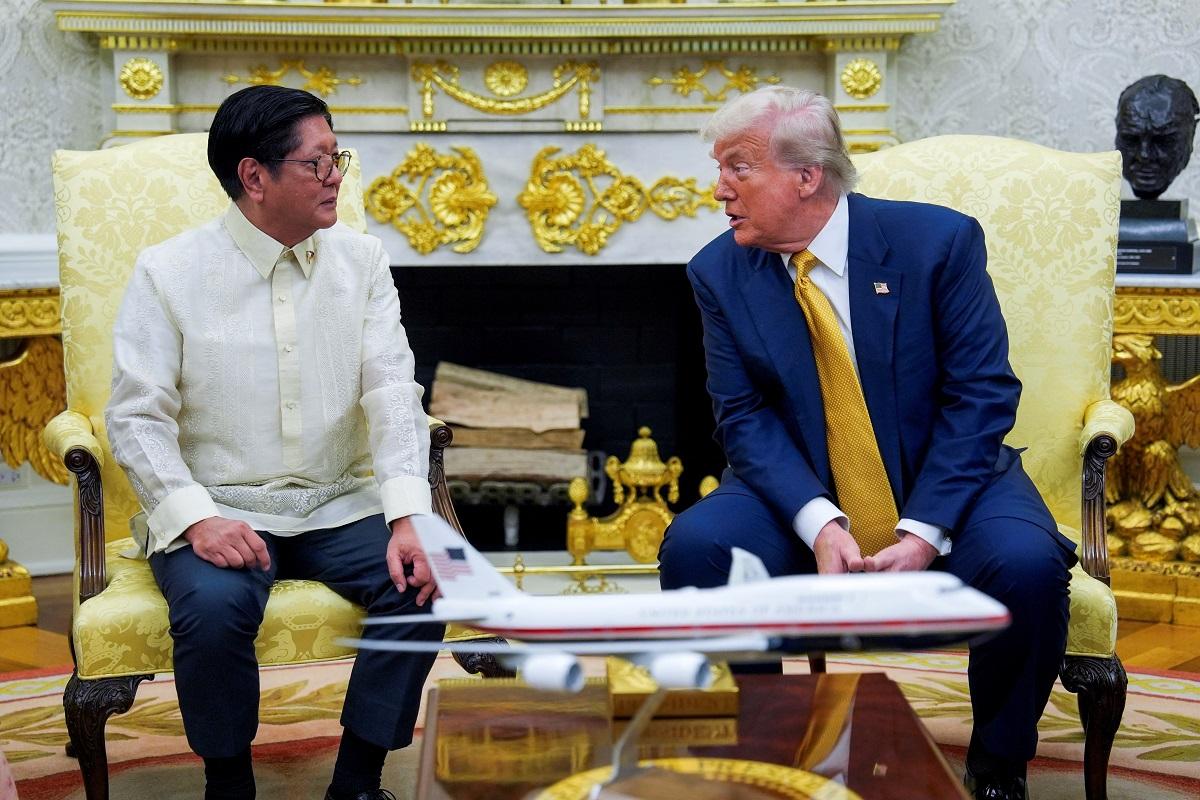
Right after his meeting with Philippine President Ferdinand Marcos Jr. on Tuesday, Trump announced on his social media platform Truth Social that the new tariff rate for Manila was at 19% - just below the 20% he demanded this month, while US goods entering the country would be tax-free.
Romualdez said the zero tariffs on US goods will only apply to some sectors, such as automobiles, and will exclude agricultural products “to protect local farmers.”
“We cannot include agricultural products because it will hurt our agriculture industry,” he said.
The new levy on Philippine goods was above the 17% rate initially set in April when Trump announced sweeping reciprocal tariff rates for all its trading partners, including its allies, such as the Philippines.
Romualdez said the Philippines aspires to further bring down the tariff rate since it’s still in the “negotiating phase.” Trump’s steep tariff rates will take effect unless countries strike a deal with the US before its August 1 deadline.
Although the current rate stands at 19 percent, the envoy said the country is “looking at other details to fine-tune it” and possibly offer the US an “incentive” to reduce the rate.
“It depends on how negotiations will go with the US Trade Representative. This is just the overall goal that we will have,” he said.
Key Philippine exports to the US include electronic products, including semiconductors, automobile parts, textiles and garments, wheat and animal feeds, and coconut oil.
Romualdez explained that the Philippines does not rely solely on the US for trade, noting that goods shipped to America only comprise 16% of its total global exports, so the effect is “not as big as people think.”
After announcing the new rate for the Philippines, Trump on the same day announced a 15% reciprocal tariff with Japan, another close Asian ally. But compared to the Philippines, Romualdez said the US has a bigger trade deficit with the Asian nation and that Tokyo has pledged to invest $550 billion in the US.
If Manila would not be able to get the same rate as Japan, Romualdez said the Philippines “will find ways to adjust accordingly.”
Some critics frowned on what they called a “lopsided” deal Marcos got from Trump, but the envoy pointed out that there are also “a lot of advantages” from having import-free products from the US, such as bringing down the cost of medicines manufactured by American pharmaceutical companies and equipment and machinery being used by Filipino manufacturers in factories.
He maintained that the visit of Marcos to the US – the first by a Southeast Asian leader under Trump’s second term – was “successful” as both sides have committed to boost defense and security cooperation in the face of China’s increasingly aggressive actions against smaller nations with claims in the disputed South China Sea, such as the Philippines.
“It’s not yet over. We will finalize an agreement before the deadline,” Romualdez said. —VAL, GMA Integrated News

