

 GMA Brandtalk
 Tracking
 Archives

PAGCOR has earned P155 billion in online gaming revenue since 2021, says chief
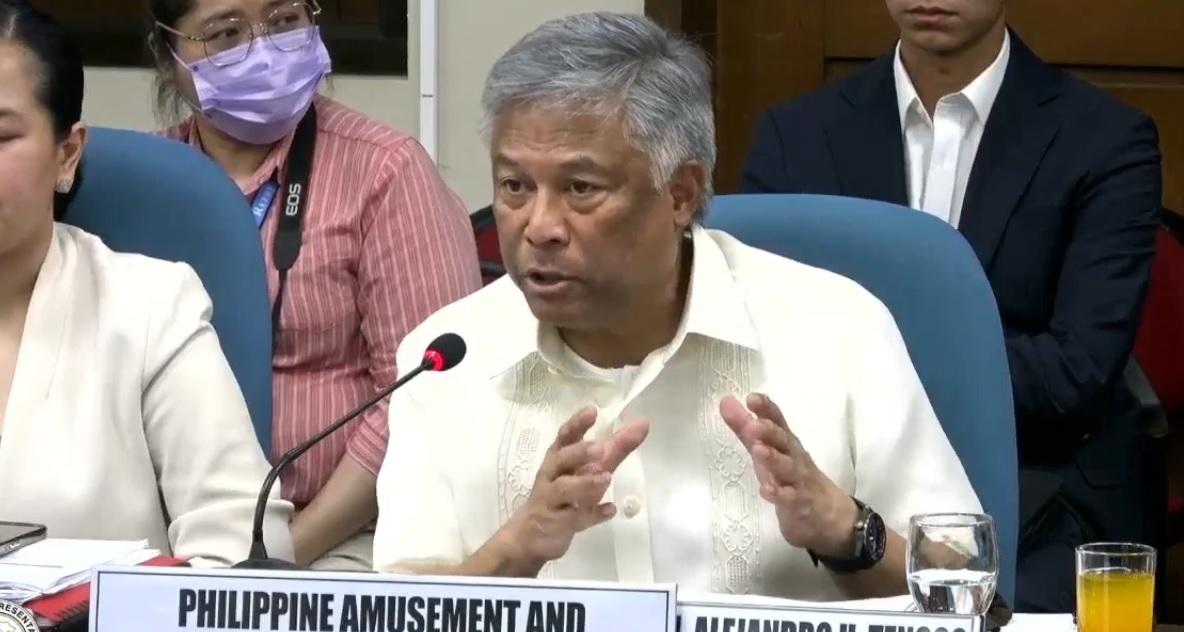
State-run Philippine Amusement and Gaming Corporation (PAGCOR) has raked in P155 billion in revenue from online gaming since 2021, its chairman Alejandro Tengco said Wednesday.
In a briefing before the House Committee on Appropriations, Tengco, also said that PAGCOR is expecting P62 billion in revenues from online gaming by the end of 2025, amid the ban on Philippine Offshore Gaming Operators (POGO) and online sabong in the last two years.
The P155 billion is broken down to:
- P6 billion in 2021
- P12.5 billion in 2022
- P22 billion in 2023
- P49 billion in 2024
- P37 billion so far in 2025
“The growth of online gaming has been exponential, and for the first seven months of this year, PAGCOR’s income from online gaming increased by 32%. Ang nakikita ko po ngayong 2025, kung patuloy pong walang total ban, ang magiging revenue po mula sa online gaming will be at P60 billion to P62 billion,” Tengco told the House appropriations panel.
(Barring a total ban, we are looking at P62 to P65 billion in revenue from online gaming this year.)
Under the law, PAGCOR is required to remit 75% of its net income to the National Treasury.
Tengco said PAGCOR is expected to post a P116-billion income for 2025, of which around 62% will come from online gaming.
“The online gaming industry accounts for 62% of PAGCOR’s income, while around 38% come from land-based casino operations, which are the integrated resorts,” he said.
He added that PAGCOR is also rethinking regulations on online gaming given its exponential rise and the calls for a total ban.
For starters, Tengco said, PAGCOR has imposed a moratorium on issuing licenses to operate to online gaming firms since March 2024.
As a result, the number of licenses online gaming firms only stands at 70.
“What we are processing now are applicants who filed their application before the moratorium,” he said.
Tengco said PAGCOR is also implementing a self-exclusion program to promote responsible gaming.
“We have received close to about 2,000 requests for self-exclusion. If you or your family had requested for one, you will be banned for a minimum period of six months. We have increased that to a minimum period of one year,” he said.
“This [exclusion program] is ongoing and even if we receive a request from a bettor who wants to play again, we won’t allow the bettor to play until the one year ban expires,” Tengco added in response to a question by Akbayan party-list Representative Chel Diokno.
Tengco said PAGCOR is also working with software companies for the use of AI tools that would be able to determine an individual's betting habits and flag when the winnings are being dwarfed by the amount of bets.
Tengco said that the Governance Commission for Government-Owned and -Controlled Corporations (GCG) is expected to decide on PAGCOR’s proposal to become a regulator alone and ditch its operator function for good.
“We already submitted our plan before the GCG in June and they will study it before making a recommendation to the President if PAGCOR should be purely a regulator or whether it should still continue to have its dual role of being a regulator and an operator. I don’t want preempt the GCG, but towards the last quarter, I see them coming up with their final recommendation to the President,” he said.
“My position is that PAGCOR should purely be a regulatory agency rather than being a regulator and an operator, and the entire PAGCOR Board is on board with this [position].
“Letting go of our operator role would affect a certain part of our employees, but in the long term, it would be more beneficial for PAGCOR to just be a regulator,” Tengco added.
He said that if PAGCOR succeeds in its bid to let go of its regulatory role, the agency will recommend the hiring of 70% of its current employees to whoever will take over the PAGCOR casinos, on top of granting incentives and retirement pay. — BM, GMA Integrated News

