

 GMA Brandtalk
 Tracking
 Archives

Inflation swells to 1.5% in August amid series of storms
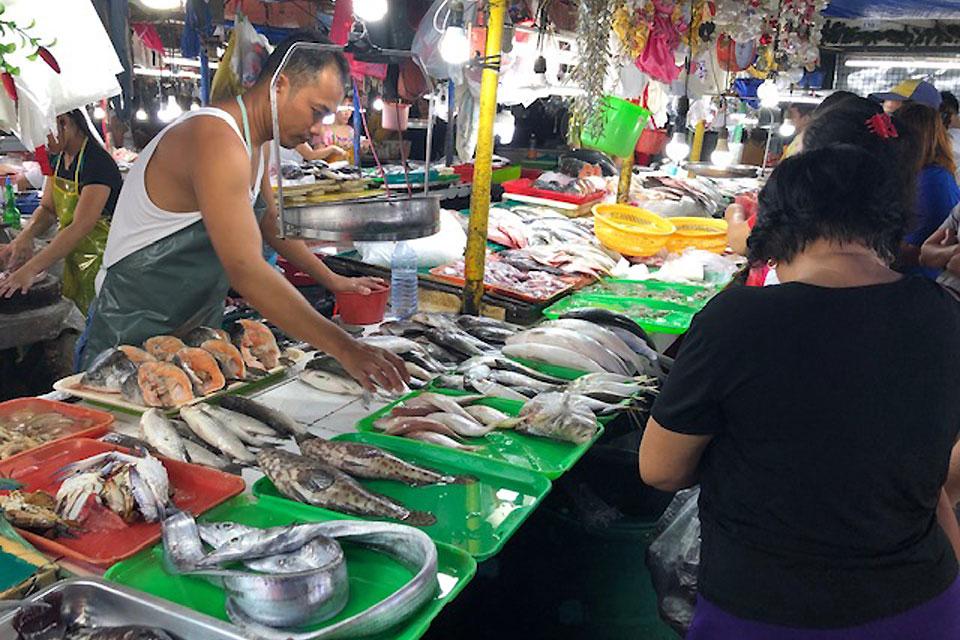
The rate of increase in the prices of goods and services in the Philippines accelerated in August primarily on the back of faster growths in food costs arising from adverse weather conditions during the month.
At a press conference, National Statistician and PSA chief Claire Dennis Mapa reported that last month’s inflation print —which measures the rate of growth in prices— accelerated to 1.5% from 0.9% in July.
Year-on-year, August’s inflation rate was slower than the 3.3% rate seen in August 2024.
Last month’s rate brought the year-to-date national average inflation (January to August 2025) to 1.7%, falling within the government’s comfortable ceiling of 2% to 4%.
“Ang pangunahing dahilan ng mas mataas na antas ng inflation nitong Agosto 2025 kaysa noong Hulyo 2025 ay ang pagtaas ng presyo ng Food and Non-Alcoholic Beverages na may 0.9% inflation rate, mula sa pagbaba noong Hulyo 2025,” Mapa said.
(The main contributor to the faster inflation rate in August 2025 compared to July 2025 was the increase in the prices of Food and Non-Alcoholic Beverages with an inflation rate of 0.9% inflation rate, from a slowdown seen in July 2025.)
In July, the Food and Non-Alcoholic Beverages index contracted by -0.2%.
“Ito ay may 69.3% share sa pagtaas ng pangkalahatang inflation sa bansa,” the PSA chief said.
(This had a share of 69.3% to the increase in the country’s overall inflation rate.)
August’s inflation print was within the Bangko Sentral ng Pilipinas’ forecast range of 1% to 1.8%, citing highest costs of fruits, vegetables, and fish due to unfavorable weather conditions.
Mapa said the increase in the Food and Non-Alcoholic Beverages’ inflation rate was due to the spike in the prices of vegetables to 10% from a contraction of -4.7% as well as the faster increase in fish and seafood prices to 9.5% from 6.3%.
“Nakikita natin na kapag may mga bagyo nagkakaroon ng baha sa ating lands na nagpo-produce ng [agricultural] products like vegetables,” the PSA chief said.
(We observed that every time there is a storm, it results in flooding in lands producing agricultural products like vegetables.)
“Dito nag-attribute na ang impact ng mga bagyo noong nakaraang buwan, particularly sa vegetables,” he added.
(So here we can attribute this to the impact of storms last month, particularly on vegetables.)
In a separate statement, Economic Planning Secretary Arsenio Balisacan said that the inflation rate in August “remains broadly manageable,” but “the recent figures highlight how adverse weather conditions directly impact prices.”
Balisacan underscored the importance of closely monitoring the country’s weather outlook due to its potential impact on agricultural production.
The Philippine Atmospheric, Geophysical, and Astronomical Services Administration (PAGASA) has forecasted seven to 15 tropical cyclones between September 2025 and February 2026.
The country’s chief economic planner cited how La Niña conditions, which may develop from September to December, could lead to flooding and crop damage in high-risk areas.
“In anticipation of these weather shocks, we must ramp up preparatory activities and proactively ensure sufficient food supply to protect Filipino consumers from price volatility,” Balisacan added.
The slower decrease in Transport at -0.3% from -2% also contributed to the uptrend in August’s inflation rate.
Food inflation
Food inflation —which tracks the price movements of food items in a "basket" commonly purchased by households— grew to 0.6% from a decline of -0.5% in July due to the increase in vegetable and fish prices.
Food inflation grew despite the lower rate seen in meat at 7.1% from 8.8%; milk, dairy, and eggs at 3.8% from 5%; and fruits and nuts at 5.2% from 8%.
Rice continued its deflation streak, contracting faster at -17% from -15.9% in July.
Production recovery
To support production and recovery, Balisacan said the Department of Agriculture’s Disaster Risk Reduction and Management Operations Center has allocated agricultural inputs to regional field offices.
These include rice, corn, high-value crop seeds, drugs and biologics for livestock and poultry, and fish stocks with the necessary aquaculture equipment.
Registered farmers affected by extreme weather may also access financial and insurance assistance through the Survival and Recovery Loan Program of the Agricultural Credit Policy Council, indemnification under the Philippine Crop Insurance Corporation, and rehabilitation funding through the Quick Response Fund.
“We also welcome the Department of Agriculture’s upcoming soft launch of a command center in November that will enhance data-driven management of the food supply chain and improve supply-demand forecasting. Initially focused on the rice value chain, the system will eventually cover high-value crops, livestock, poultry, and fisheries. It will also establish a central registry of food and cold storage facilities and dry warehouses, including their stock levels,” said Balisacan.
Moreover, the Food and Drug Administration has approved the commercial use of Volvac B.E.S.T. (Baculovirus Expressed System Technology) AI plus ND, the country’s first avian influenza vaccine.
The vaccine provides immunity against the highly pathogenic avian influenza (HPAI) subtype H5N1 and velogenic Newcastle disease, both of which pose serious threats to poultry, public health, and food security.
“We remain committed to implementing strategic policies that ease supply constraints and improve market efficiency. Our priority is to protect Filipinos, especially the most vulnerable, from the impact of rising prices while building resilience in our production systems to ensure stable and affordable food commodities for every household,” said Balisacan.—AOL, GMA Integrated News

