

 GMA Brandtalk
 Tracking
 Archives

Marcos wants stronger implementation of RCEP
President Ferdinand ''Bongbong'' Marcos Jr. called on participating countries to strengthen the implementation of the Regional Comprehensive Economic Partnership (RCEP) as a key platform amid global economic uncertainties.
During the 5th RCEP Leaders’ Summit in Malaysia, Marcos pointed out that the RCEP, the world’s largest free trade agreement, ''serves as a cornerstone of rules-based, transparent, and predictable trade, enabling continued growth and cooperation among member economies.''“The five years since the signing of the agreement have been a time of profound transformation in the global economic and geopolitical landscape,” Marcos said.
“Amidst today’s global uncertainties, which include shifts to inward trade policies, ASEAN’s commitment to a rules-based trading system remains our strongest anchor,” he added.
He also urged all RCEP parties to advance the accession process and pursue early expansion of the RCEP to deepen regional integration, strengthen supply chain resilience, and reinforce ASEAN’s central role in shaping the region’s economic future.
“By doing so, we strengthen RCEP as a platform that drives prosperity, inclusivity, and ensures that our region remains a vital force in the global economy,” he said.
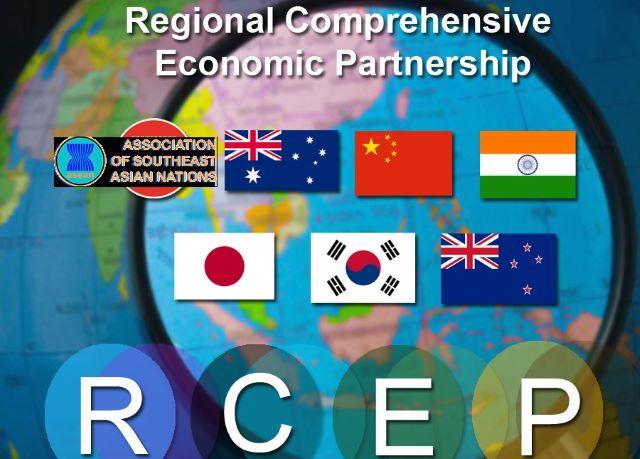
The RCEP, which includes all 10 ASEAN members as well as China, Japan, South Korea, Australia and New Zealand, is the world's largest trading bloc, covering nearly a third of the global population and about 30% of global gross domestic product.
The bloc is seen by some analysts as a potential buffer against tariffs imposed by the United States, though its provisions are considered weaker than some other regional trade deals due to competing interests among its members.—LDF, GMA Integrated News

