

 GMA Brandtalk
 Tracking
 Archives

Inflation rate flat at 1.7% in October 2025
The Philippines’ inflation rate in October 2025 remained at the same level as September 2025, bringing the year-to-date average still well within the government’s target band, the Philippine Statistics Authority (PSA) reported on Wednesday.
At a press conference, PSA chief and National Statistician Claire Dennis Mapa said the country’s overall inflation print —which measures the rate of increase in the prices of consumer goods and services— stood at 1.7%.
This rate was the same level seen in the previous month.
October’s inflation rate brought the year-to-date national average from January to October 2025 to 1.7%, falling within the government’s comfortable ceiling of 2% to 4%.
The steady inflation print seen last month was on the back of faster price increases in clothing, utilities, communications, and personal care expenses; which were offset by the softer price pressures from food and beverages, health, transportation, and recreation costs.
In a separate statement, Department of Economy, Planning, and Development (DEPDev) Secretary Arsenio Balisacan said the administration’s “efforts to stabilize prices and ensure the adequate supply of essential goods have kept inflation in check, safeguarding household welfare and promoting sustained, inclusive growth.”
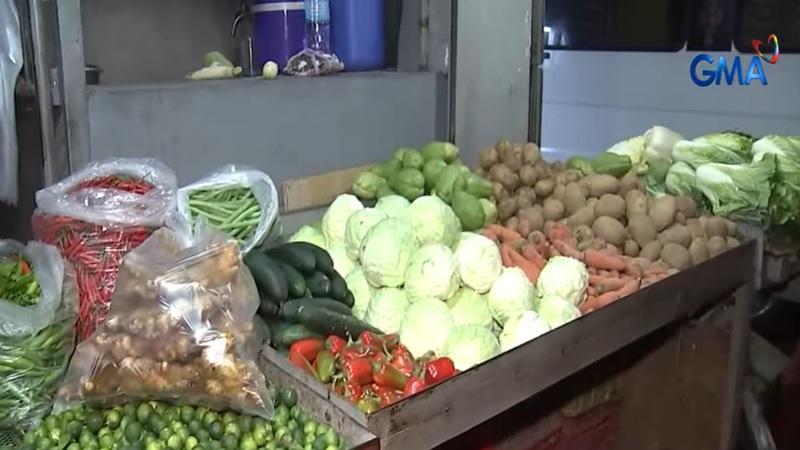
Food inflation, which tracks the price movements of food items in a "basket" commonly purchased by households, also slowed down to 0.3% from 0.8% month-on-month.
The slowdown was driven by the easing of inflation in vegetables at 16.6% from 19.4% as well the decline in meat inflation at 5.2% from 6%.
Rice inflation stayed at the negative territory at -17%, easing faster than the -16.9% seen in the prior month.
“The steady headline inflation rate shows that our coordinated interventions are helping to maintain adequate supplies and keeping essential goods affordable,” said Balisacan.
“We remain vigilant in managing risks from weather disturbances, global market volatility, and other domestic factors that may affect prices in the coming months,” the DEPDev chief said.
The Bangko Sentral ng Pilipinas (BSP), in a statement, said tat the October inflation print fell within its forecast range of 1.4% to 2.2%.
“Going forward, the Monetary Board will continue to review newly available information and reassess the impact of prior monetary actions in light of evolving economic conditions and their implications for inflation and growth,” the BSP said.
Balisacan, meanwhile, cited the Department of Agriculture’s (DA) move to authorize the importation of various vegetables to help mitigate the impact of weather disruptions.
To improve long-term efficiency, the DEPDev chief said the DA is prioritizing farm-to-market roads, rice-processing plants, and agri-food hubs that will strengthen supply chains and reduce post-harvest losses.
The implementation of the Animal Industry Development and Competitiveness Act will also enhance livestock and poultry production through the establishment of a P20-billion Animal Competitiveness Enhancement Fund, supporting animal health, productivity enhancement, and value chain development, according to Balisacan.
The country’s chief economist said the Department of Energy (DOE) is accelerating electric vehicle adoption by integrating charging stations into utility development plans, streamlining registration and certification processes, and promoting renewable energy use in charging facilities.
Moreover, he said that the Energy Partnership between the DOE and the Government of Japan will facilitate pilot projects and policy dialogues on renewable energy, grid integration, and related areas, adding that the “collaboration is expected to help diversify the energy mix, reduce reliance on imported fuels, and support a more stable power supply.”
The DEPDev chief cited President Ferdinand Marcos Jr.’s issuance of Executive Orders (EO) No. 100 and 101 to strengthen food security and boost the productivity and welfare of farmers and fisherfolk.
EO No. 100 sets a floor price for palay (unmilled rice) to guarantee fair returns for producers, especially during periods of oversupply or market volatility.
Meanwhile, E.O. No. 101 directs all national and local government agencies to fully implement the Sagip Saka Act (Republic Act No. 11321), which institutionalizes the Farmers and Fisherfolk Enterprise Development Program to provide comprehensive support such as market access, financing, and capacity building, helping farmers and fisherfolk increase their income and improve their quality of life.
“DEPDev welcomes the issuance of Executive Orders No. 100 and 101 as crucial interventions for food security. These policies help ensure fair returns for our farmers and fisherfolk, thus encouraging domestic production. In addition, other support services are being provided to improve the efficiency of post-production processing and distribution systems while we provide other measures to stabilize food prices and protect consumers,” said Balisacan. —KG/RSJ, GMA Integrated News

