

 GMA Brandtalk
 Tracking
 Archives

US tariff exemption on agri products 'calms' anxiety of PH fruits industry —DA
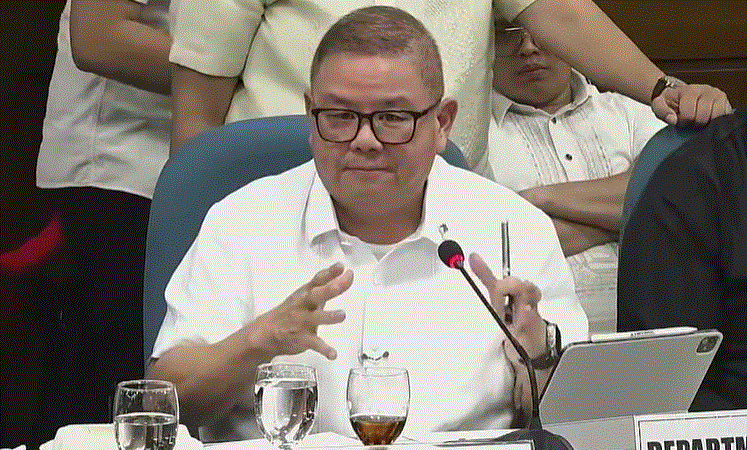
Agriculture Secretary Francisco Tiu Laurel Jr. on Wednesday welcomed the additional tariff exemptions on certain Philippine agricultural products granted by the United States.
“So I’m happy that the anxiety of our industries especially for fruits —bananas, pineapple, coconut— has calmed down,” Tiu Laurel said, in a mix of English and Filipino, in a chance interview with reporters.
On Tuesday, Trade Secretary Cristina Roque and Special Assistant to the President for Investment and Economic Affairs and incoming Finance Secretary Frederick Go announced that US President Donald Trump’s executive order has granted additional exemptions from the 19% reciprocal tariff, covering agricultural products that are not locally produced in the US such as coconuts, pineapples, dried mangoes, and fruit juices, among others.
Tiu Laurel said that the 19% tariff for Philippine goods to the US was “basically an anxiety issue,” which affected investments into exporting industries as many investors are oblivious to “what lies ahead.”
“But now, everything is clear. The path is clear… The President’s directive was to support our export products. And that will be our banner program for next year,” the Agriculture chief said.
“Now that the path is clear, now people can plan, invest, and expand… as far as the DA is concerned, we have to start planting more… so that we can export more to the US,” Tiu Laurel said.
In particular, among the agricultural exports covered by the tariff exemptions are as follows:
- Coconuts (copra) oil, both crude and other than crude
- Fruit juices
- Processed pineapples
- Desiccated coconuts
- Prepared or preserved coconuts
- Bananas, other than pulp
- Dried guavas, mangoes, and mangosteen
- Frozen tuna fillets
- Rice wafer products
- Confectionary products
Other agricultural products that are no longer subject to the 19% US tariffs include coffee and tea, cocoa and spices, oranges, tomatoes, beef, and some fertilizers.
In July, Trump announced a new 19% tariff rate for Philippine goods to the US, which was lower than the 20% rate announced earlier in the same month but was higher than the 17% rate initially imposed by the US president in April.
In a separate statement, Samahang Industriya ng Agrikultura (SINAG) expressed reservations on the latest tariff exemptions granted to the Philippines as “the suspension of tariffs covering 200+ agricultural products was not specific to the Philippines.”
“The products covered under the U.S. modification include coffee and tea; tropical fruits and fruit juices; cocoa and spices; bananas, oranges, and tomatoes; beef; and certain fertilizers. The rationale behind this suspension is domestic: it was introduced by the US to address rising consumer prices and inflationary pressures,” SINAG executive director Jayson Cainglet said.
“What we are still awaiting from our trade negotiators is a meaningful progress toward reducing the 19% reciprocal tariff, a benchmark that many other countries have already achieved,” Cainglet said. —VAL, GMA Integrated News

