

 GMA Brandtalk
 Tracking
 Archives

LTFRB sets temporary TNVS surge pricing reduction amid Christmas rush
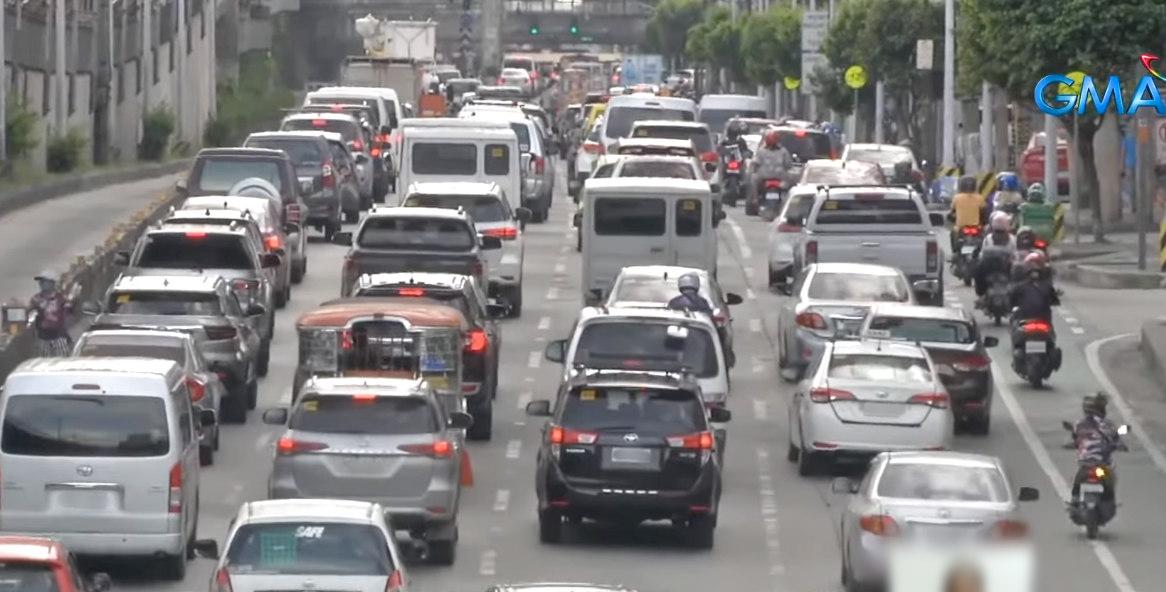
The Land Transportation Franchising and Regulatory Board (LTFRB) has set a temporary adjustment to reduce the fare computation for transport network vehicle service (TNVS) during peak hours and other high-demand periods ahead of the Christmas holidays.
LTFRB Chairperson Atty. Vigor D. Mendoza said the adjustment, under Memorandum Circular 2025-056, is only temporary and would be in effect from December 17, 2025, to January 4, 2026.
“We heard the complaints, and we also feel the sentiments raised by those in the TNVS sector; that is why we immediately acted on this in response to the instruction of President Marcos and Secretary Lopez to come up with the guidelines on the computation of TNVS fares,” Mendoza said.
Surge pricing is meant to balance supply and demand by encouraging more TNVS drivers to go online when and where demand is high, thereby improving service availability.
The LTFRB said the lack of specific parameters on how the surge pricing fares should be computed for TNVS is has caused numerous complaints from the passengers.
"What is specific in the LTFRB MC 2019-036—which set the fare matrix for TNVS—is that the surge price must not be more than twice the base fare," the LTFRB said.
"This is where the problem started, as there are no parameters or guidelines on how the surge pricing must be computed—a problem that was addressed in the new memo, the LTFRB MC 2025-056," it added.
Mendoza said the issuance of the MC 2025-056 is intended to be a "win-win solution" to address both the concerns of the commuters and the TNVS drivers.
Sample computation
Under the new memorandum, the LTFRB set parameters on how the surge price should be computed—it stated that the surge pricing must not exceed the B+C TNVS Fare Matrix.
The B in the memo refers to the per kilometer per rate while the C refers to per minute charge of the TNVS.
Currently, the hatchback and sub-compact has a flagdown rate of P35, sedan with P45, AUV with P55 and Premium with P145 flagdown rate.
The per kilometer rate for hatchback and sub-compact is P13, sedan with P15, AUV with P18 and Premium with P36 per kilometer charge.
All of them have P2 per minute travel time except for premium with P4.
In the new memo, the LTFRB set a sample computation in order to clear things up with both the passengers and TNVS.
If for instance a car/sedan TNVS travelled five kilometers and the travel time is 10 minutes, passenger should pay P75 for the per kilometer rate and P20 for 10-minute travel time—for a total of P95, plus the flag down rate of P45.
Therefore, the LTFRB said the price surging must not exceed P95 for car/sedan TNVS since the basic computation in the MC 2025-056 should not exceed the B (per kilometer rate) +C (per minute travel time) in the TNVS Fare Matrix.
No TNC earnings from surge during implementation
In a move meant to support drivers, the LTFRB also barred transport network companies (TNCs) from taking any commission or service fee from the surge component.
“The TNCs shall not collect any share, commission, or impose a service fee derived from the surge price component of the TNVS fare during the implementation of this Memorandum Circular,” the document states.
TNCs and TNVS operators are directed to reconfigure their fare algorithms in time for the December 17 rollout to ensure compliance.
Mendoza emphasized that while the adjustment is temporary, the LTFRB will continue reviewing surge pricing rules, regulations, and jurisprudence to craft a long-term, “win-win” framework.
TNVS community
The policy, however, has caused concern from the TNVS sector, which argues that surge pricing is essential to keeping drivers online during heavy traffic and high-demand hours.
In an official statement, TNVS Community Philippines spokesperson Lisza Redulla said the surge cap would directly hit drivers’ income at a time when fuel prices and operating costs remain high.
“Ikinababahala ng TNVS Community Philippines ang Memorandum Circular ng LTFRB na nagbababa sa surge pricing cap ngayong holiday season,” she said.
“Kapag binawasan ito sa panahon ng peak demand, mas maraming driver ang mapipilitang mag-offline dahil hindi na sulit ang oras, pagod, at gastos. Sa huli, mas mahihirapan ding makakuha ng masasakyan ang commuters.”
Redulla said the LTFRB previously mentioned possible “compensatory adjustments,” including higher pick-up fares, but no final guidelines have been released.
“Ang pagiging patas ay hindi lang dapat para sa commuter. Dapat patas din para sa drivers na araw-araw lumalaban sa kalsada,” she added. –NB, GMA Integrated News

