

 GMA Brandtalk
 Tracking
 Archives

Robust consumer spending boosts US third-quarter economic growth
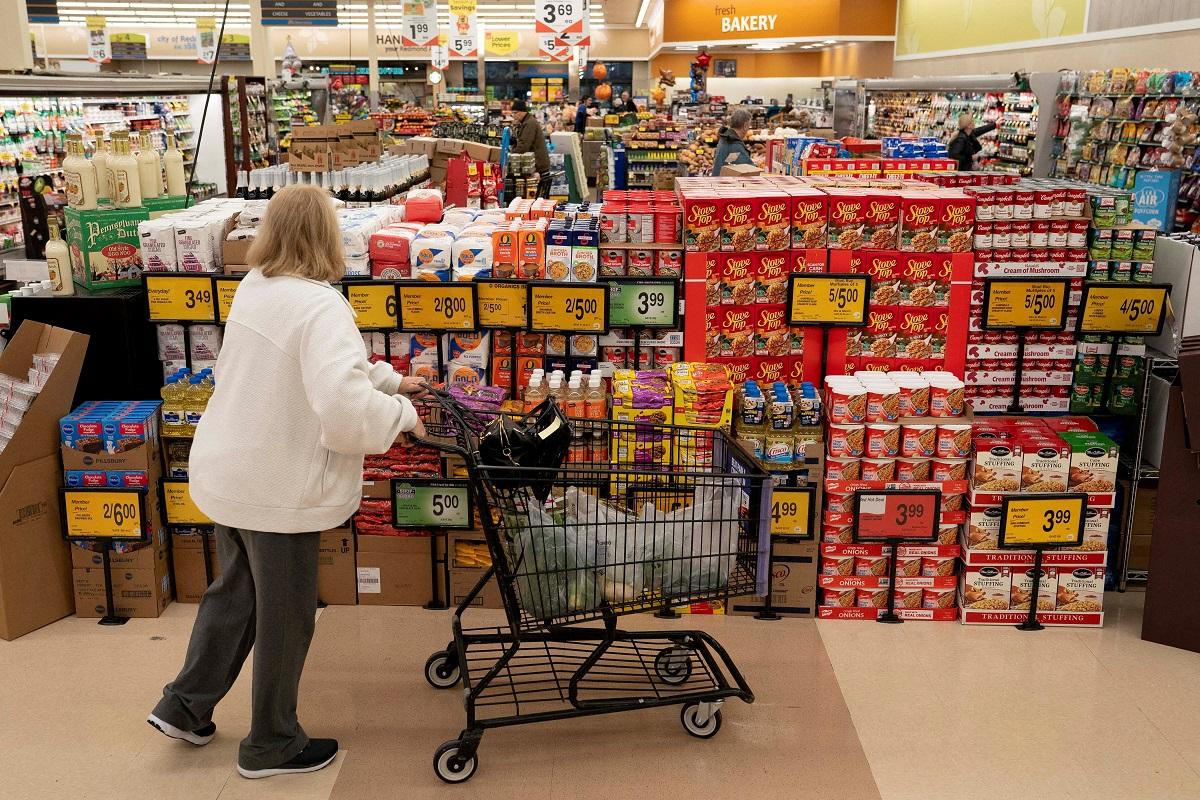
WASHINGTON — The US economy grew at its fastest pace in two years in the third quarter, fueled by robust consumer spending, though momentum appears to have faded amid the rising cost of living and recent government shutdown.
The stronger-than-expected increase in gross domestic product last quarter, which was reported by the Commerce Department on Tuesday, also reflected solid growth in exports, which helped to shrink the trade deficit, as well as government spending and a still-solid pace of business investment in equipment and artificial intelligence products.
The increase in consumer spending was the fastest in nearly a year as households splurged on recreational goods and vehicles and traveled internationally.
Economists say higher-income households are driving spending, thanks to a stock market boom that has inflated household wealth, while middle- and lower-income households have mostly pulled back because of high inflation, partly blamed on President Donald Trump's import tariffs. This trend has created what is called a K-shaped economy.
Though the GDP report is outdated after being delayed by the 43-day federal government shutdown, economists said strong economic growth last quarter reduced the need for the Federal Reserve to cut interest rates again in January. Inflation accelerated in the third quarter.
"The report will greatly lessen the odds of a Fed rate cut on January 28, and even adds some doubt about future moves," said Sal Guatieri, a senior economist at BMO Capital Markets. "Given the economy's resilience, softness in both employment and inflation might be needed to spur rate cuts in 2026."
Gross domestic product increased at a 4.3% annualized rate last quarter, the fastest pace since the third quarter of 2023, the Commerce Department's Bureau of Economic Analysis said in its initial estimate of third-quarter GDP. Economists polled by Reuters had forecast GDP would rise at a 3.3% pace. The economy grew at a 3.8% pace in the second quarter.
Consumer spending increased at a 3.5% rate last quarter, the strongest pace since the fourth quarter of 2024, after advancing at a 2.5% pace in the second quarter.
In addition to recreational goods and vehicles, consumption was also boosted by spending on non-durable goods like food for consumption at home, prescription medication, apparel and footwear. Consumers also spent more on healthcare, including outpatient, hospital and nursing home services.
But that data is in the rear-view mirror now. Retail sales stalled in October, while motor vehicle purchases have dropped in the past two months. The non-partisan Congressional Budget Office has estimated the shutdown could slice between 1.0 percentage point and 2.0 percentage points off GDP in the fourth quarter. It projected most of the GDP drop would be recovered, but estimated between $7 billion and $14 billion would not.
The K-shaped phenomenon also is playing out among businesses. Economists said large corporations have mostly managed to withstand the blow from the import duties, which have increased costs, and are investing in AI. But smaller businesses are struggling with tariffs.
Profits from current production increased at a $166.1 billion rate last quarter, up from a $6.8 billion pace in the second quarter.
Trump touts tariffs
Economists say Trump's policies are contributing to what they have termed an affordability crisis that is denting his approval ratings. Trump cheered the economy's strong performance last quarter, which he credited to his tariffs.
"The TARIFFS are responsible for the GREAT USA Economic Numbers JUST ANNOUNCED," Trump wrote on his Truth Social media platform "AND THEY WILL ONLY GET BETTER! Also, NO INFLATION & GREAT NATIONAL SECURITY."
Inflation, however, heated up last quarter. Households struggled with higher supermarket prices and utility bills as the rapid growth of AI and cloud computing data centers boosts electricity demand. Some consumers will see skyrocketing health insurance premiums in 2026.
The Personal Consumption Expenditures Price Index increased at a 2.8% rate after rising at a 2.1% pace in the April-June quarter. Excluding food and energy, the PCE price index advanced at a 2.9% rate following a 2.6% pace of increase in the second quarter. The US central bank tracks the PCE price measures for its 2% inflation target.
The Fed this month cut its benchmark overnight interest rate by another 25 basis points to the 3.50%-3.75% range, but signaled borrowing costs were unlikely to fall in the near term as policymakers await clarity on the direction of the labor market and inflation.
Stocks on Wall Street were trading modestly higher. The dollar fell against a basket of currencies. Shorter-dated US Treasury yields rose.
Business investment slowed last quarter as spending on structures like factories contracted for the seventh straight quarter. That slowdown was offset by strong spending on equipment and AI-related outlays on intellectual property and equipment.
Exports rebounded sharply and imports declined for a second straight quarter, helping to narrow the trade deficit. Trade added to GDP growth for a second straight quarter. Tariffs have caused wild swings in imports, resulting in the trade deficit subtracting from and adding to GDP by margins not seen since the government started keeping records.
Inventories subtracted from GDP for the second quarter in a row, while the government sector made a contribution that mostly came from defense spending.
Residential spending, which includes homebuilding and sales, remained weak. The housing market has been slammed by higher mortgage rates, which have weighed on demand, as well as rising construction costs because of duties on imported materials. — Reuters

