

 GMA Brandtalk
 Tracking
 Archives

Marcos-led ED Council okays P105.7-B PPP to build over 16k classrooms
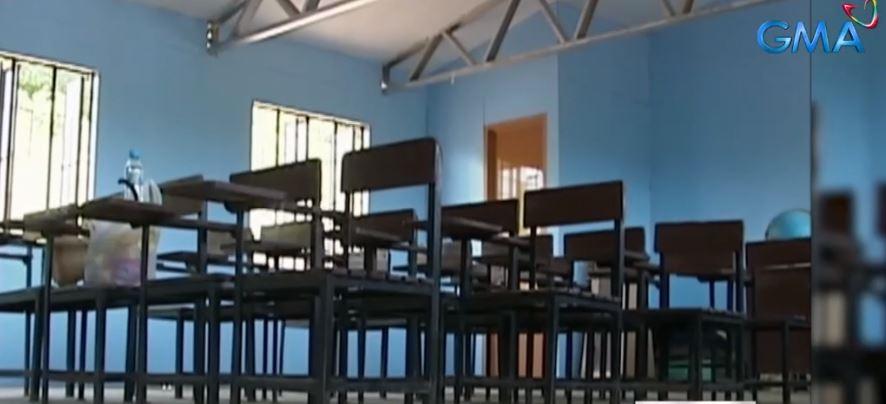
The Economy and Development Council (ED Council), chaired by President Ferdinand "Bongbong" Marcos Jr., has approved a multibillion-peso public-private partnership (PPP) project aimed at closing classroom gaps and creating better learning environments.
In a statement, the Department of Economy, Planning, and Development (DEPDev) said the P105.7-billion Public-Private Partnership for School Infrastructure Project Phase III (PSIP III) was approved during the ED Council’s meeting on Thursday, January 8, 2026.
The DEPDev said the PSIP III, under the supervision of the Department of Education (DepEd), is a flagship initiative designed to provide quality classrooms, addressing long-standing shortages and improving learning conditions.
With an estimated cost of P105.69 billion, the Socioeconomic Planning agency said the PSIP III covers the construction of 16,459 new classrooms across 1,095 existing schools in Luzon between March 2027 to March 2028, which would benefit at least 800,000 learners per year from improved facilities.
The project is also seen to lower the average class size from 50 to 39 students, “creating more conducive learning environments” and eliminating multiple-shift schedules, transitioning schools to single-shift operations to “increase student contact time and reduce teacher workload.”
The DEPDev said the severe shortage of physical infrastructure in the Philippine education sector has forced schools to adopt multiple-shift schedules and resulted in overcrowded classrooms—averaging 50 students per class—conditions that undermine effective learning.
The PSIP III, moreover, aims to leverage private sector efficiency through a solicited PPP modality and a Build-Lease-and-Transfer contractual arrangement, overcoming delays often associated with conventional procurement, according to the Socioeconomic Planning agency.
The project would also complement DepEd’s construction of nearly 25,000 classrooms as allocated in the 2026 General Appropriations Act, which now allows DepEd to partner with local government units in building new classrooms.
“Addressing critical infrastructure gaps in education is central to sustaining growth and achieving our development targets. By investing in classrooms that strengthen learning outcomes, we are laying the foundation for higher productivity, stronger human capital, and inclusive growth,” said DEPDev Secretary and ED Council vice-chair Arsenio Balisacan.
Classroom backlog
Meanwhile, Education Secretary Sonny Angara said the PPP project is intended to complement government-funded classroom construction and accelerate delivery.
"Hindi na puwedeng umasa lang tayo sa iisang paraan. PSIP is one of our horses in this race to deliver classrooms faster to our communities," Angara said in a statement issued Tuesday, January 13.
(We can no longer rely on a single approach. PSIP is one of the ways we aim to deliver classrooms faster to our communities.)
The DepEd said PSIP III forms part of broader reforms in school infrastructure delivery, alongside nearly 24,000 classrooms programmed for 2026 under the national budget and initiatives allowing local government units to directly construct classrooms.
According to DepEd estimates, the country is facing a 165,000-classroom backlog.
The Education department cited estimates that construction under PSIP III could generate more than 57,000 jobs, while projecting potential government savings of P40.15 billion, based on comparative cost assumptions under the PPP model. – with a report from Sherylin Untalan/ NB/ VDV, GMA Integrated News

