

 GMA Brandtalk
 Tracking
 Archives

PH government to ramp up infra spending in Q1
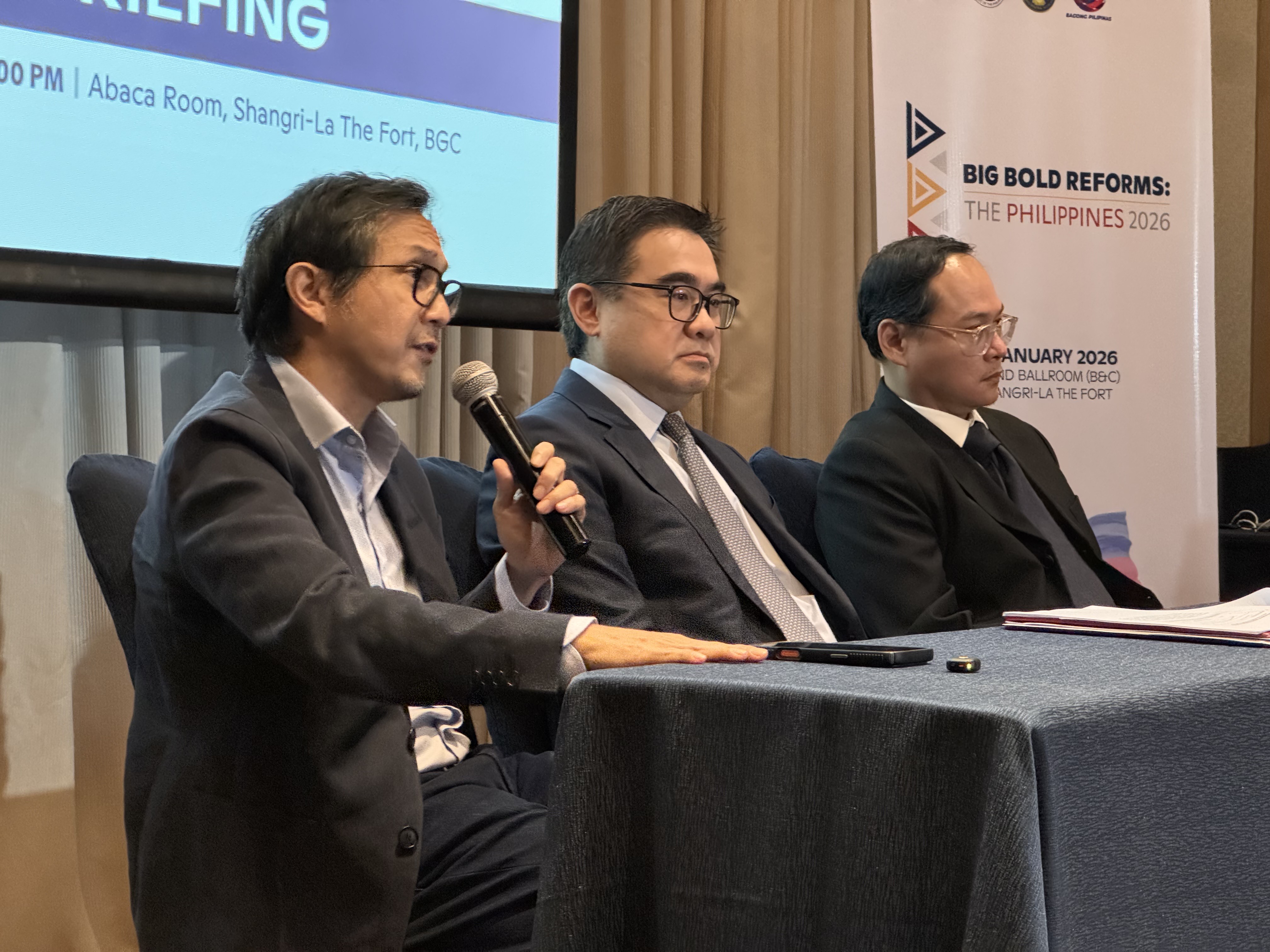
Philippine officials on Friday vowed to ramp up infrastructure spending this year after corruption concerns — particularly involving flood control projects — slowed disbursements and weighed on economic growth over the past two quarters.
According to Department of Public Works and Highways Secretary Vivencio “Vince” Dizon, the agency targets to spend between P200 billion to P250 billion in the first quarter, with the administration aiming to hit 4.3% of the gross domestic product (GDP) this year.
Latest data available from the Department of Budget and Management (DBM) show that government infrastructure and capital outlays stood at P65.9 billion in October, reflecting a 40.1% decline from the same month in 2024.
“For the infrastructure spend, which is critical, clearly we had a very rough third and fourth quarter. The DOTr, actually, I think, did quite well given all the delays in the past,” Dizon told reporters in a press conference in Taguig City.
“But for DPWH, I think, our goal is not just to spend more… but to spend more wisely, and spend for the right things,” he added, noting that spending will depend on how much the government will be able to collect and raise.
The weak infrastructure spend has dragged the country’s economic growth, slumping to 4.0% in the third quarter, the slowest in four years since the 3.8% recorded in the first quarter of 2021 when the country implemented strict lockdowns due to the COVID-19 pandemic. Growth averaged 4% in the first nine months.
The slowdown has been widely attributed to lower government spending, as corruption concerns dampened consumer and investor sentiment, with the Department of Economy, Planning, and Development (DepDev) conceding that the government is unlikely to meet the 5.5% to 6.5% target range.
This comes as Philippine lawmakers are now looking into alleged irregularities in public works spending, after President Ferdinand “Bongbong” Marcos Jr. in August 2025 disclosed that 20% of the total P545-billion budget for flood control projects went to only 15 contractors, which he described as a “disturbing assessment.”
Dizon said the focus on infrastructure spending will be on basics such as the upkeep and maintenance of roads and bridges, along with all unfinished projects such as hospitals and classrooms, that Marcos wants finished within his term.
“We will be getting most of the funding for that from savings that fortunately we were able to generate last year and hopefully, we will also be able to generate more savings this year,” he said.
“Kailangan ibalik natin ‘ung common sense. Unahin natin ‘yung mga kailangang i-maintain ng tama, unahin natin ‘yung mga nakatengga, so that’s what we want to focus on,” he added.
(We need to bring back common sense. We should prioritize properly maintaining what needs to be maintained and address what has been left idle or stalled — that’s what we want to focus on.)
For the Department of Transportation, Acting Secretary Giovanni Lopez said the agency is looking to spend P60 billion in the first quarter, as majority or 80% of its capital outlays are foreign assistance projects (FAPs), consisting of its the North-South Commuter Railway (NSCR) and the Metro Manila Subway.
“For the DOTr, we’re looking right now for the first quarter and if we can disburse, as long as they give us the allotment, we can obligate it and we can disburse more as around P60 billion. Remember, the budget for the DOTr for the entire year right now is around P103 billion,” he said in the same press conference.
Friday’s press conference came on the heels of a series of briefings with the private sector, where Cabinet officials discussed the administration’s plans moving forward.
“The private sector is an indispensable partner in national development, whether it’s for economic growth or for job creation. The briefing’s objective is clear — to inspire optimism, renew investor confidence, and encourage greater investments in the Philippines,” Finance secretary Frederick Go said.
“Despite the challenges of the past year, our long-term fundamentals remain strong and intact. Our stable macroeconomic environment, enabling policies, and dynamic workforce provide a solid foundation for sustainable growth. With this, we are now advancing with big, bold reforms,” he added. —AOL, GMA Integrated News

