

 GMA Brandtalk
 Tracking
 Archives

PH economy misses growth target anew, slows down to 4.4% in 2025
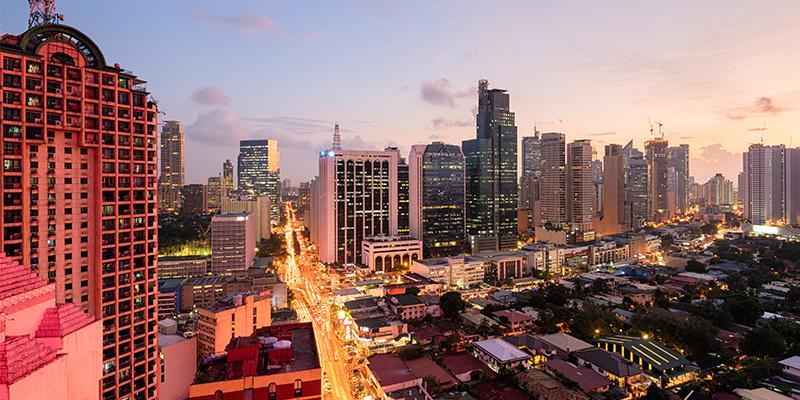
The Philippines ended the year 2025 with a lackluster economic performance as the growth rate fell short of the government's target for the third consecutive year, dragged by a confluence of factors including climate-related disruptions and the dent on consumer and investor confidence caused by the flood control corruption scandal.
At a press conference in Quezon City on Thursday, Philippine Statistics Authority (PSA) chief and National Statistician Claire Dennis Mapa reported that the economy as measured by gross domestic product (GDP)—the value of goods and services produced in a period—grew 3% in the October to December 2025 period, slower that the downwardly revised 3.9% growth rate seen in the third quarter of 2025.
The fourth quarter economic performance brought the full-year 2025 growth rate to 4.4%, falling below the Marcos administration's target growth rate of 5.5% to 6.5% for the year.
This marked the third straight year that the country failed to hit its economic growth target—5.7% in 2024, below the 6% to 6.5% goal; and 5.5% in 2023, lower than the 6% to 7% target.
In his statement during the press conference, Department of Economy, Planning and Development Secretary Arsenio Balisacan said that the GDP outcome seen last year “reflects several converging factors,” which included “the adverse economic effects of weather- and climate-related disruptions, which led to unexpected class and work suspensions, several of them, as well as the measures we are taking to ensure that only the right infrastructure projects move forward.”
“Admittedly, the flood control corruption scandal also weighed on business and consumer confidence. These challenges unfolded alongside lingering global economic uncertainties,” Balisacan said.
Climate disruptions and the consumption and investment confidence decline resulting from the flood control controversy brought domestic demand growth to slow down to 0.7% in the fourth quarter, bringing its full-year rate to 3.7%, down from 5.8% in 2024 as both public and private construction, as well as private consumption, “were particularly affected during this period.”
“While these developments weighed on short-term growth, the Marcos administration emphasizes that the investigations into the flood control corruption controversy had to be undertaken,” Balisacan said.
“The resulting measures and governance reforms are necessary to strengthen accountability, improve project quality, ensure better value for scarce public resources, and build our capacity for faster and more sustainable growth in the years ahead,” the country’s chief economist added.
To address climate change-related disruptions, Balisacan said the government is strengthening adaptation efforts such include improved disaster preparedness, enhanced early warning systems, and stronger capabilities for PAGASA and local weather stations.
“Notably, the government has restored funding for the Project Nationwide Operational Assessment of Hazards, or Project NOAH,” he said.
“We are also boosting investments in climate-resilient agricultural inputs, technologies, and infrastructure to raise farm productivity, ensure food security, and support sustained export growth,” he added.
PSA data showed that the major industries that contributed to the 2025 GDP growth were wholesale and retail trade at 5.2%; financial and insurance activities at 5.8%; and manufacturing at 2.5%.
Among the major economic sectors, agriculture, forestry, and fishing; services; and industry posted growths of 3.1%, 5.9%, and 1.5%, respectively.
For the full year of 2025, Household Final Consumption Expenditure (HFCE) grew 4.6% while Government Final Consumption Expenditure (GFCE) grew 9.1%.
Exports of goods and services saw an 8.1% growth while imports of goods and services grew 5.1%.
Gross capital formation, meanwhile, posted an annual decline of 2.1%.
2026: A rally point
“Looking ahead, we see 2026 as our rally point. We are accelerating efforts to restore public trust through improvements in governance and public services—improvements that Filipinos can see and feel in their everyday lives,” Balisacan said.
“In infrastructure, we are resuming and accelerating the completion of public works while enforcing stricter anti-corruption safeguards. At the same time, we are pursuing long-term and high-impact reforms in infrastructure development planning, guided by comprehensive, science- and technology-based master plans,” the country’s chief economist said.
The DEPDev chief noted that the government is prioritizing the implementation and passage of key legislative reforms.
“These include the newly enacted New Government Procurement Act, the proposed Anti-Dynasty Bill, and amendments to the Party-List System Reform Act, the Bank Deposits Secrecy Law, and the Anti-Money Laundering Act.
We are also modernizing governance systems by integrating tools and technologies across planning, budgeting, implementation, and monitoring and evaluation,” Balisacan said.
“These efforts include enhancing public dashboards, modernizing audit and revenue monitoring systems, and reinforcing the link between planning and budgeting,” he said.
The country’s chief economist, moreover, said that the administration is leveraging the Philippines’ ASEAN chairmanship “to position the country as a competitive business and tourism destination.”
“We are fast-tracking interagency coordination on travel facilitation, digital visitor services, and destination readiness. These initiatives are expected to support multi-country ASEAN travel, create opportunities for our MSMEs, and showcase Filipino service excellence,” Balisacan said.
The DEPDev chief noted that the Economy and Development Council discussed and approved, last January 26, the Executive Report titled “Making 2026 the Rally Point to Revitalize PDP Implementation” —a report outlines strategies to address governance challenges and chart our path forward.
“Allow me to reiterate that while the reform efforts we have begun—and continue to pursue—have affected recent growth performance, they are necessary and critical steps,” Balisacan said.
“These reforms protect public funds, strengthen our institutions, build a more resilient, inclusive economy, and ultimately, rebuild trust between government and the people we serve. With discipline, better governance, and sustained reforms, we are decisively moving to ensure that growth in 2026 and beyond is stronger, more inclusive, more resilient—and truly felt by all Filipinos,” he added.— VDV/AOL, GMA Integrated News

