

 GMA Brandtalk
 Tracking
 Archives

Travel tax abolition among priority measures of Marcos admin — Palace
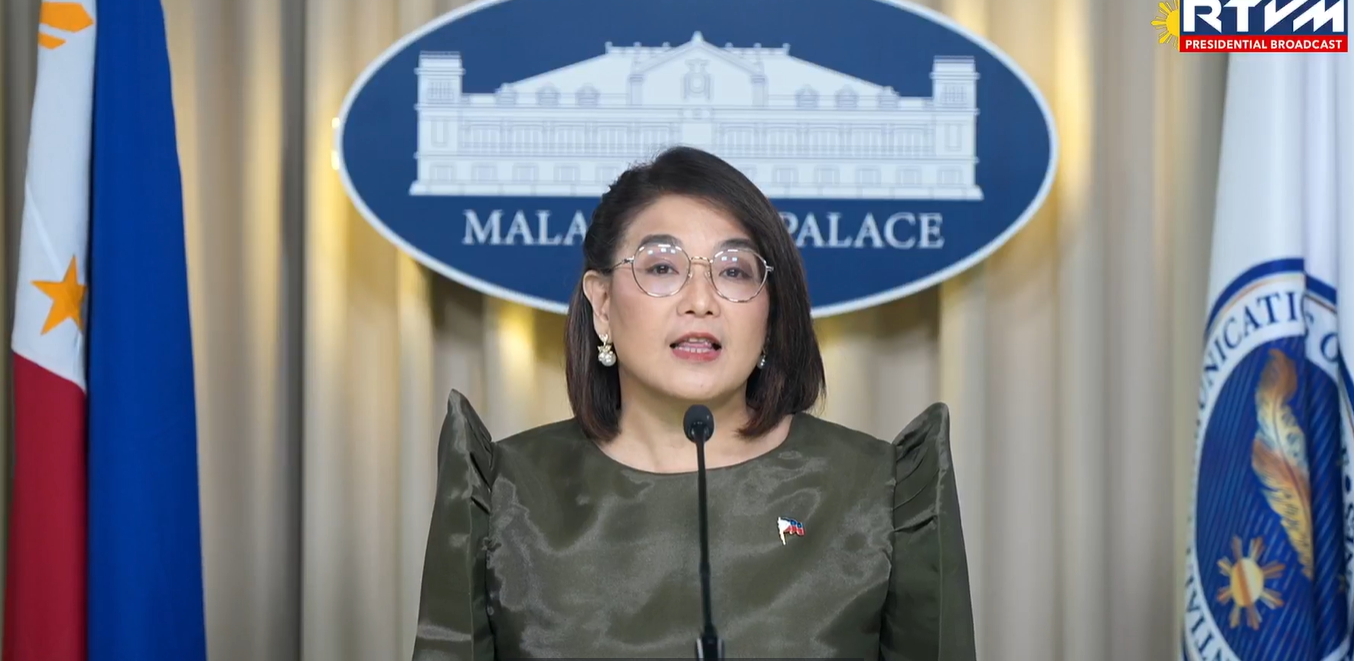
The abolition of travel tax is among the priority measures of the Marcos administration.
This was according to Palace Press Officer Undersecretary Atty. Claire Castro following a LEDAC meeting on Tuesday where a total of 21 measures have been supported and approved by President Ferdinand ''Bongbong'' Marcos Jr.
The administration is aiming to pass the measure by June of this year, she added.
''Kabilang sa mga prayoridad ng Pangulo na maipasa sa Hunyo ang mga sumusunod: Travel Tax Abolition, Expanded Anti-Online Sexual Abuse or Exploitation of Children and Anti-Child Sexual Abuse or Exploitation Materials Act of 2026, Fake News and Digital Disinformation na layuning isara rin ang pintuan ng mga gumagawa ng iba't-ibang online crimes at BARMM elections,'' Castro said.
(Those included in the priority measures are the Travel Tax Abolition, Expanded Anti-Online Sexual Abuse or Exploitation of Children and Anti-Child Sexual Abuse or Exploitation Materials Act of 2026, Fake News and Digital Disinformation and the BARMM elections.)
Castro said Marcos sees that this will ease the burden of tourists, especially Filipinos who travel.
''Nakita po ng Pangulo na mas makakagaan po ito sa ating mga turista at sa ating mga kababayan na nagbibiyahe,'' she said.
(The President sees that this measure will ease the burden of tourists and Filipino travelers.)
To recall, House Majority Leader Ferdinand Alexander ''Sandro'' Marcos, son of the President, recently proposed the abolition of the imposition of travel tax for Filipinos travelling abroad for vacation, saying the said levy already outlived its purpose.
House Bill 7443 aims to repeal Presidential Decree (PD) No. 1183 and related provisions of the Tourism Act of 2009 imposing travel tax which currently amounts to P1,620 for economy class travelers and P2,700 for first-class passengers.
Earlier, Tourism Secretary Christina Frasco warned that scrapping the tax without a substitute fund could adversely affect the tourism sector. She explained that 50% of travel tax collections support tourism infrastructure such as tourist rest areas, visitor centers, and jetty ports.
Meanwhile, about 40% of the tax funds tourism education through the Commission on Higher Education; and 10% are allocated for the preservation of heritage structures nationwide.
According to Castro, these programs will still be funded through the national budget if the travel tax would indeed be abolished.
''Opo, kapag ka po ito ay nagkaroon ng, naabolish na po lahat at di lang kumabga deduction lang ng fee, ito naman po ay popondohan ng gobyerno, of course sa pamamagitan ng GAA,'' Castro said.
(If this will really be abolished, the projects will be funded by the government through GAA.)
Anti-political dynasty
Castro said that during the LEDAC meeting, Marcos also asked about the proposed anti-political dynasty measure.
She said that as per Senator Risa Hontiveros, who was present in the LEDAC meeting, consultations are still ongoing as regards the bill.
''Sa ngayon po ay nagkakaroon pa lang po ng consultation ang Kongreso. So, kung ano po ang ibibigay nila na version, doon pa lamang po malalaman ng Pangulo kung anong mas maganda at kung ano ang kaniyang susuportahan,'' Castro said.
(Consultations are ongoing. So, whatever version they will submit, the President will determine what's good and what he'll be supporting.)
The President has also urged Congress to prioritize the passage of the anti-political dynasty bill.
Several measures have been filed in both the Senate and the House of Representatives seeking to implement the 1987 Constitution’s provision prohibiting political dynasties. — RSJ, GMA Integrated News

