

 GMA Brandtalk
 Tracking
 Archives

PPA denies congestion in Manila ports; brokers group bemoans 'paralysis'
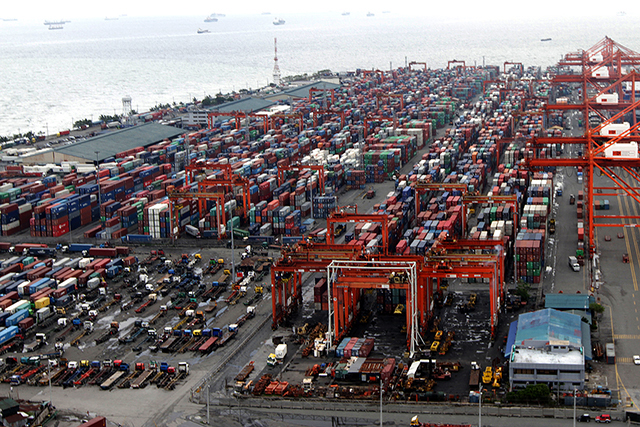
The Philippine Ports Authority (PPA) on Thursday brushed off claims that Manila’s ports are congested.
“Firstly, there is no port congestion. Let’s not create a scenario which will create undue concern to the public that there will be a hike in prices resulting from port congestion,” PPA General Manager Jay Santiago said in a text message.
“Yard utilization at the Manila ports remains healthy even if utilization is above optimum. Higher utilization does not mean congestion. Cargo processing remains consistent and free flowing,” he said.
Port situation data, as of February 12, 2026, showed the yard utilization rate at Manila South Harbor and Manila International Container Terminal stood at 72.97% and 84.16%, respectively.
“Optimum is 70% yard utilization. Port charges remain constant and can’t be arbitrarily adjusted or increased,” the PPA chief said.
Santiago was asked for comment after the Philippine Chamber of Customs Brokers Inc. (PCCBI) —the only accredited integrated professional organization representing more than 15,000 Filipino registered customs brokers— said that its members and the broader logistics community “are grappling with a severe truck deadlock caused by the limited capacity of empty container yards, which prevents the timely return of empties and, in turn, stalls the withdrawal of laden containers from terminals.”
“This paralysis is exacerbated by trucks remaining tied up with empty containers because ports and carriers have limited space to accept them,” said PCCBI.
Santiago echoed PCCBI’s statement, saying the current issue is between the shipping lines and truckers or brokers related to the handling and return of empty containers.
“The main issue is the lack of yard facilities which should be provided by shipping lines for the return of empty containers,” he said.
The PCCI, for its part, urged for the reduction of the current 90-day allowance for empty container storage to a maximum of 60 days “to address this systemic congestion and normalize trade flows.”
“We believe this accelerated timeframe will compel international shipping lines to prioritize the evacuation of overstaying containers, preventing them from clogging vital terminal space and harming the national economy,” the group said.
The PCCBI also called for the full implementation of PPA Administrative Order No. 02-2019, “which provides clear guidelines for the immediate transfer of overstaying import cargoes from terminals to designated areas.”
Under the AO, all cleared import cargoes remaining inside the port for more than 30 days must be accelerated for transfer.
“We believe that strictly enforcing this 30-day dwell time limit will help break the current deadlock, provided the associated transfer costs are not unfairly passed on to customs brokers and importers when the delay is caused by shipping lines’ nominated depots,” said PCCBI. —RF, GMA Integrated News

