

 GMA Brandtalk
 Tracking
 Archives

BSP inks info-sharing agreements with NBI, CICC, SEC
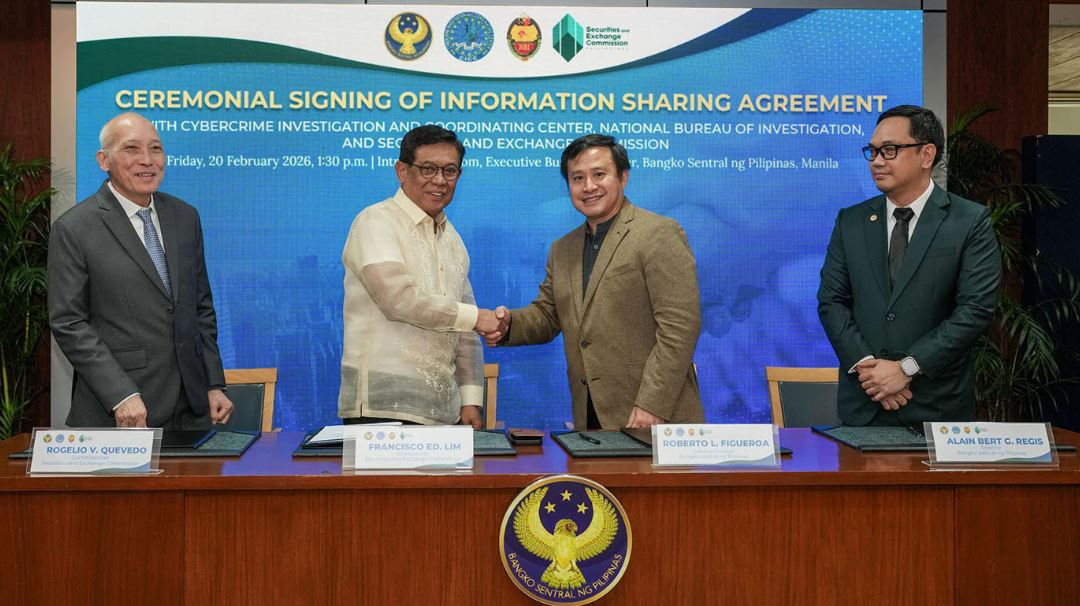
The Bangko Sentral ng Pilipinas (BSP) on Friday signed separate information-sharing agreements (ISAs) with several government agencies to allow the lawful exchange of confidential financial account information that will assist investigations of scams.
In separate agreements, the BSP allowed the sharing of information to support investigations conducted by the National Bureau of Investigation (NBI), the Cybercrime Investigation and Coordinating Center (CICC), and the Securities and Exchange Commission (SEC).
The ISAs outline procedures for securing information from the central bank’s Consumer Account Protection office on financial accounts linked to scams, in line with the Anti-Financial Account Scamming Act (AFASA).
“Its success will not be measured by the document itself, but by its execution — by investigations strengthened, cases resolved, risks mitigated, and harm prevented,” BSP general counsel Roberto Figueroa said in a statement.
The BSP said the agreements will help the NBI and the CICC build cases involving AFASA violations, and help the SEC obtain information in line with its regulatory mandate, including adjudication of financial consumer complaints, all with strict safeguards for bank secrecy and data privacy.
“The BSP remains firmly committed to working with the CICC, NBI, and SEC to ensure that AFASA is implemented with discipline, integrity, and fidelity to the law,” BSP deputy governor and AFASA Technical Working Group adviser Elmore Capule said.
“Through sustained coordination and mutual trust, we will reinforce the resilience of our financial system and better protect the Filipino public from those who seek to exploit it,” he added.
President Ferdinand “Bongbong” Marcos Jr. signed the AFASA, or Republic Act 1201,0 on July 20, 2024, after being designated as a priority bill by the Legislative Executive Development Advisory Council (LEDAC).
The implementing rules and regulations (IRR) of the law provide for BSP-supervised financial institutions to limit the use of OTPs sent to users via SMS and email, and adopt more multi-factor authentication (MFA) methods by June 2026. —LDF, GMA Integrated News

