

 GMA Brandtalk
 Tracking
 Archives

Shares turn higher, oil prices retreat after Trump hints at end to Iran war
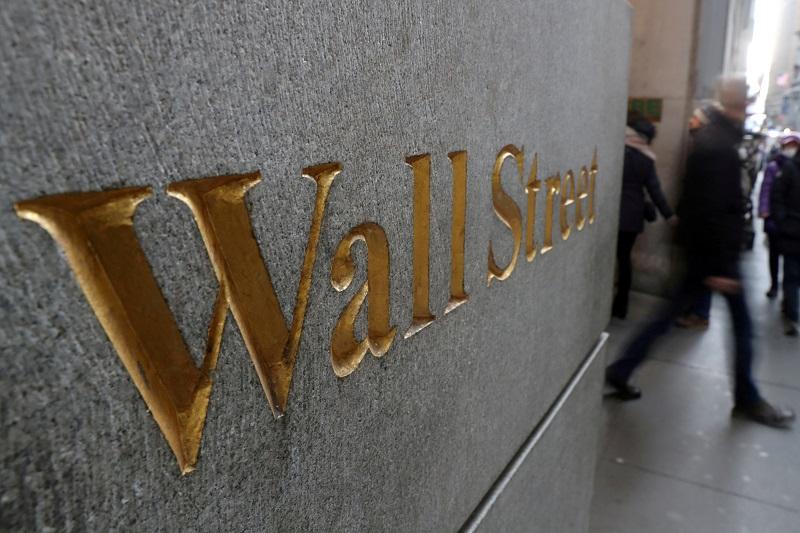
BOSTON/LONDON - Wall Street stocks gained, oil prices relented and U.S. Treasury yields dipped on Monday after President Donald Trump reportedly said he thinks the war against Iran "is very complete" and that the U.S. is "very far ahead" of his initial four- to five-week estimated time frame.
Stocks and bond prices had initially slumped as surging oil prices looked likely to stoke inflation around the globe, leading central banks to raise interest rates.
Oil prices soared by as much as 29% during the session as Saudi Arabia and other OPEC members cut supplies during the expanding U.S.-Israeli war with Iran. Prices then retreated from session highs as the U.S. and other Group of Seven (G7) countries considered tapping strategic petroleum reserves to limit inflation pressures from energy price increases.
In post-settlement trade, U.S. crude CLc1 was last down 5.32% to about $86 a barrel and Brent LCOc1 fell to $90 per barrel, a decline of 2.65%.
After initial losses, Wall Street stocks ended higher. The Dow Jones Industrial Average .DJI gained 0.6%, the S&P 500 .SPX added 0.8% and the Nasdaq Composite .IXIC surged 1.3%.
The gains came despite Iran's hardliners having staged a show of force on Monday, taking to the streets to proclaim their loyalty to new Supreme Leader Mojtaba Khamenei, whose rise appeared to dash hopes of a swift end to war in the Middle East causing havoc on global markets.
European, Asian shares sink
European shares had tumbled to their lowest in more than two months, with the pan-European STOXX 600 .STOXX down 0.6% in a third session of losses. The benchmark index shed 5.5% last week, its worst weekly performance in nearly a year.
The oil price spike was sobering for major oil importers in Asian markets, with Japan's Nikkei .N225 closing down 5.2% after a 5.5% drop.
China, another big oil importer albeit with a huge stockpile of crude, saw its blue-chip index .CSI300 fall roughly 1%.
China on Monday said inflation had already picked up in February before the current oil surge, with consumer prices rising 1.3% on the year, not necessarily a negative development, given the country has long struggled with disinflation.
Lisa Shalett, chief investment officer at Morgan Stanley Wealth Management, wrote in a note earlier on Monday that the U.S. equity market may still seem placid but there are "extreme" rotations and stock dispersions beneath the surface.
"Over the past 80 years, war-induced oil shocks have not been kind to equities, as nearly every episode has catalyzed a recession and market selloff," Shalett wrote.
Central banks face inflation conundrum
U.S. Treasury yields pulled back from Monday's initial surge after oil prices relented. The yield on the two-year note was last down 0.4 basis points at 3.552%. It earlier reached 3.635%, the highest since November 20. The benchmark U.S. 10-year note yield fell 3 basis points to 4.102% after earlier trading at 4.216%, the highest since February 9.
Fed funds futures are now pricing in 77% odds of a rate cut in July, up from 67% earlier on Monday, and are fully pricing in a reduction in September.
The U.S. dollar was little changed against the euro and yen after gaining against both earlier on Monday in a flight to safety.
Spot gold XAU= fell 0.53% to $5,142.37 an ounce, while bitcoin BTC= gained nearly 3% to $69,154. — Reuters

