

 GMA Brandtalk
 Tracking
 Archives

EXPLAINER: Understanding how Philippine fuel pump prices are determined
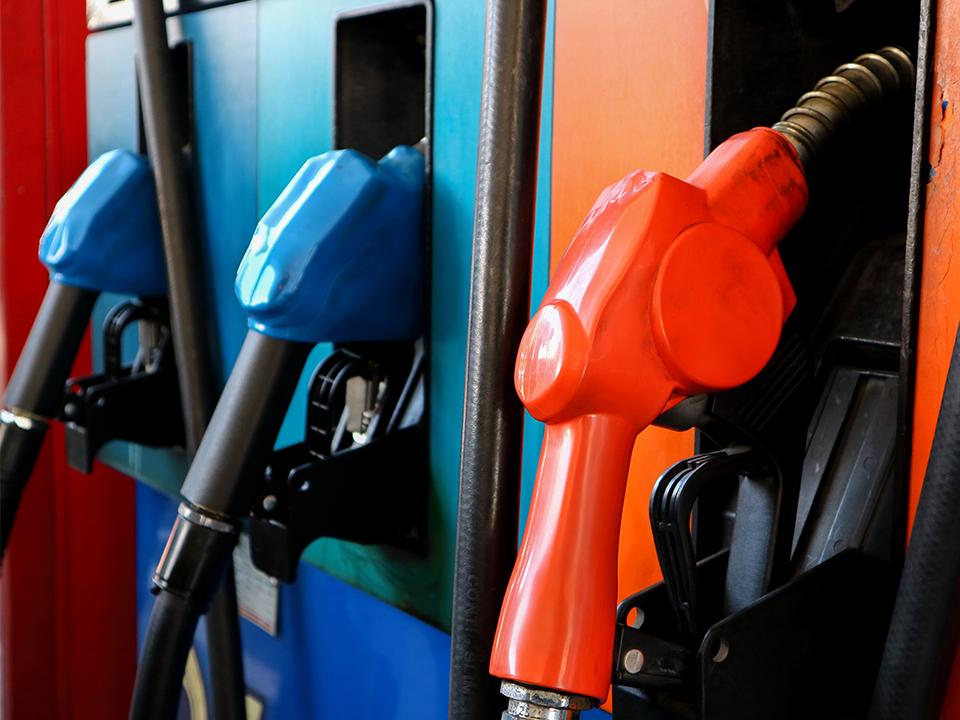
Fuel retailers have agreed to stagger the big-time pump price hike resulting from the ongoing conflict in the Middle East.
According to data from the Department of Energy (DOE), retailers are set to increase the prices per liter of gasoline by P7.00 to P13.00, diesel by P17.50 to P24.25, and kerosene by P32.00 to P38.50.
The exorbitant price hikes, however, raised questions on how fuel retailers determine weekly adjustments, especially when inventory or supply was bought weeks ago at probably lower rates.What’s the basis?
In an interview with GMA News Online, Jetti Petroleum president Leo Bellas said the basis of fuel retail prices in the Philippines is the Mean of Platts Singapore (MOPS)–the average daily price assessments of refined petroleum products traded at the regional trading hub in Singapore.
“For example, for the movement this week… the basis of that was the average last week. So the average for the whole week from March 2 until March 6 and then [compare] it to the average a week ago, if the difference is ‘plus,’ it means it's an increase. But if the difference is ‘negative,’ it means a rollback,” Bellas said.
He explained that the formula was agreed upon by industry players together with the Department of Energy to simplify the price determination since “there really is a movement every day… but it is difficult to implement changes every day.”
“So what happened now is that we have a one-week delay because the big-time increase last week is only reflected this week… Basically, it was an agreed formula between the industry and the DOE,” Bellas said.
Bellas said that on top of the MOPS movement, fuel retailers in the country also factor in freight or shipping costs to the pump prices.
“It's very volatile during a crisis… shipping rates are higher. So if you buy during a crisis, it would be a bit higher,” he said.
Why every Tuesday?
In an interview on Super Radyo dzBB, Energy Secretary Sharon Garin explained that implementing pump price adjustments every Tuesday was part of the formula agreed upon by industry players and the DOE during the time of former Secretary Angelo Reyes.
The formula was crafted 10 years after the enactment into law of the Downstream Oil Industry Deregulation Act of 1998.
Garin also explained that, in a deregulated market, Philippine fuel retailers use a “replacement cost accounting” scheme.
This is why supplies bought weeks ago would be sold in fuel retail stations at a different or “assumed” cost.
Garin explained that retail prices reflect “replacement costs” and take into account the average prices of the previous week, which are then assumed as the cost of buying new stock, allowing firms to estimate the capital requirement to replenish their inventory for the coming week.
Why retail prices are different in each city, town
Bellas said the varying prices per liter of petroleum products in each city or town or gasoline station was due to freight costs and competition.
“The farther you go away from Metro Manila, it’s the default basis of freight… so while you go farther from Metro Manila, the freight costs also increase,” he said.
“So, for example, the prices within Metro Manila should be the same, and the prices within Pampanga should also be the same,” he said.
However, competition among players also plays a key part in the variation of pump prices.
“But… we reached this point that the industry has already matured and become very competitive… So, as an example, for a certain week, instead of increasing, other players would not implement changes… so other players won’t have a choice but to follow suit,” Bellas said.
“Assuming there will be a rollback, for example, 50 centavos per liter, but one player implemented an aggressive rollback of P1 per liter, so it really distorts the market,” he added.
No cap
The Department of Energy has clarified that it had no authority to impose a cap on pump price adjustments due to the Oil Deregulation Law.
According to Garin, while the amendment of the Oil Deregulation Law would help move forward, there are currently no measures that give the department the authority to implement a ceiling on prices.
“We are constrained by the law and the deregulation that we do not have the powers to cap or to control the prices unless maybe they give us the authority or an amendment of the law, or emergency powers. As of now, speaking as DOE, DOE does not have the power to do so,” she said.
The big-time adjustment came as the Strait of Hormuz, a key global shipping corridor located between Iran and Oman, was closed off amid the ongoing conflict among the United States, Israel, and Iran.
It is considered the world’s most vital oil export route, connecting the biggest Gulf oil producers with the Gulf of Oman and the Arabian Sea. –NB, GMA Integrated News

