

 GMA Brandtalk
 Tracking
 Archives

IEA tackles Iran war oil price spikes with record stocks release plan, markets not convinced
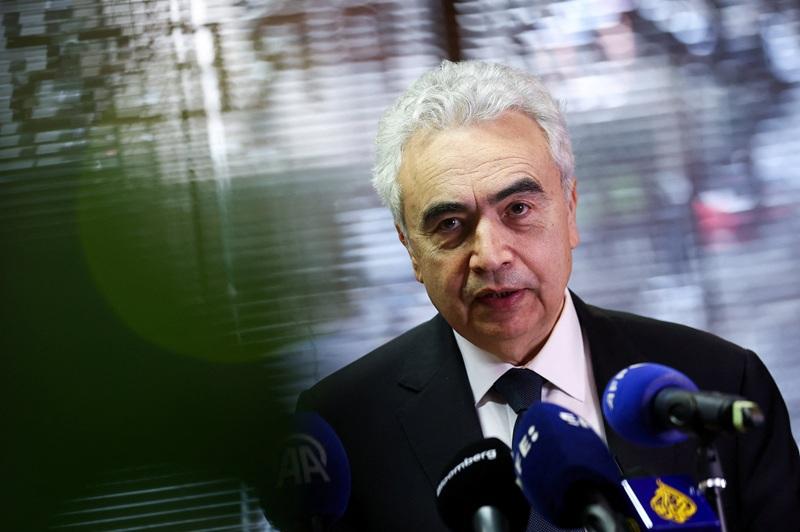
PARIS/LONDON - The International Energy Agency on Wednesday agreed to release 400 million barrels of oil, the largest such move in its history, to try to rein in crude prices that have soared due to supply shocks from the U.S.-Israeli war with Iran.
The IEA said all 32 member countries backed the release, the sixth coordinated stockpile release since the agency's creation in the 1970s. President Donald Trump said the U.S., a founding member of the IEA and the world's top oil consumer and producer, would contribute "a little bit".
The release is aimed at preventing a further rise in oil prices that have spiked due to disruptions to around a fifth of global oil and gas supply along the Strait of Hormuz since the war began February 28.Iran said on Wednesday the world should be ready for oil at $200 a barrel LCOc1 as its forces continue to hit merchant ships on the strait.
"The oil market challenges we are facing are unprecedented in scale, therefore I am very glad that IEA member countries have responded with an emergency collective action of unprecedented size," said IEA Executive Director Fatih Birol.
The Paris-based IEA made its comments as French President Emmanuel Macron chaired a G7 leaders meeting to discuss the issue.
"The emergency stocks will be made available to the market over a timeframe that is appropriate to the national circumstances of each member country," the IEA said.
Trump, facing political pressure due to surging energy prices ahead of the November midterm elections, was shown at the end of a video of the G7 meeting chaired by Macron saying: "I think we are having a tremendous impact on the world."
Later on Wednesday, Trump said in a local U.S. media interview that the U.S. would contribute "a little bit" from the U.S. Strategic Petroleum Reserve.
"I filled it up once, and I'll fill it up again, but right now, we'll reduce it a little bit, and that brings the prices down. We have to get rid of the evil. There's great evil taking place in Iran, as you know," he said in an interview with Cincinnati's Local 12.
Oil prices gained nearly 5% on Wednesday as further attacks on ships in the Strait of Hormuz worsened supply-disruption fears, and analysts said the release of reserves was inadequate to ease those concerns.
"I'm not surprised that the market is reacting like this given that the announcement was priced in," said Gary Ross, CEO of Black Gold Investors and a veteran oil market analyst. "This situation is not manageable without some demand destruction and much higher prices, unless the conflict ends."
Analysts have also said the pace of daily IEA stock releases would matter as much as, if not more than, the overall size.
If 100 million barrels were released over the next month, the daily pace will amount to around 3.3 million barrels per day - a fraction of the current disruption of around 20 million barrels per day, with the Strait of Hormuz between Iran and Oman effectively blocked.
The last major release of global oil stockpiles was in 2022 after Russialaunched its full-scale invasion of Ukraine. At that time, IEA member countries released 182.7 million barrels of oil and oil products in two stages, which was then the largest in IEA history. The U.S. was by far the top contributor to that release.
Washington was a key driver in the latest IEA decision, one EU diplomat said. "Pressure came mainly from the U.S. government which wants this release."
Japan to move swiftly
G7 member Japan, which relies heavily on Middle Eastern oil, said it planned to release around 80 million barrels from its private and national oil reserves as its contribution.
"Rather than wait for formal IEA approval of a coordinated international reserve release, Japan will act first to ease global energy market supply and demand, releasing reserves as early as the 16th of this month," Prime Minister Sanae Takaichi said in a broadcast statement.
India, also a major importer of Middle East oil, welcomed the IEA's announcement.
"India stands ready to take appropriate measures, as necessary, to support global market stability in alignment with the efforts of the International Energy Agency," India's ministry of petroleum and natural gas said in a statement.
Western economies coordinate their strategic oil stockpiles through the IEA, which was formed in 1974 after the oil crisis.
IEA members hold emergency stockpiles of more than 1.2 billion barrels, with another 600 million in industry stocks held under government obligation. — Reuters

