

 GMA Brandtalk
 Tracking
 Archives

What is the Oil Deregulation Law?
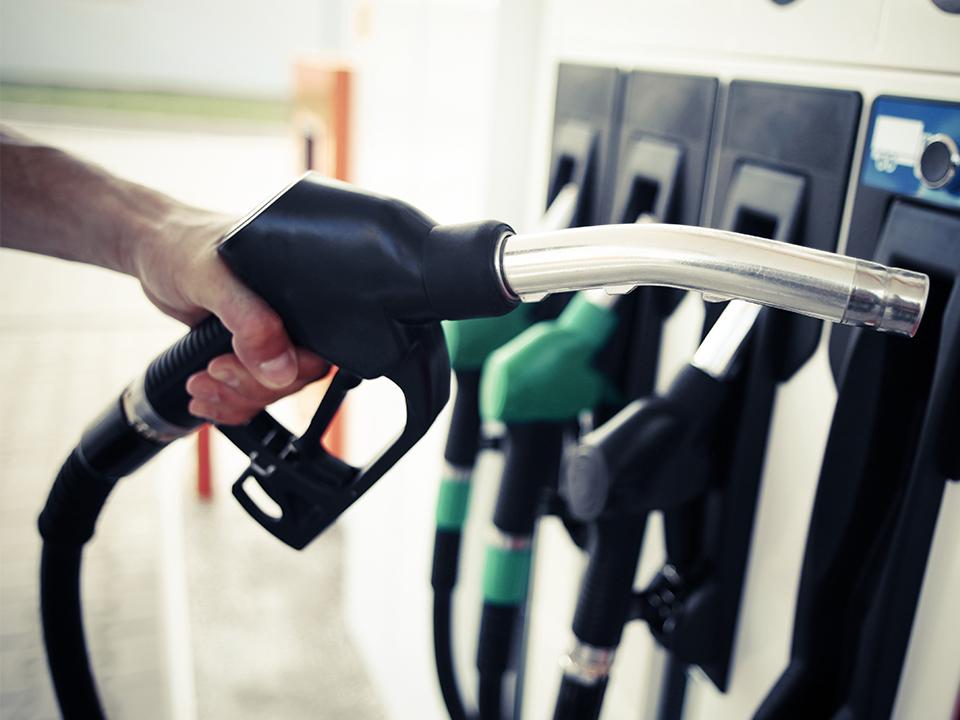
Groups and opposition lawmakers have called for scrapping the Oil Deregulation Law amid rising pump prices amid tensions in the Middle East.
Senate President Vicente Sotto III has filed Senate Bill No. 1984 seeking the total repeal of the oil deregulation law.
“It is high time to give back to the state the authority to manage fuel prices," Sotto said in his explanatory note.
"Now that our petroleum prices are directly impacted by the geopolitical tension in the Middle East, transparency, scrutiny, and uniformity in pricing are needed more than ever,” he added.
What is the Oil Deregulation Law, and how does it affect fuel prices in the country?
Republic Act No. 8479, or the Downstream Oil Industry Deregulation Act of 1998, removed the government’s power to control fuel prices to help oil companies become more competitive with their supply and pricing of petroleum products.
“It shall be the policy of the State to liberalize and deregulate the downstream oil industry in order to ensure a truly competitive market under a regime of fair prices, adequate and continuous supply of environmentally-clean and high-quality petroleum products,” the law said.
“To this end, the State shall promote and encourage the entry of new participants in the downstream oil industry, and introduce adequate measures to ensure the attainment of these goals,” it added.
According to the Philippine Institute for Development Studies (PIDS), the Energy Regulatory Board fixed petroleum prices based on the exchange rate and the cost of imported crude, before the deregulation law was enacted.
Before RA 8479, the Oil Price Stabilization Fund (OPSF)–a government-managed budget allocation–automatically absorbed any price change incurred by the fuel companies in importing crude oil, which was not reflected in the selling price.
Local oil prices did not reflect changes in the global prices of oil and the foreign exchange rate in real time. Hence, businesses and consumers had a hard time adjusting to huge oil price changes in the global market.
Because price changes were subject to mandatory public hearings, oil companies faced lags in recouping their profit margins.
Under the regulated environment, the entry of new players in the oil industry was discouraged, and competition was minimized.
The deregulation of the country’s oil industry was done in two stages: partial and full deregulation.
In the partial deregulation stage, the automatic pricing mechanism was implemented. The downstream oil industry was later fully deregulated through Executive Order No. 471, and the OPSF was abolished.
There were four major reasons why the oil industry was deregulated:
- To stabilize and provide reasonable prices
- To encourage competition
- To encourage investments, and
- To remove cross-product subsidies
The increase in the price per barrel of crude oil when the Middle East conflict erupted again put the spotlight on the deregulation law.
Energy Secretary Sharon Garin said the government had no power to control fuel prices because of RA 8479.
“We are constrained by the law and the deregulation that we do not have the powers to cap or to control the prices unless maybe they give us the authority or an amendment of the law, or emergency powers. As of now, speaking as DOE, DOE does not have the power to do so,” she said in a virtual briefing.
She supported moves to amend the law to give the government more authority to address price shocks.
The Department of Energy (DOE) earlier announced the following fuel price adjustments for March 17 to March 23:
- Diesel: ₱20.40 to ₱23.90 per liter
- Gasoline: ₱12.90 to ₱16.60 per liter
- Kerosene: ₱6.90 to ₱8.90 per liter
With these adjustments, DOE Secretary Sharon Garin said diesel prices may reach ₱114.90 per liter, while gasoline could climb to as high as ₱91.60 per liter.
Opposition lawmakers who have long advocated for scrapping the fuel excise tax said that the ongoing war between the joint forces of the US and Israel, and Iran makes the scrapping of the oil deregulation law a necessity.
"This price shock, the biggest since the Oil Deregulation Law took effect in 1998, exposes the brutal reality that deregulation did not create competition; it consolidated corporate power, enabled coordinated price increases, and left the public defenseless," the House Makabayan bloc said.
The DOE earlier issued a show-cause order against 54 gasoline stations for allegedly increasing their prices amid the tensions in the Middle East.
However, the DOE admitted that the oil deregulation law does not give the department the authority to impose a cap on oil prices.
“We are constrained by the law and the deregulation that we do not have the powers to cap or to control the prices unless maybe they give us the authority or an amendment of the law, or emergency powers. As of now, speaking as DOE, DOE does not have the power to do so,” Garin said.
Under RA 8479, the DOE’s power is limited to “[monitoring] the refining and manufacturing processes of local petroleum products to ensure that clean and safe (environment and worker-benign) technologies are applied.”
“The DOE shall monitor and publish daily international crude oil prices, as well as follow the movements of domestic oil prices," the law said.
"It shall likewise monitor the quality of petroleum products and stop the operation of businesses involved in the sale of petroleum products which do not comply with the national standards of quality that are aligned with the national standards/protocols of quality,” it added.
Meanwhile, Malacañang earlier said that it was up to Congress to decide whether there is a need to repeal the oil deregulation law amid the spike in fuel prices. –NB, GMA Integrated News

