

 GMA Brandtalk
 Tracking
 Archives

Ordinary Filipinos should not bear the brunt of rising oil prices —experts
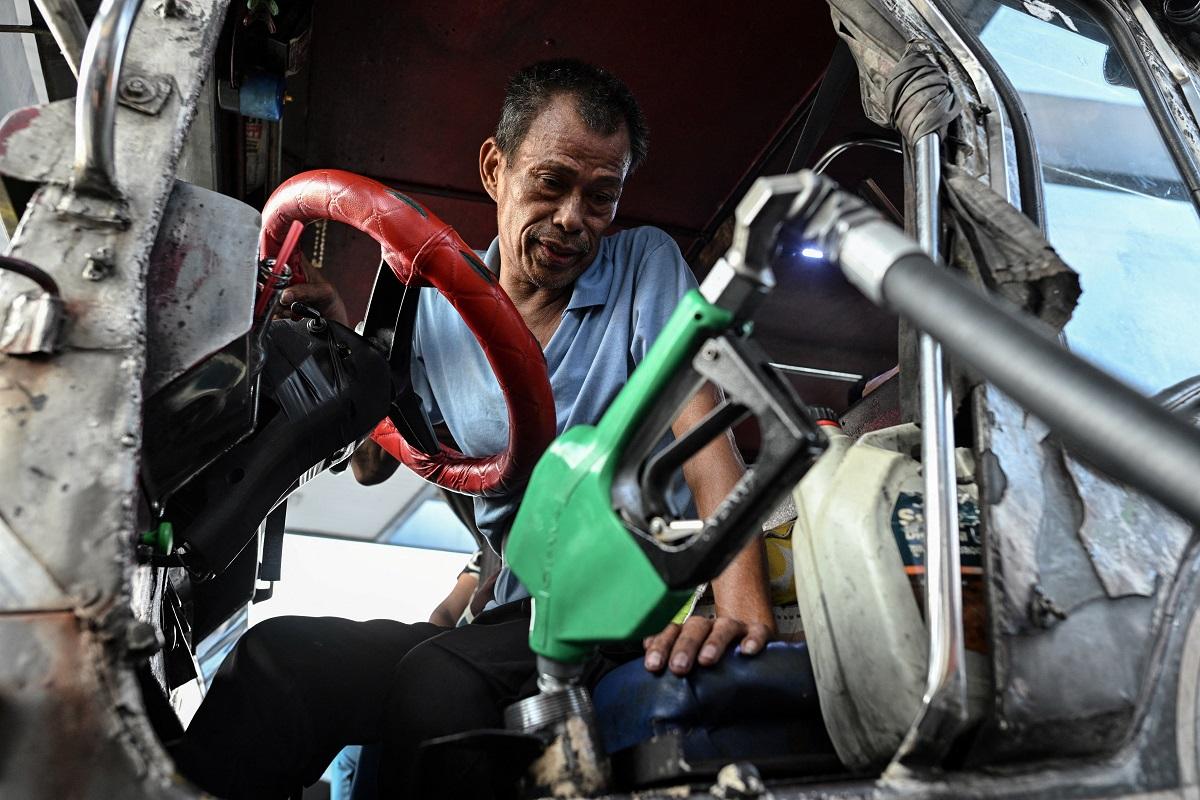
The administration must ensure that ordinary Filipinos do not end up bearing the brunt of the economic burden from the oil crisis, experts said Thursday.
“There's no way around it. We do need substantial subsidies for fuel-intensive sectors but also substantial subsidies for the poorest Filipinos,” IBON Foundation executive director Sonny Africa said at the Pandesal Forum.
He added that the administration is downplaying the issue, pointing to President Ferdinand "Bongbong" Marcos Jr.'s insistence that everything is “normal.”
Center for People Empowerment in Governance (CenPEG) chairperson Professor Roland Simbulan, for his part, said that any interventions made by the government going forward must be anchored on the welfare of the most vulnerable sectors of the society.
“Dito sa nangyayaring kilos at galaw ng Philippine government, makikita natin na kailangan talagang baguhin din itong character ng ating gobyerno sapagkat habang itong gobyernong ito ay kontrolado ng mayayaman, yung kanilang simpatya at empathy ay para sa mayayaman at di sa mahihirap… Sa mga krisis katulad nito, pinapasa nila ang hirap at sakripisyo sa mga mahihirap di sa mga kapwa mayaman nila,” he said.
(With the movement of the Philippine government, we can see that we really need to change the character of our government because while it is controlled by the rich, their sympathies and empathy is for the rich and not the poor… In crises like this, they will pass the burdens to the poor and not their fellow rich.)
The Banko Sentral ng Pilipinas (BSP) earlier said it was closely monitoring the impact of the global price shock on the Philippine economy.
Inflation is to be expected on almost all goods as oil prices continue to climb and the peso's value begins to decrease.
As of Wednesday, global prices of crude oil hovered at USD$100 per liter but Iran authorities warned of the possibility of prices soaring up to at least USD$200 per barrel as the war between US, Israel, and Iran continues.
Africa said any actions to be implemented by oil manufacturers and companies in the country would help in some way, but that cumulative actions must help the poor.
“There’s no single measure that will help pero [but] putting it altogether, they might help. The main warning for us is that not to think there’s a single measure that will help. We need a lot of measures, but we have to be very careful… Bottom line, whatever measures we take has to be with the bias towards the more than 18 million vulnerable [Filipino] families,” he said.
Normalize PH, Iran relations
Simbulan said that the Philippines and Iran had shared 60 years of trade and diplomacy until 2011.
“Before 2011, we have had 60 years of Philippine-Iranian relations where we were even directly buying oil from Iran… Yung relations natin na yun, it was not political, it was not ideological. It was purely practical. Purely trade,” he shared.
He said the relationship only stopped when the country joined the United States in placing sanctions against Iran.
Simbulan said that it was a good signal that the Iranian ambassador has reached out to normalize and fix ties with the country.
“Kung gusto nating makinabang talaga sa oil nila, wag tayong sunod-sunuran sa US na porket mage-embargo sila [at] magsa-sanction ay sasama tayo. Sasabit tayo diyan. It will be a practical move if we will normalize these relations that we had with Iran before,” he said.
(If we want to benefit from their oil, we should not follow the US blindly [that] just because they decided to embargo [and] sanction, we are going to join in. We will be implicated there. It will be a practical move if we will normalize these relations that we had with Iran before.)
Repeal VAT, other taxes on fuel
At the forum, Bagong Alyansang Makabayan (BAYAN) chairperson Teddy Casiño said that the current actions of the Marcos administration had placed heavy burdens on middle- and lower-class Filipinos.
Marcos had recently pulled back the move to increase fares and said he was still considering the use of emergency powers to suspend fuel excise taxes.
He also said that public utility drivers will get more aid, after his decision not to increase fares.
“Yung hindi pagbaba ng excise tax and also value-added tax shows that these are policy options that favor the rich and produce suffering for the poor. Ganoon din sa pamasahe… Choices benefit the big players, the rich, and disenfranchise the poor. At the end of the day, it is a reflection kung gaano ka anti-poor ang gobyerno ni Marcos. Sa panahon ng krisis, pinapahirapan niya ang mahihirap at ang nakakalusot ay mayayaman,” he said.
(Not lowering excise tax and also value-added tax shows that these are policy options that favor the rich and produce suffering for the poor. It is the same with the fares… Choices benefit the big players, the rich, and disenfranchise the poor. At the end of the day, it is a reflection of how the Marcos administration is so anti-poor. In times of crisis, he is placing burden on the poor and the rich gets off free.)
Casiño said that one of the quickest ways to resolve or control the oil hike issue was to remove value-added tax and other fees on oil.
He proposed three measures to combat the loss of revenue for the government: utilizing the pork barrel, imposing wealth tax on rich Filipino families, or reinstating corporate income taxes. — BM, GMA Integrated News

