

 GMA Brandtalk
 Tracking
 Archives

LTFRB considers service contracting amid rising fuel prices for public transport
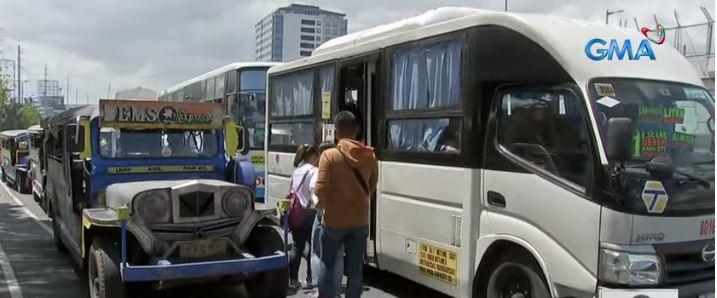
The Land Transportation Franchising and Regulatory Board (LTFRB) is now looking into two types of service contracting, or the government's lease of public transport drivers and their operators, to help public utility vehicle drivers and commuters amid the massive fuel price hikes.
According to Bernadette Reyes’ report in “24 Oras” on Thursday, the transport strike conducted by groups amid the oil crisis left many commuters stranded on the road.
“Malaki na ang problema ng transport sector dahil sa taas ng presyo ng krudo. Kusa na po nagbabawas ng biyahe ang ating mga pampublikong sasakyan. Tapos, dadagdagan mo pa ng tigil-pasada. It does not help anybody,” LTFRB chairperson Vigor Mendoza II said.
(The transport sector is facing a massive problem due to the high price of fuel. Our public utility vehicles are already voluntarily reducing their trips. And then you add a transport strike on top of that. It does not help anybody.)
In Commonwealth Avenue near PHILCOA in Quezon City, many commuters had to wait for hours before they could find a ride. In Parañaque City, some had to spend extra money for UV Express or motorcycle taxis due to the lack of jeepneys available.
The LTFRB said it has reached out to bus companies to add more trips. Aside from that, the agency is also considering two types of service contracting.
The first model provides free rides. It would also benefit the drivers as they would not shoulder the refueling of the vehicle. An example of this is the Quezon City government’s QCity Bus wherein drivers are assured of salary regardless of the number of passengers they can accommodate.
“Mas okay kasi sigurado yung kita namin. Kahit walang pasahero, may kita kami,” said QCity Bus driver Richard Tabay.
(This is better because our income is guaranteed. Even if there are no passengers, we still earn.)
The Pasig City government, on the other hand, procured electric vehicles to provide free rides to commuters.
But the LTFRB said that providing free rides also has its downside.
“‘Yung 100% libre. Pero siyempre kung meron tayong pondo at 100% libre ‘yung number of days kung kailan mangyayari ito baka umigsi masyado depende sa pondo,” said Mendoza.
(Regarding the 100% free [rides]—of course, even if we have the funds, if it’s 100% free, the number of days we can sustain it might become too short, depending on the budget.)
Meanwhile, the second model that the LTFRB is looking at is net service contracting. Under this model, commuters would have to pay the fare but at a discounted rate.
The LTFRB already requested a budget to fund the service contracting and additional funding for the fuel subsidy.
“Sisingil pa rin ang ating mga driver at operator at a discounted price tapos dadagdagan ng ating gobyerno para ‘di naman sila malugi,” sid Mendoza.
(Our drivers and operators will still collect fares at a discounted price, and then the government will add to that so they won't lose money.)
Among the routes being considered for the implementation of the net service contracting include Commonwealth, Ortigas, secondary roads, as well as those in provinces.
Some PUV drivers earlier said that service contracting is a better option than receiving cash assistance.
“Ang gobyerno po ang nagbabayad sa serbisyo ng ating mga public transport operators and drivers,” said Mendoza.
(The government pays for the services of our public transport operators and drivers.)
“Hindi na kailangan mag-problema man tungkol sa presyo ng krudo. ‘Yung ating commuters naman ‘di kailangan magkaroon ng problema dahil libre itong sakay na ito so makakatipid po sila,” the LTFRB chief added.
(They no longer need to worry about the price of fuel. Our commuters, on the other hand, won't have to face any problems because this ride is free, so they will be able to save money.) –Vince Angelo Ferreras/NB, GMA Integrated News

