

 GMA Brandtalk
 Tracking
 Archives

Peso sinks further vs. the dollar to new all-time low P60.55:$1
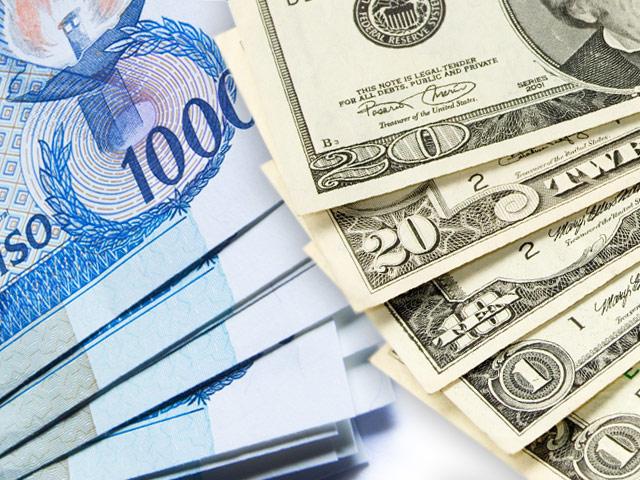
The Philippine peso depreciated even further against the US dollar on Friday close at another all-time low, its second this week, as dollar demand continued to be buoyed by the ongoing conflict in the Middle East.
The local currency shed 15.2 centavos to close at P60.55:$1 from Thursday’s finish of P60.23:$1. This is the weakest performance of the peso to date, surpassing the previous record low of P60.3:$1 hit on Monday, March 23, 2026.
“The peso weakened to 60.55 as markets begin to price in oil-related risks, reinforcing near-term dollar demand,” Reyes Tacandong & Co. senior adviser Jonathan Ravelas said in a mobile message.
“Trading remains constraint-driven, with flows reflecting caution rather than panic,” he added.
This comes as the dollar, used to buy petroleum products in the world market, has continued to see a boost in demand amid the US-Israeli war on Iran.
“The US dollar/peso exchange rate was again higher for the third straight day amid some market doubts on ceasefire on the war on Iran amid diverging/conflicting conditions/demands set by the US and Iran,” Rizal Commercial Banking Corp. (RCBC) chief economist Michael Ricafort said in a separate message.
US President Donald Trump said he would pause attacks on Iran’s energy facilities for 10 days at Tehran’s request, adding that negotiations were “going very well.” However, an Iranian official dismissed a U.S. proposal to end the conflict as “one-sided and unfair,” Reuters reported.
“Peso depreciation due to rising oil prices, which is fueling inflation expectations; and policy rate being held unchanged at BSP’s off-cycle meeting, signalling a dovish stance in terms of being vigilant against inflation risks and recognizing growth headwinds from the Middle East conflict,” Security Bank chief economist Angelo Taningco said separately.
The Bangko Sentral ng Pilipinas (BSP) on Thursday said it now expects inflation to average 5.1% this year, faster than the target range of 2.0% to 4.0%, given global uncertainties such as the impact of the armed conflict in the Middle East.
BSP governor Eli Remolona Jr. also said the foreign exchange market has not merited heavy intervention so far, as he maintained that the central bank does not target a specific level but instead moves when big swings are made.
“At the same time, we understand that the weakness of the peso is not necessarily a bad thing. The peso, where it’s going, seems to help with our current account deficit and our exports. It’s not necessarily a bad thing,” he said.
Philippine equities also ended on the red on Friday, with the local stock barometer PSEi down by 11.37 points or 0.19% to 5,972.83. The broader All Shares index, meanwhile, gained 1.75 points or 0.05% to 3,335.86.
More than 2.465 billion shares, valued at P8.945 billion, changed hands. Advancers led decliners, 92 to 91, while 54 issues were unchanged.
“The PSEi ended the week relatively flat as persistent geopolitical tensions and local currency depreciation continued to weigh on investor sentiment,” Regina Capital Development Corp. head of sales Luis Limlingan said in a mobile message.
“Risk appetite remained subdued, leading to selective buying and generally cautious activity. Market participants largely stayed on the sidelines, awaiting clearer signals on global developments,” he added.—LDF, GMA Integrated News

