

 GMA Brandtalk
 Tracking
 Archives

DOE: PH fuel supply good for 51 days, more imports due in April
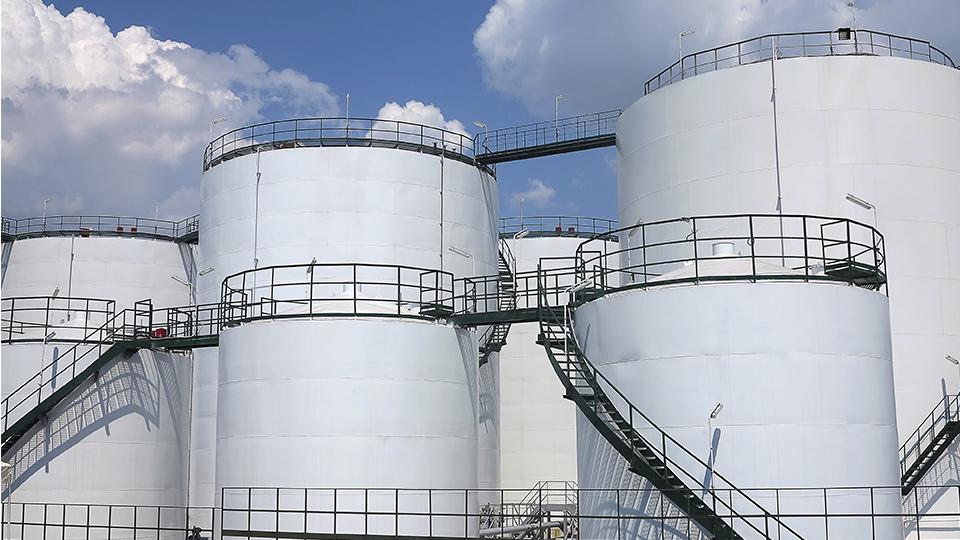
The Department of Energy (DOE) on Monday said the Philippines now has a supply of petroleum products good for 50.94 days, with the country set to receive more in the coming months amid the growing conflict between the United States and Iran in the Middle East.
In a virtual briefing on Monday evening, DOE secretary Sharon Garin said the country now has a total inventory of 75.052 million liters, which will last six days longer than the previously reported 45 days.
The country now has 22.326 million liters (59.78 days’ worth) of gasoline; 32.516 million liters (46.93 days’ worth) of diesel; 142,140 liters (107.88 days’ worth) of kerosene; 6.320 million liters (62.69 days’ worth) of jet fuel; 2.472 million liters (57.27 days’ worth) of fuel oil; and 10.274 million liters (34.02 days’ worth) of liquefied petroleum gas (LPG).
Prior to the ongoing Middle East conflict, Garin said the DOE required firms to store 15 to 30 days’ worth of inventory, with the country able to replenish supplies every 10 days.
“Even though we know that we have enough time to order for additional supply, we still would like to remind the public that we have to be very prudent,” Garin told reporters.
She added that the country has already ordered and confirmed 1.042 million barrels or 165.7 million liters of diesel supplies, of which 142,000 barrels arrived from Japan starting last Thursday, March 26.
The Philippines is set to receive 300,000 barrels from Malaysia and Singapore in early April; another 300,000 barrels from North Asia or India by mid-April; and another 300,000 barrels from Oman (through Singapore) by end-April.
“What this tells us is clear, that we have supply. What we have consumed last week was replenished and even increased,” Garin said.
The procurement was done through the Philippine National Oil Co.-Exploration Corp. (PNOC-EC), with the supplies set to be released to local gas stations.
Earlier on Monday, Petron Corp. also confirmed the procurement of 2.48 million barrels of crude oil from Russia to augment its inventory until June.
Garin explained that importing supplies from Russia is not expected to impact trading relations, especially with the United States, which has given countries a window to secure supplies amid the war.
“Will this affect our relationship with the other countries? I do believe that it won’t kasi nga (because) with clearance din from all parties involved,” she said.
“I think the primary concern of our country now is to make sure that we have enough supply… The priority is to protect our country, but so far naman there hasn’t been any complaints or objections that we have received from any other country,” Garin added.
This came after President Ferdinand “Bongbong” Marcos Jr. last week declared a state of national energy emergency and ordered the adoption of a Unified Package for Livelihoods, Industry, Food, and Transport (UPLIFT), to ensure energy supply stability, and support key sectors such as transport, agriculture, and micro, small, and medium enterprises (MSMEs).
Malacañang, citing Garin, has maintained that there is no crisis in oil supply but rather a disruption in prices due to developments in the Middle East.
Global prices continue to increase due to the escalating conflict in the Middle East, as Iran closed off the Strait of Hormuz, a key global shipping corridor that carries around a fifth of the world’s oil.
Local fuel retailers are set to implement pump price hikes anew starting Tuesday, March 31, marking the 12th straight week of increases for gasoline, and the 14th for both diesel and kerosene.
In terms of power, Garin said some 1,471 megawatts of renewable energy are expected to enter the grid by April 2026. This involves 22 projects: 12 solar, six hydroelectric, two biomass, one wind, and 120 megawatts of renewable energy storage systems.
Over the weekend, Iran said it was ready to respond should the United States deploy its troops after it accused Washington of planning to send in its ground forces while pushing for negotiations to end the conflict.
US President Donald Trump for his part, in an interview with Financial Times, said he wants to “take the oil in Iran” and hinted at the possibility of taking over the export hub of Kharg Island, as reported by Reuters. — JMA, GMA Integrated News

