

 GMA Brandtalk
 Tracking
 Archives

Record-low peso due to Middle East tensions — Palace
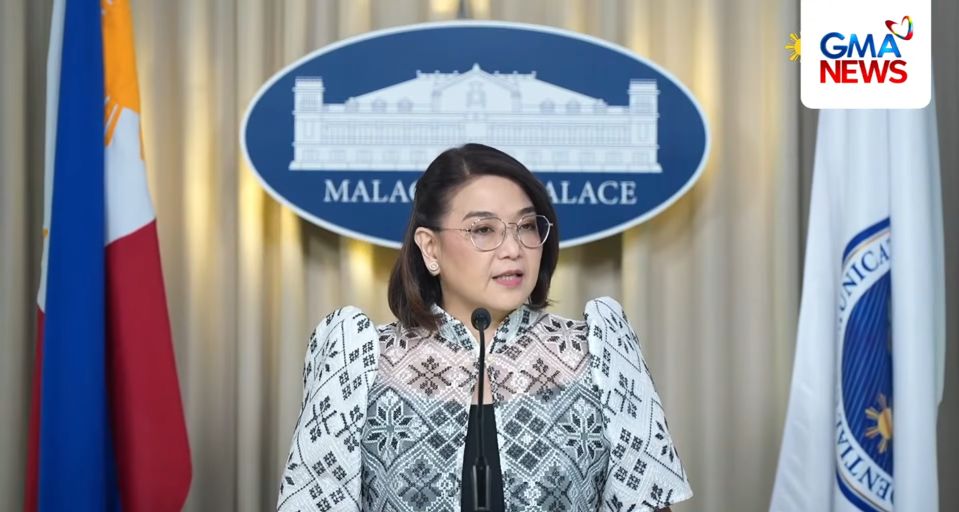
Malacañang on Tuesday attributed the continued decline of the Philippine peso against the US dollar to the ongoing conflict in the Middle East.
At a press briefing, Palace Press Officer Undersecretary Atty. Claire Castro said the weakening of the peso was an effect of geopolitical tensions in the Middle East, stressing that President Ferdinand Marcos Jr. does not want the conflict to escalate.
“Hindi po natin nais na ganito. Hindi po ninais ng Pangulo na magkaroon ng gulo sa Middle East. Ito po ay talagang nagiging epekto, at ang paghina po ng peso kontra dolyar ay bunsod na rin ng geopolitical tension na nangyayari po sa Middle East,” Castro said.
(We do not want this to happen. The President did not wish for conflict in the Middle East. This is truly an effect, and the weakening of the peso against the dollar is also due to the geopolitical tensions occurring in the Middle East.)
“So, talaga pong ito ang maaaring kahihinatnan hanggang hindi po napipigil ang tensyon o ang sigalot sa Middle East,” she added.
(So, this weakening of the peso could really be the outcome as long as the tension or conflict in the Middle East is not contained.)
The peso shed 14 centavos to close at P60.69:$1 from last Friday’s finish of P60.55:$1, marking a new record low.
According to Bangko Sentral ng Pilipinas (BSP) Governor Eli Remolona Jr., the foreign exchange market has not warranted heavy intervention so far, as the central bank does not target a specific exchange rate level but acts in response to sharp market swings.
Local equities also closed lower on Monday, with the Philippine Stock Exchange index (PSEi) down 103.34 points, or 1.73%, to 5,869.49.
The broader All Shares index fell by 40.01 points, or 1.20%, to 3,295.85.—MCG, GMA News

