

 GMA Brandtalk
 Tracking
 Archives

Inflation accelerates to 4.1% in March amid fuel price shock
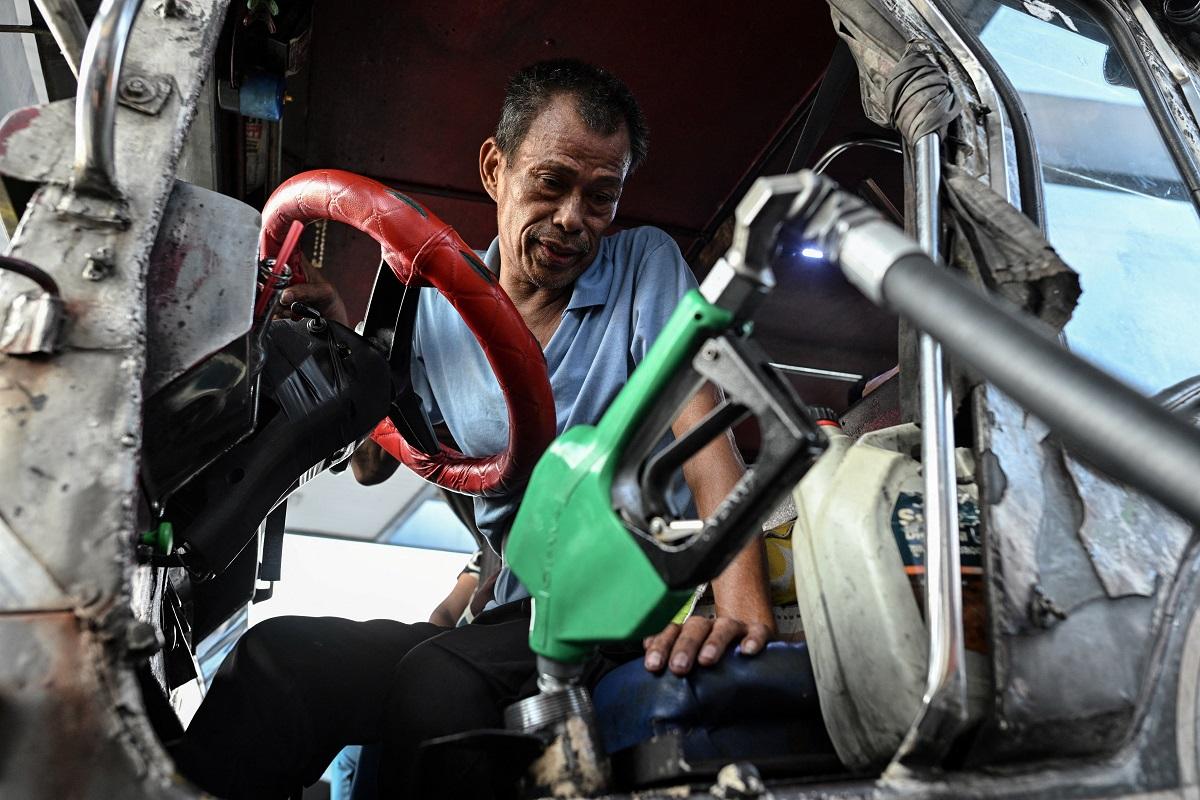
Inflation rate sped up in March to its fastest in 20 months, driven by the series of hikes in the retail prices of petroleum products due to the ongoing war in the Middle East, the Philippine Statistics Authority (PSA) reported on Tuesday.
At a press briefing, National Statistician and PSA chief Claire Dennis Mapa said inflation — the rate of increase in the prices of goods and services — accelerated to 4.1% last month from 2.4% in February 2026 and 1.8% in March 2025.
This was the quickest inflation rate since the 4.4% in July 2024.
Year-to-date inflation rate stood at 2.8%, still within the government’s 2% to 4% ceiling.
Mapa said the main culprit from the higher inflation print was Transport index which saw an inflation rate of 9.9%, a reversal from 0.3% decline month-on-month, and a 54.8% share to the overall uptrend.
“Ang nag-ambag sa mas mataas na antas ng inflation ng Transport nitong Marso 2026 ay ang pagtaas ng presyo mula sa pagbaba ng presyo noong Pebrero 2026 ng mga gasolina at diesel,” he said.
(The main contributor to the higher Transport inflation in March 2026 was the increase in the prices of gasoline and diesel from a decline seen in February 2026.)
In particular, inflation for gasoline soared to 27.3% last month from -5.7% in February while diesel’s inflation rose to 59.5% from -1.3% a month prior.
The global oil price shock amid the continuing US-Israel versus Iran conflict has caused petroleum pump prices in the country to jack up to historic highs in March.
Also contributing to inflation acceleration in March was the Food and Non-Alcoholic Beverages index which climbed to 3% from 1.8% in February with an overall share of 26.9% to the uptrend, driven by cereals (such as rice) growing 3.7% from -1.3% in the prior month.
The inflation for Housing, Water, Gas and Other Fuels index likewise increased to 4.5% from 3.5% month-on-month with a share of 12.7% on the back of increments across electricity (9.2% from 6.7%), LPG (2.2% from -2.2%), and rentals (3.2% from 3%).
Inflation felt by the bottom 30% income households clocked in at 4.2% from 2.5% in February, bringing its first quarter average to 2.8%.
The inflation for the bottom 30% income class was brought about by the 3.9% growth in Food and Non-Alcoholic Beverages as well as Transport which posted a 7.2% from a contraction of 0.6% in the previous month.
Coordinated measures
In a separate statement, the Department of Economy, Planning, and Development (DEPDev) said the government has rolled out coordinated measures to address the uptick of inflation and mitigate the impact of the ongoing conflict in the Middle East on households and key sectors of the economy.
“The government stands ready to address emerging inflation pressures through strategic, well-targeted, and time-bound interventions, particularly in fuel, transport, and food,” said DEPDev Secretary Arsenio Balisacan.
Balisacan said that the issuance and operationalization of Executive Order No. 110, or the Unified Package for Livelihoods, Industry, Food and Transport or UPLIFT Committee helps the government identify these strategic measures.
To stabilize domestic fuel supply and ease transport costs, the government has already activated the emergency fuel procurement program, with 165.6 million liters of diesel secured for delivery through April, according to the DEPDev.
Toll rebates for public utility vehicles and cargo trucks are also being rolled out on major expressways.
To protect consumers and ensure adequate food supply, anti-hoarding guidelines have been issued to prevent artificial fuel shortages and maintain orderly distribution, the socioeconomic planning agency said.
Moreover, the P20 rice program has been expanded nationwide, while logistics support has been deployed to transport vegetables from Benguet to Metro Manila.
The DEPDev said the reduced Ro-Ro terminal fees for vehicles carrying raw agricultural products will also help keep the movement of food items efficient and affordable.
To help cushion the impact of higher fuel costs, the agency said the government is likewise providing targeted assistance to vulnerable sectors such as public utility vehicle drivers, farmers, and fisherfolk through service contracting, cash assistance, and fuel subsidies.
“Our immediate priority is to ensure the safety of Filipinos abroad and to deploy timely and tangible solutions by providing critical support for the transport sector, commuters and industries, while simultaneously diversifying the energy mix,” said Balisacan.
“The government is firmly committed to ensuring the continuous delivery of services, even as we pursue decisive measures to enhance the resilience of our economy and institutions, carefully balancing short-term relief measures and longer-term considerations toward enabling the economy to recover high growth quickly,” said the country’s chief economist. — KG/RSJ, GMA News

