

 GMA Brandtalk
 Tracking
 Archives

EXPLAINER: What is GDP and why should you care about it?
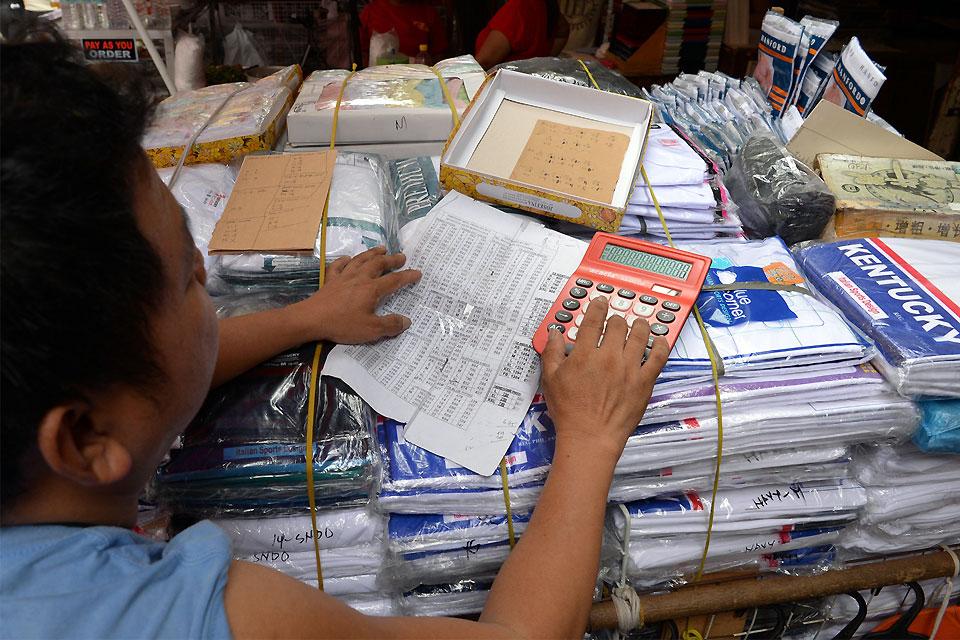
After every quarter of a year, the Philippine Statistics Authority (PSA) releases a report about the country's overall economic health as measured by GDP or gross domestic product.
GDP is the amount of all economic activities produced in a country during a specific period.
Philippine Institute of Development Studies (PIDS) senior research fellow John Paulo Rivera candidly defined GDP as "Ginawa Dito sa Pilipinas (Made Here in the Philippines)," noting that it is "basically the total value of goods and services produced in the country within a given."
"It is one of the main ways economists measure how fast or slow the economy is growing. It is computed by adding together what households spend, what businesses invest, government spending, and exports minus imports. In simple terms, it reflects the overall economic activity happening in the country," Rivera said.
Rizal Commercial Banking Corp. chief economist Michael Ricafort said GDP can be computed by "industrial origin" and "expenditure share."
"First GDP computation by industrial origin: Services + Industry + Agriculture. Second GDP computation by expenditure share: Consumer Spending + Investments + Government Spending + Exports - Imports," Ricafort said.
Simply put, the RCBC economist said GDP or economic growth is reported as a year-on-year growth to represent the increase in production, incomes, and livelihood within the country.
Likewise, UnionBank chief economist Carlo Asuncion said GDP measures the size and strength of the economy as the "overall income" of all citizens in a country.
Why should you care?
"Bakit dapat itong pakialaman ng ordinaryong Pilipino? Dahil may epekto ito sa araw‑araw na buhay," Asuncion said.
(Why should ordinary Filipinos care about it? Because it has an effect on our everyday lives.)
"Ordinary Filipinos should care about GDP because it affects jobs, incomes, businesses, and opportunities. When GDP is growing strongly, companies are more likely to hire, invest, and expand. When growth slows, businesses become more cautious, job creation weakens, and household incomes can come under pressure," Rivera said.
"But GDP is not just about big numbers. What matters is whether growth is actually being felt by people through better jobs, stable prices, and improved quality of life," he said.
Asuncion said a strong GDP means more jobs and opportunities, a more balanced inflation, and healthier fiscal space for government projects.
"Ang GDP ay report card ng ekonomiya. Hindi nito sinasabi ang lahat, pero malinaw nitong ipinapakita kung umuusad o humihina ang bansa—at kung paano ito posibleng maramdaman sa trabaho, presyo, at kabuhayan ng Pilipino," Asuncion said.
The Philippine GDP grew 2.8% in the first quarter of 2026, slower than the 3% growth seen in the last quarter of 2025. It was weighed by the dent on consumer and investor sentiment caused by the flood control corruption scandal, as well as the inflationary impact of the global fuel price shocks resulting from the Middle East war.
This is the economy's slowest footing since the 3.8% contraction during the COVID-19 pandemic lockdown in the first quarter of 2021. — VDV, GMA News

