

 GMA Brandtalk
 Tracking
 Archives

Shares rise, oil falls as markets weigh shaky US-Iran truce
LONDON — Global shares advanced and oil prices eased on Wednesday as markets looked for signs of whether a shaky truce between the United States and Iran will be extended.
European shares gained 0.5%, driven by auto and chemical stocks and trading close to their all-time high notched before the Iran war started. Asian markets earlier gained, with Japanese and South Korean stocks hitting record highs, fueled by optimism over AI. MSCI's All-Country World Index also added 0.2%.
Wall Street was also set for gains, with US stock futures up 0.3%. The S&P 500 and Nasdaq closed at record highs on Tuesday, driven by renewed confidence around AI.
Iran said on Tuesday US strikes near the contested Strait of Hormuz represented a "gross violation" of a ceasefire in place for nearly seven weeks. The US said its attacks were defensive in nature.
"A deal might not yet be as imminent as hoped over the weekend," Deutsche Bank analysts wrote. "However, it seems talks remain on track despite the targeted US strikes."
Overall, sentiment remained vulnerable as talks continued, aiming to reach a lasting halt to the three-month-long conflict that has rocked energy markets.
$1 trillion club
Earlier, Asia-Pacific shares outside Japan rose for a fifth straight day to an all-time high, adding 1.1%.
South Korea's KOSPI also hit a record high, closing up 2.3% as chipmaker SK Hynix surged beyond $1 trillion in market value for the first time.
Domestic rival Samsung surpassed the $1 trillion mark for the first time in early May, while US-listed Micron did so on Tuesday.
Japan's Nikkei closed flat after rising as much as 2.2% to hit a record intraday high of 66,428.81.
The safe-haven dollar held onto gains from the previous session.
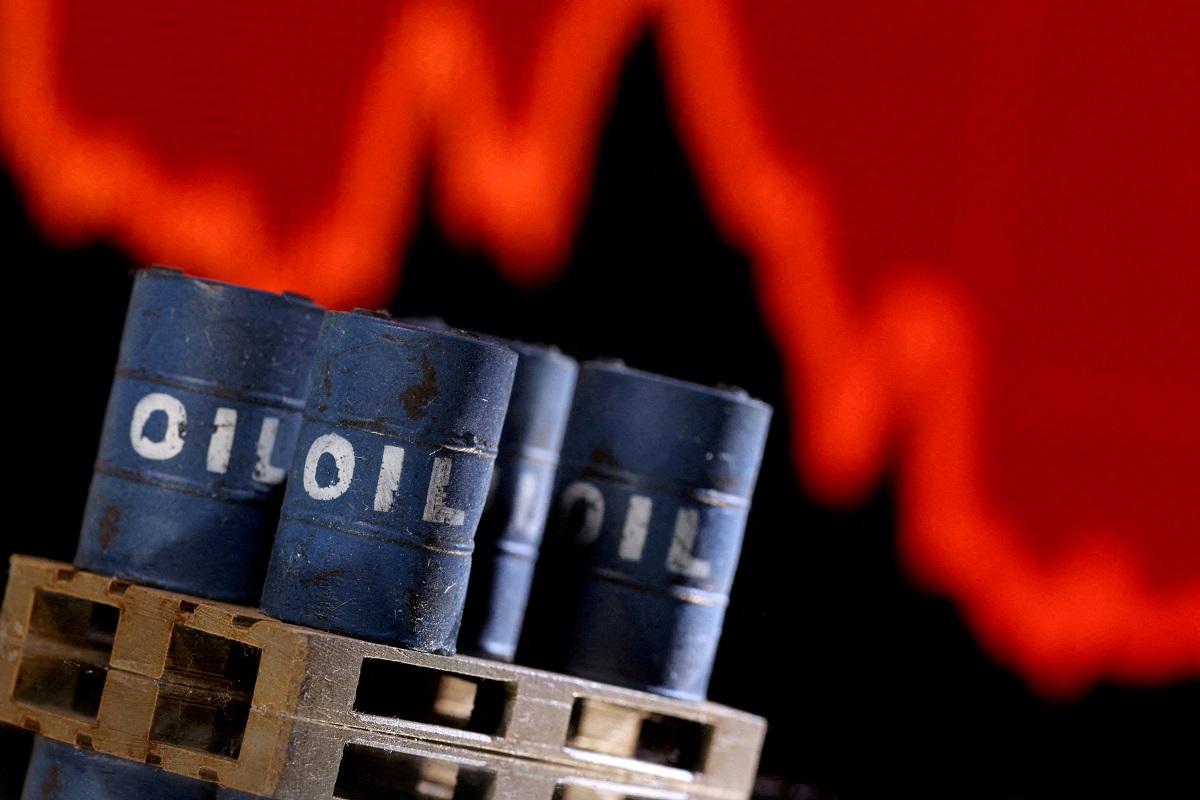
Meanwhile, US crude fell 3.8% to $90.08 a barrel, and Brent lost 3.1% to $96.48 per barrel, after a nearly 4% surge in the prior session, sparked by the new US strikes.
The dollar index, which measures the greenback against a basket of currencies, was little changed at 99.07. It added 0.15% on Tuesday.
The yen hovered at 159.38 per dollar, near its May low that spurred Japanese currency intervention.
Bank of Japan Governor Kazuo Ueda struck a hawkish posture on Wednesday, saying the war-driven oil shock could become persistent in an environment of high-inflation expectations and rising wages. European Central Bank board member Isabel Schnabel, a day earlier, advocated for an interest rate hike in June even if a US-Iran peace deal is reached.
The euro rose 0.1% to $1.39.
New Zealand's dollar jumped 0.8% against the dollar to $0.5880 after the central bank held interest rates steady but said rates would need to move up sooner.
"We have seen a previously dovish central bank, faced with an economy operating with a negative output gap, prepared to hike rates sooner and more aggressively than previously," ING analysts noted.
In bond markets, the yield on benchmark US 10-year notes fell 1.8 basis points to 4.473%, down for a third day to the lowest since May 14.
On a light day for economic data, markets were looking forward to Thursday's release of the Personal Consumption Expenditures (PCE) Index, the measure favored by the Federal Reserve for setting its 2% annual inflation target. — Reuters

