

 GMA Brandtalk
 Tracking
 Archives

Inflation cools down to 6.8% in May 2026
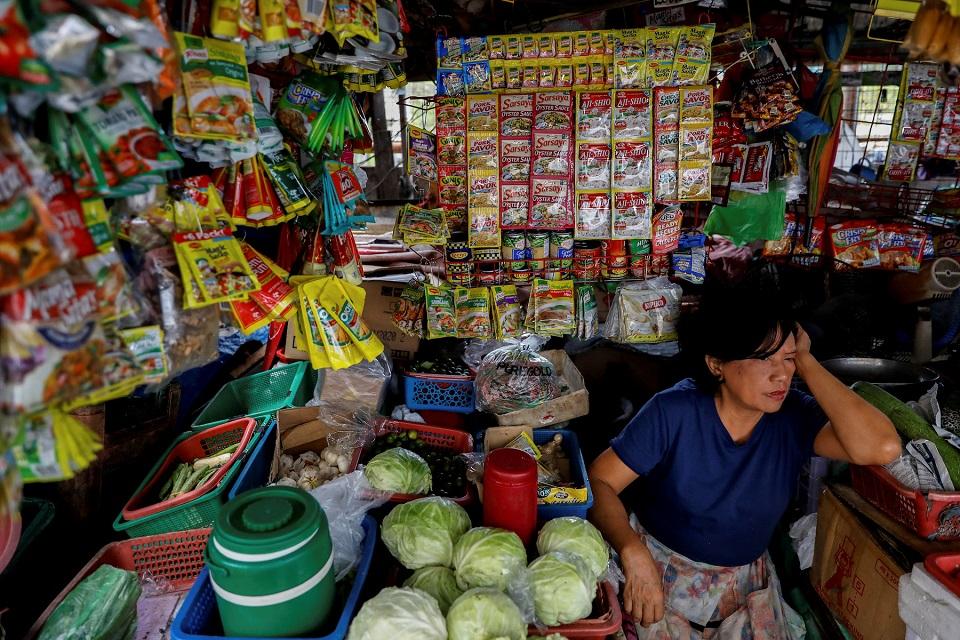
Philippine inflation rate eased in May 2026 on the back of slower increases in fuel and food costs seen during the period, the Philippine Statistics Authority (PSA) reported on Friday.
At a press briefing, National Statistician and PSA chief Claire Dennis Mapa said inflation — the rate of increase in the prices of goods and services — slowed down to 6.8% last month from 7.2% in April 2026.
May’s inflation print brought the year-to-date rate to 4.5%, surpassing the government’s comfortable ceiling of 2% to 4%.
“Ang pangunahing dahilan ng mas mababang antas ng inflation nitong Mayo 2026 kumpara noong Abril 2026 ay ang mas mabagal na pagtaas ng presyo ng Transport na may 16.2% inflation rate,” Mapa said.
(The main contributor to the decrease in the inflation rate in May 2026 compared to April 2026 was the slower increase in Transport prices which posted a 16.2% inflation rate.)
Good news
Malacañang welcomed the development, saying that it is “good news” for Filipino families.
“Senyales ito na unti-unti nang nagbubunga ang mga hakbang ng pamahalaan sa ilalim ng UPLIFT strategy,” Palace Press Officer Usec. Claire Castro said in a message to reporters.
(This is a sign that the government's interventions under the UPLIFT strategy are gradually bearing fruit.)
Castro, however, emphasized that the government will not let its guard down as there are still threats seen, such as the possible increase in oil prices and the effect of El Niño.
“Kaya tuloy-tuloy ang ating mga hakbang upang mapanatiling abot-kaya ang mga bilihin, maprotektahan ang budget ng bawat pamilya, at makalikha ng mas maraming trabaho para sa mga Pilipino,” she added.
(Our interventions will continue to keep goods affordable, protect the budget of every family, and create more jobs for Filipinos.)
The Transport index saw a rate of 21.4% in April.
Transport contributed 70.3% to the overall deceleration of the inflation rate in the country.
The slowdown in Transport inflation was due to slower price increases in diesel at 58.5% from 122.7% and gasoline at 51.6% from 59.6%.
Food and Non-Alcoholic beverages also contributed to the downtrend with a rate of 5.7% down from 6% in April; while Housing, Water, Electricity, Gas and Other Fuels index posed a slower rate of 7.8% from 8.2% month-on-month.
“While global oil prices remain elevated, Transport inflation has begun to slow down. The government’s timely and targeted interventions help mitigate the impact of external shocks on Filipino households. This underscores the importance of maintaining responsive and coordinated policies that protect consumers while safeguarding economic stability,” Department of Economy, Planning and Development Secretary Arsenio Balisacan said in a statement.
Balisacan said the government’s measures to stabilize transport costs—including fuel assistance for public utility vehicle operators and drivers, as well as efforts to ensure an adequate fuel supply—eased the impact of higher fuel prices on commuters, transport workers, and businesses.
Meanwhile, food inflation, which tracks the movement of prices in a “food basket” commonly purchased by households, also slowed to 5.8% in May from 6.1% in April, largely driven by slower price increases for vegetables at 6.2% from 10.4%, fish at 8.8% from 9.4%, and meat at -2.5% from -1.9% amid oversupply in key producing areas.
However, price pressures on several key staples persisted such as rice inflation which rose to 15.6% from 13.7% and corn inflation at 25.5% from 21.0%.
Inflation also increased for flour, bread, and other cereals, bakery, and pasta products at 3.5% from 3.0%, underscoring the need to sustain interventions to improve agricultural productivity and strengthen food security.
Balisacan said the government will continue to implement timely, efficient, and targeted measures to further stabilize prices and protect the purchasing power of Filipino households.
These measures include expanding support for the most vulnerable sectors, procuring fuel to ensure an adequate supply, exploring alternative fuel sources, and accelerating the country’s transition to renewable energy.
The government also aims to stabilize farmers’ earnings and strengthen their preparedness by reconvening the El Niño Task Force to implement cloud-seeding operations, deploy solar-powered irrigation systems, and roll out crop diversification programs, the country’s chief economist said.
“While the easing of inflation in May is encouraging, we recognize that price pressures remain elevated. Thus, well-targeted government interventions are critical to cushioning the impact of domestic shocks such as weather disturbances and external headwinds such as ongoing geopolitical tensions, while preserving business continuity. The government, through the UPLIFT Committee, will continue to monitor inflation and pursue measures to strengthen domestic food production, improve logistics and market efficiency, and ensure that vulnerable sectors receive timely support,” Balisacan said. —with a report from Giselle Ombay/VAL, GMA News

