

 GMA Brandtalk
 Tracking
 Archives

Milestone reached: Marcos hails PH upper-middle-income status for economy
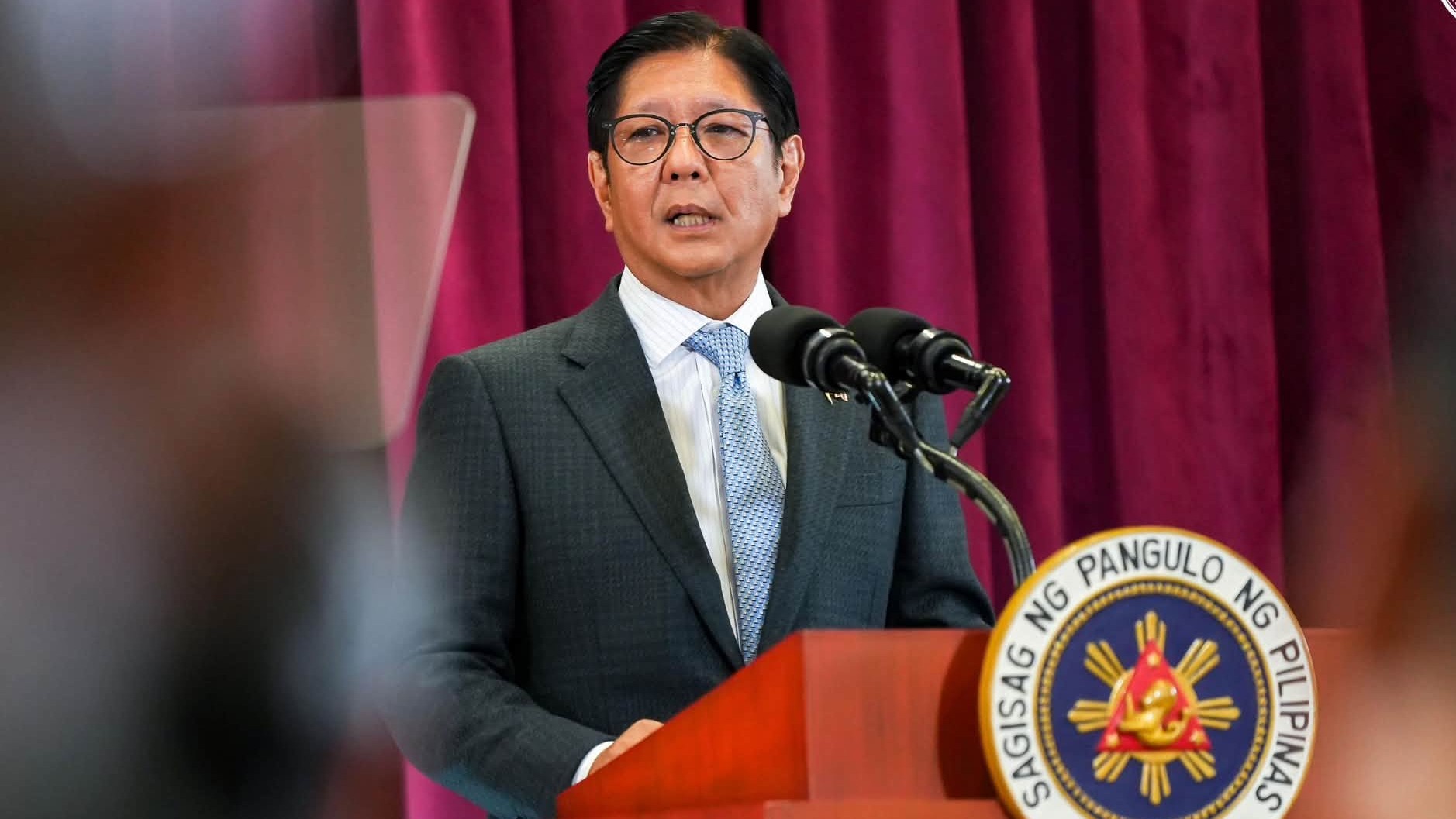
President Ferdinand “Bongbong” Marcos Jr. on Thursday welcomed the Philippines’ reclassification as an upper-middle-income country, saying the milestone reflects the country’s economic progress and resilience after nearly four decades.
In a statement, Marcos said the country’s new income classification affirms the effectiveness of the administration’s economic policies.
“The Philippines has officially become an Upper-Middle-Income Country,” the President said.
According to Marcos, the country had remained a lower-middle-income economy since 1987 before attaining the new classification.
“After nearly four decades as a lower-middle-income country since 1987, this milestone affirms that the economic policies we have pursued over the past four years have been effective,” he said.
The President attributed the country’s upgraded status to steady economic growth, a broadly stable currency, and long-term reforms despite global economic challenges.
He said the new classification is expected to boost investor confidence and generate more economic opportunities.
“Greater confidence means more investments. More investments mean more businesses, better quality jobs and more opportunities for Filipino families,” Marcos said.
Marcos added that the milestone should translate into tangible benefits for ordinary Filipinos.
On Wednesday, the Department of Economy, Planning, and Development (DEPDev) announced that the World Bank (WB) has confirmed the status of the Philippines as an upper-middle-income country (UMIC) after its gross national income (GNI) per capita exceeded the UMIC threshold.
The WB, in its latest income assessment in July, reported that the Philippines’ GNI per capita has reached $4,850, exceeding the $4,636 UMIC threshold.
The DEPDev attributed this upgrade to steady economic growth, sound macroeconomic management, and long-term structural reforms.
“The shift was underpinned by steady economic expansion, with Gross Domestic Product (GDP) growing by an average of 5.8 percent from 2021 to 2025," the DEPDev said in a statement.
Stronger economic fundamentals
Meanwhile in a separate statement, Finance Executive Secretary Ralph Recto said the country’s graduation to upper-middle-income status reflects stronger economic fundamentals under the Marcos administration.
“Hindi lang ito titulo. Ibig sabihin nito, mas lumalago ang ekonomiya natin. Mas dumarami ang trabahong nalilikha, mas lumalaki ang kita ng ating mga kababayan, at mas maraming investors ang nagtitiwala sa Pilipinas.” (This is more than just a title. It means our economy is growing, more jobs are being created, our people are earning more, and more investors have confidence in the Philippines.)
Citing World Bank data, Recto said the Philippines’ upgrade was driven by broad-based economic expansion, with the country’s economy posting an average annual gross domestic product (GDP) growth of 5.8% over the past five years.
He also cited estimates from the Department of Economy, Planning, and Development (DEPDev) showing that the country’s gross national income (GNI) per capita reached $4,850 in 2025, exceeding the World Bank’s upper-middle-income threshold of $4,636.
Despite the milestone, Recto said the government recognizes that more work remains.
“Ang tunay na sukatan ng tagumpay ay kung nararamdaman ba ito ng bawat pamilyang Pilipino. Kaya hindi tayo titigil hangga’t mas maraming Pilipino ang nakakaahon sa kahirapan at mas gumagaan ang kanilang pamumuhay.” (The true measure of success is whether every Filipino family feels its benefits. We will not stop until more Filipinos rise out of poverty and their lives become easier.)
Recto said the administration’s priorities include bringing down inflation, protecting jobs, strengthening purchasing power, attracting more investments, accelerating major infrastructure projects, implementing targeted assistance programs, improving the ease of doing business, strengthening digital connectivity, and enhancing education and workforce skills.
The Philippines had been classified as a lower-middle-income economy since 1987. With the latest upgrade, it joins regional upper-middle-income economies including China, Malaysia, Thailand, Indonesia, and Vietnam. — RSJ, GMA News

