

 GMA Brandtalk
 Tracking
 Archives

PH to lose some dev't assistance with new upper-middle income status —DEPDev
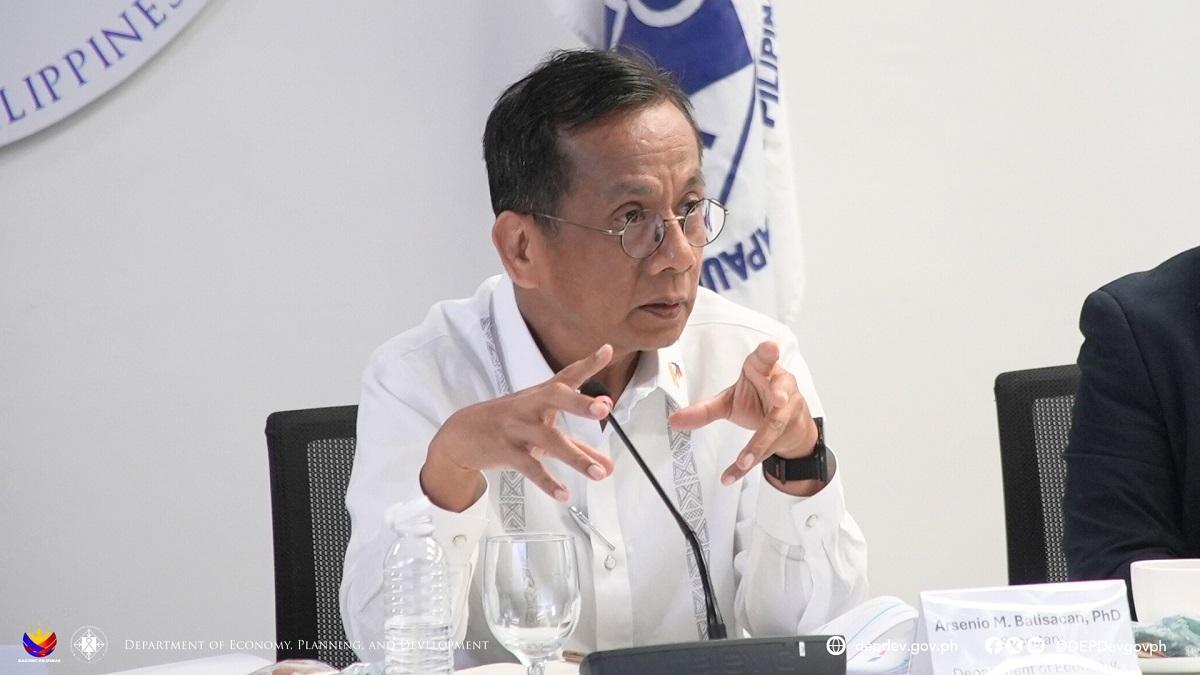
The Philippines will explore other sources of financing as it expects to lose concessional financing and development assistance given its new classification as an upper-middle-income country, a top official said Monday.
According to Department of Economy, Planning, and Development (DepDev) Secretary Arsenio Balisacan, the country has a three-year window to adjust, as the loss of the preferential financial agreements will be on a gradual basis.
“I think in the next three years, we will still maintain those concessional loans but gradually, as we progress, we will lose eventually those ones,” he told reporters in a briefing in Mandaluyong City.
“There will be still other development partners who continue to lend to us at concessional loans, at least for those projects that they see and we see as high impact, high developmental impact. Those are the ones that we will be exploring with those agencies, development partners,” he added.
The Philippines reached upper-middle income country status on July 1, as its gross national income (GNI) per capita hit $4,850 in 2025, exceeding the threshold of $4,636 for the fiscal year.
With the classification, the country will gradually lose access to forms of concessional financing, development assistance, and aid programs that geneally cater to poorer economies. With this, the country may shift more toward borrowing at market-based rates.
READ: What the Philippines' upper-middle-income status means for Filipinos
“In the meantime, we have the time to develop our capacity to access other sources of financing, particularly those that are evolving now, like climate-related financing, for example, and ensure that not just the government, the private sector can also access those financing,” Balisacan said.
“Even as we lost the concessional loans, the greater benefits are opened up from the improvements in access to financing by both government and the private sector,” he added.
Balisacan said the country will also continue to work to retain the upper-middle-income country status, with the administration focusing on continuing reforms to accelerate growth even further and make it more inclusive.
“Those are also pressure for us to keep driving the push for reform so that we are able to sustain the momentum, so the possibility of us going back to lower-middle-income class is, I think, quite remote, unless you know, you have certainly a very bad development in our political economy but we don’t se that,” he said.
For his part, DepDev Undersecretary Joseph Capuno said the country will work with the three-year window to focus on ongoing projects and slow down a bit on new infrastructure projects.
“We’re going to be very selective in approving projects for next year that would require government financing, precisely because there is very limited fiscal space but we can approve projects now if they require financing in 2028,” he said.
“Basically, if they can slide government financing to 2028, we can approve more because by that time, we see the fiscal space becoming larger,” he added.
According to Capuno, there are some 20 to 30 projects that may be affected, as these are done with development partners such as the Asian Development Bank (ADB), the World Bank, and the Japan International Cooperation Agency (JICA).
“In the general scheme of things, grants are just a smaller part of the whole financing that we get from multilaterals and bilaterals. A big part is actually ODA [Official Development Assistance] loans,” he said.
“Sometimes, many of these grants are tied to eventually taking out a loan from these development partners, so meron din tayong [we also have a] three-year window to take advantage of those grants,” he added. — BM, GMA News

