

 GMA Brandtalk
 Tracking
 Archives

Construction of LRT-1-MRT common station to proceed after ED Council approval
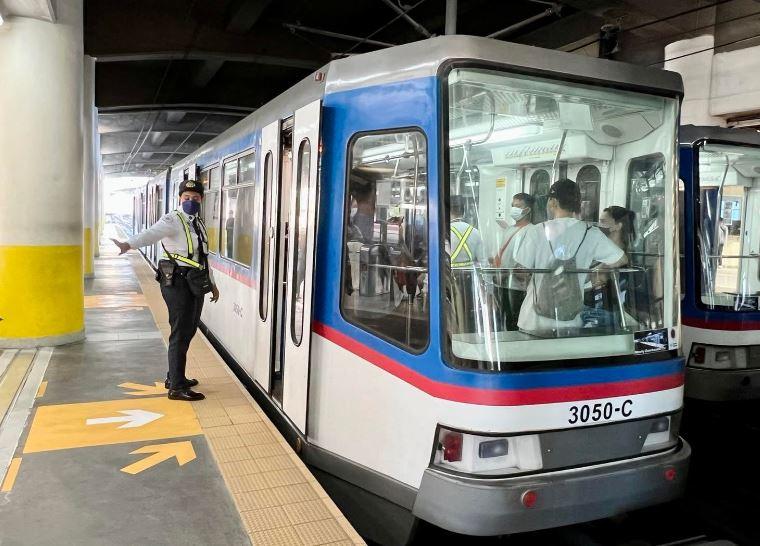
The construction of the stalled unified grand central station for LRT-1, MRT-3, and MRT-7 lines will now proceed after the Economy and Development (ED) Council, chaired by President Ferdinand “Bongbong” Marcos Jr., has approved the Light Rail Transit Line 1 South Extension Common Station project.
In a news release, the Department of Economy, Planning and Development (DEPDev) said the ED Council approved the “variation order” for the project during its 10th meeting on Tuesday, July 7, 2026.
The variation order followed the termination of the existing Investment Coordination Committee (ICC) approval for the project, which will link LRT-1 with MRT-3 and MRT-7 and later with the Metro Manila Subway, in March.
The Department of Transportation (DOTr) had terminated the agreement with BF Corporation and Foresight Development and Surveying Company (BFC-FDSC) Consortium, which was tapped to build the common station, due to excessive delays.
“This is a key step toward an integrated transport system that will improve the daily travel experience for thousands of Filipinos, helping them reach jobs, schools, services and opportunities faster and more conveniently,” said DEPDev Secretary Arsenio Balisacan.
The DEPDev said the variation also covers station completion works, viaduct works, railway systems, signaling, and the integration of the Automatic Fare Collection System.
The works for the interim operations of the common station are expected to be finished by March 2028, it said.
Other projects
The ED Council likewise approved the Technical Education and Skills Development Authority's (TESDA) Boosting Employability in Strategic Technical and Vocational Education and Training Sectors (BEST) project for official development assistance (ODA) loan financing.
The DEPDev said the P15.76-billion project seeks to expand access to quality Technical and Vocational Education and Training (TVET) programs, increase certification rates, and strengthen workforce readiness in high-demand sectors, including information and communications technology, manufacturing, construction, and agri-fishery.
“As we aim to sustain our upper-middle-income status, one critical aspect is to ensure that we equip Filipinos with the skills aligned with the needs of high-quality jobs. We will maximize this project to build our competitive workforce moving forward,” Balisacan said.
The EC Council also approved the following projects:
- The Department of Energy’s P10.07 billion Philippine Geothermal Resource Derisking Facility (PGRDF) project, aimed at reducing investment risks in geothermal exploration and development.
- The Philippine Artificial Intelligence Infrastructure Master Plan (PAIIM) 2026–2033 of the Department of Information and Communications Technology (DICT), which lays out a roadmap for positioning the Philippines as a regional hub for artificial intelligence (AI) infrastructure and innovation.
- The revisions to the Philippine Seismic Risk Reduction and Resilience Project (PSRRRP) to strengthen the safety and resilience of selected public school buildings in Metro Manila.
"Together, these initiatives strengthen the foundations of long-term growth by improving connectivity, developing human capital, enhancing clean energy, disaster resilience and advancing digital transformation,” Balisacan said. —VBL, GMA News

