

 GMA Brandtalk
 Tracking
 Archives

PH salt production rises to nearly 200,000 MT in first half of 2026
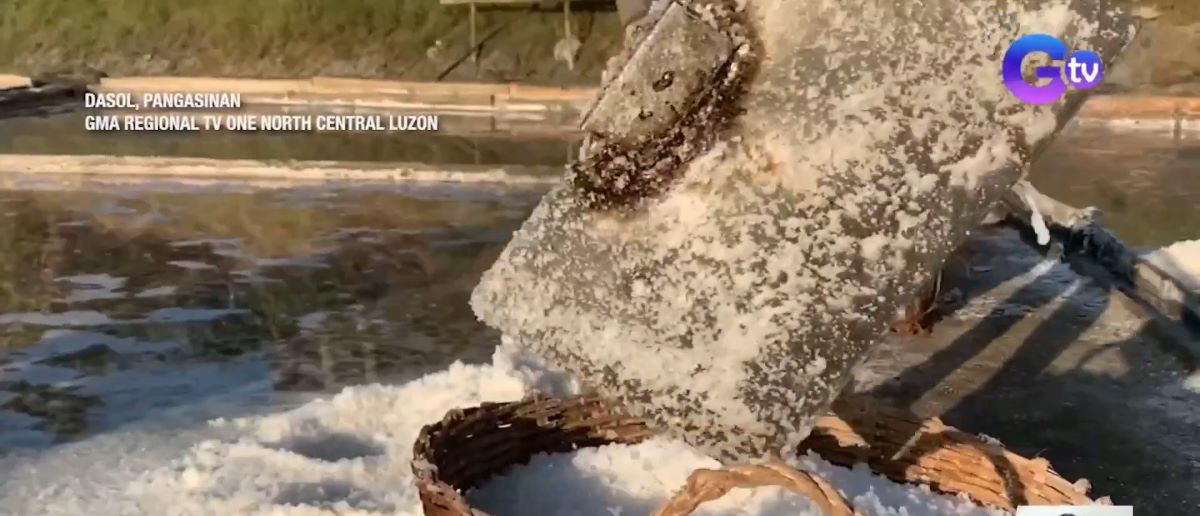
The Philippines' salt industry continued its recovery in the first half of 2026, with total production of artisanal, solar and cooking salt reaching 199,293 metric tons (MT) from January to June, reflecting the government's sustained efforts to boost local output and reduce reliance on imports.
The increase was driven by the Department of Agriculture-Bureau of Fisheries and Aquatic Resources' (DA-BFAR) Development of Salt Industry Project (DSIP), which aims to revitalize salt production by providing coastal communities with technology, infrastructure, and livelihood support.
"We are pleased with this development. The DA-BFAR will continuously support the Philippine salt industry until it reaches its full potential," BFAR National Director Elizer Salilig said.
One example of the program's impact can be found in Barangay Tawagan Sur in Pagadian City, Zamboanga del Sur, where a local fisherfolk association has successfully expanded into salt farming.
The association, originally organized in 2000 under BFAR's seaweed farming program, focused on seaweed production and had 60 members. Today, 19 members—most of them women—are engaged in salt production, providing an additional source of income for the community.
Before the project was launched, BFAR conducted site assessments and salinity testing to determine the area's suitability for salt production. The agency also provided solar beds, salt dryers, storage facilities and other equipment needed to establish and sustain the salt farm.
Despite challenges during the early stages of site development and production, the association produced 6,564 kilograms, or nearly 7 MT, of high-quality salt in 2025.
The group now operates 12 ground-level solar beds, four greenhouse tunnel-type salt dryers, 19 elevated solar salt dryers, and two salt storage facilities.
To further improve production, BFAR Region IX is set to provide an iodizing machine this year. At the same time, the Department of Science and Technology (DOST) is expected to support innovations in iodization and value-added salt products.
Pagadian City Agriculturist Engr. Ramon Rodrigo said revitalizing the local salt industry is key to strengthening domestic production and creating sustainable livelihoods.
"It is important that we revive the salt industry so we can strengthen local production. What we see in Tawagan Sur is proof that with proper support and determination, communities can produce quality salt and build sustainable livelihoods," Rodrigo said.
As domestic salt production continues to increase, BFAR said it remains committed to expanding the Development of Salt Industry Project and helping more coastal communities contribute to the country's growing salt sector. —LDF, GMA News

