

 GMA Brandtalk
 Tracking
 Archives

BSP, PPMI roll out Direct Debit PH, expand InstaPay
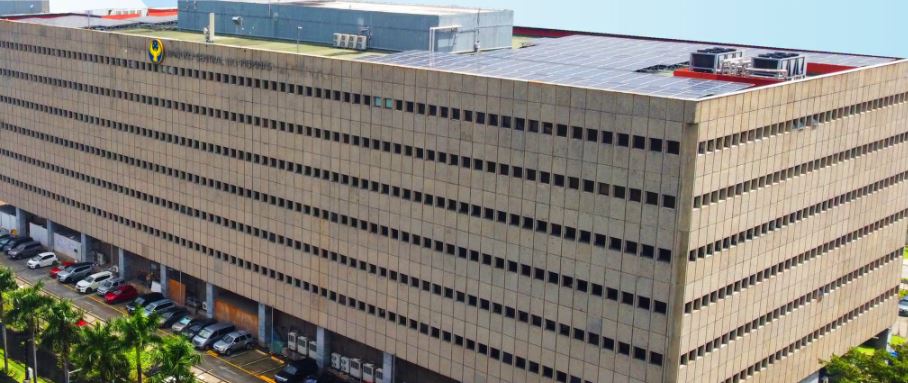
Filipinos with financial accounts can now enroll billers — such as electricity and water utilities — for automatic payments even if their accounts are held at a different financial institution, through a new direct debit facility launched by the Bangko Sentral ng Pilipinas (BSP) and the Philippine Payments Management Inc. (PPMI) on Wednesday.
Under Direct Debit PH, account holders will be able to authorize account-to-account recurring payments across participating financial institutions through a formal mandate that defines payment terms and authorizes recurring debits.
Once validated, payments will be processed automatically on the scheduled due dates, provided there are sufficient funds available on those dates. Insufficient funds will lead to the possible decline of the transaction.
The facility is interoperable across banks and electronic money issuers (EMIs), allowing customers to maintain an account in one bank while paying a biller that maintains its account in another participating bank.
“Once a mandate is activated, payments can be processed automatically on agreed dates, helping customers avoid missed payments while allowing businesses to manage collections more efficiently,” the BSP said in a briefer.
“This new use case serves as a digital alternative to traditional payments such as post-dated checks,” it added.
According to Direct Debit PH Steering Committee and PESONet Chairman Carlo Nazareno, aside from the maximum amount, safeguards of the facility include the capability of clients to cancel the mandates anytime they wish, stopping the automatic debit processing.
The service has been piloted by four participating member banks — BDO Unibank Inc., Bank of the Philippine Islands (BPI), Rizal Commercial Banking Corp. (RCBC), and China Banking Corp. (ChinaBank), with more set to join the network.
“What we want, we want to mandate all the PESONet members, which is over 128 members, (to have direct debit services),” he told reporters in a briefing at the BSP headquarters in Manila City.
Aside from this, the central bank and the PPMI also launched new services in InstaPay such as Cash-In, which allows a user to enroll accounts in a different financial institution and pull funds from such an account. Institutions may charge applicable fees for such transactions.
It is currently available in AllBank (A Thrift Bank) Inc., BPI, ChinaBank, GoTyme Bank Corp., G-XChange Inc. (GCash), MariBank Philippines Inc., ShopeePay Philippines Inc., and the Union Bank of the Philippines. Additional banks and EMIs are expected to join moving forward.
“As soon as we are able to hurdle the concerns, it’s like a bandwagon. If you get the major bigger players in there, you can really get that bandwagon effect,” Manuel Tagaza, InstaPay Steering Committee Chairman Noel Tagaza said in the same briefing.
Year-to-date transactions stood at 9.2 million or P36.39 billion as of June 2026, based on data from the Payment Network of the Philippines Inc. (PNPI).
Also launched was InstaPay for Business, which supports higher value, real-time, interoperable cash disbursements for businesses for business-to-consumer and business-to-business payment transactions.
The service — available through the Philippine National Bank (PNB), Wise Pilipinas Inc., DCPay Philippines Inc., GoTyme, and RCBC — allows businesses to transfer up to P500,000 per transaction with no limits on the number of transactions or aggregate daily value. This is higher than the regular InstaPay limit of P50,000.
“This eliminates the need for batch processing and helps businesses improve operational efficiency through optimizing cash flow management, enhancing payment certainty, and delivering a better payment experience for customers and business partners,” the BSP said.
According to Tagaza, 12 financial institutions — including major, bigger players — have also expressed their intent to offer the service.
InstaPay for Business recorded 10,808 transactions from April to June 2026, equivalent to P734.32 million.
The BSP and the PPMI on Wednesday also reminded the public that QR Ph now only refers to person-to-merchant (P2M) payments, where merchants shoulder the transaction fees. InstaPay QR, meanwhile, is used for person-to-person fund transfers.
Data from the PNPI show that 2.53 billion transactions worth P1.14 trillion were made through QR Ph as of June 2026.
“This launch reaffirms the BSP’s commitment to build a payment system for every Filipino, and every Filipino business, no exceptions,” BSP Deputy Governor Mamerto Tangonan said in an emailed statement.
“This started with the National Retail Payment System Framework, which is the blueprint for a safer, faster, and more reliable and interoperable payment system,” he added. —LDF, GMA News

