

 GMA Brandtalk
 Tracking
 Archives

DOE to crack down on gencos' unscheduled plant outages
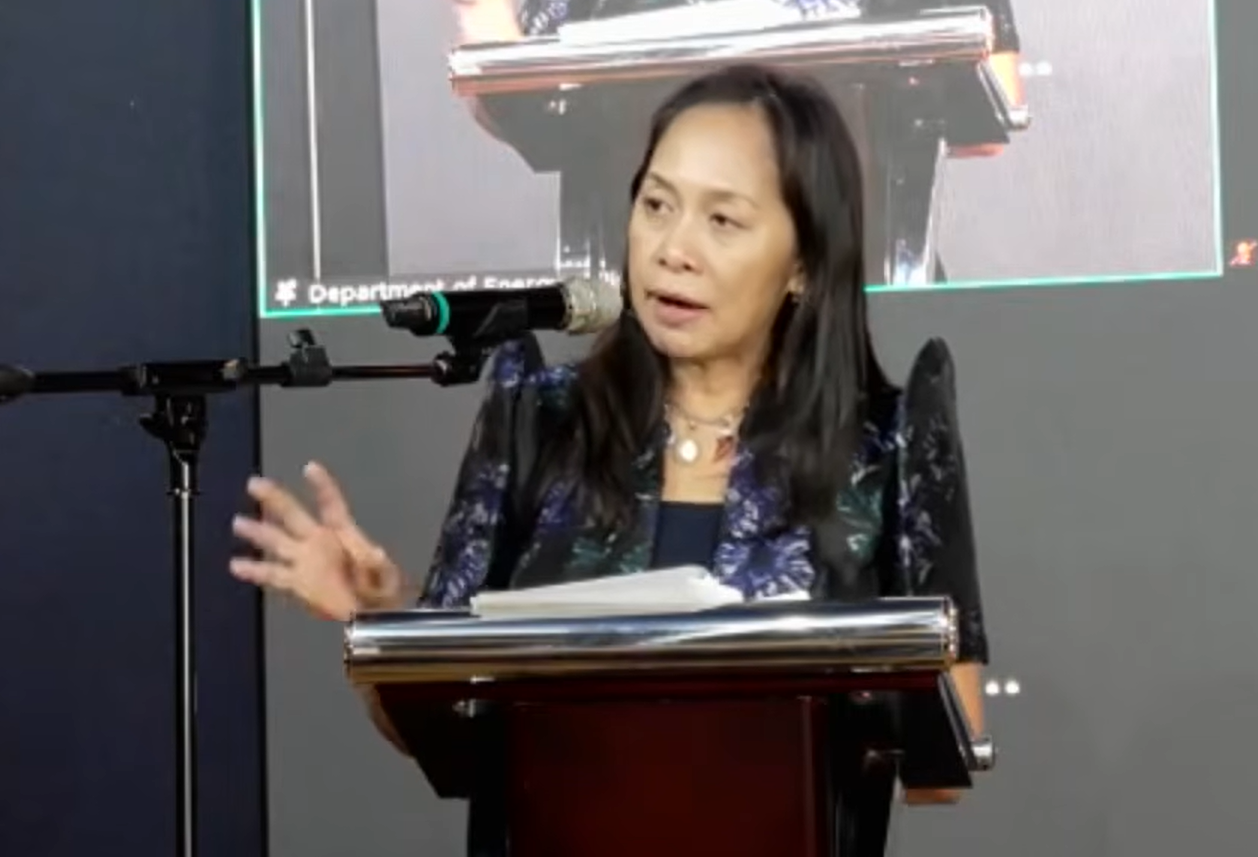
The Department of Energy (DOE) on Tuesday said it is stepping up efforts to hold power generation companies (gencos) accountable for unscheduled plant outages that can lead to power supply shortages and strain the grid.
At a press conference on Tuesday, Energy Secretary Sharon Garin announced four key directives aimed at strengthening the accountability of gencos throughout the life cycle of power plants, stressing that building new capacity would mean little if existing facilities fail to perform.
“For too long, prolonged and unscheduled outages have put pressure on the power system,” Garin said.
“Building more capacity will mean little if the plants already connected to our system cannot deliver when they are needed,” she added.
To make sure power producers comply with their obligations, Garin ordered the DOE to take immediate steps to improve plant reliability and strengthen oversight:
Review design and engineering standards: The DOE Power Bureau will re-examine existing engineering standards for all types of power plants to determine whether stricter technical requirements are needed to meet modern grid demands.
- Conduct technical audits:
The Power Bureau and the Renewable Energy Management Bureau (REMB) will conduct performance audits of existing facilities. Garin said “installed capacity on paper is not enough,” adding that “we need to look at actual performance—whether plants are delivering the capacity and reliability expected of them.” - Audit government permits and contracts:
The DOE’s Legal Services will review all agency-issued instruments, including Certificates of Endorsement (COE), Certificates of Confirmation of Commerciality (COCC) and service contracts, with the aim of tightening legal conditions and accountability provisions. - Draft sanctions and blacklisting rules:
The Power Bureau and Legal Services were tasked with strengthening penalties for repeat offenders, including establishing formal procedures for blacklisting non-compliant generation companies.
Garin said government permits and approvals carry obligations that power companies are expected to fulfill.
“Government approvals come with responsibilities. A permit, endorsement, or service contract from the DOE cannot simply be treated as a piece of paper,” Garin said.
“The principle is simple: if generation companies make commitments to the DOE, the ERC, distribution utilities, and the power system, they must be accountable for delivering on those commitments,” she added.
Garin said the compliance review comes as DOE simulations show that the Philippines’ installed power capacity must increase sharply from 32.2 gigawatts (GW) in 2026 to 121.3 GW by 2040 “under a conservative outlook.”
As the country works toward its renewable energy targets of 35% by 2030 and 50% by 2040, Garin said the timely completion of projects already in the pipeline—including offshore wind, gas and waste-to-energy facilities—is critical to reducing the need for additional infrastructure later.
The DOE is also expecting nuclear power to contribute 1.4 GW of capacity to the energy mix by 2038.
Garin, however, said nuclear power would serve as a “supplement” rather than a replacement for flexible gas, solar, wind and energy storage projects.
Apart from tightening enforcement on power producers, Garin announced the creation of a joint task force with power sector stakeholders to explore ways to reduce electricity costs.
The task force is studying regulatory and legislative options to remove the value-added tax (VAT) on system-loss charges, a move the DOE estimates could save an average household consuming 200 kilowatt-hours (kWh) around ₱21 a month.
“Our objective is to minimize unscheduled and prolonged plant outages, strengthen long-term grid stability, and make clear that reliability comes with accountability,” Garin said. — MCG, GMA News

