

 GMA Brandtalk
 Tracking
 Archives

Are EVs still cheaper to drive amid higher electricity rates?
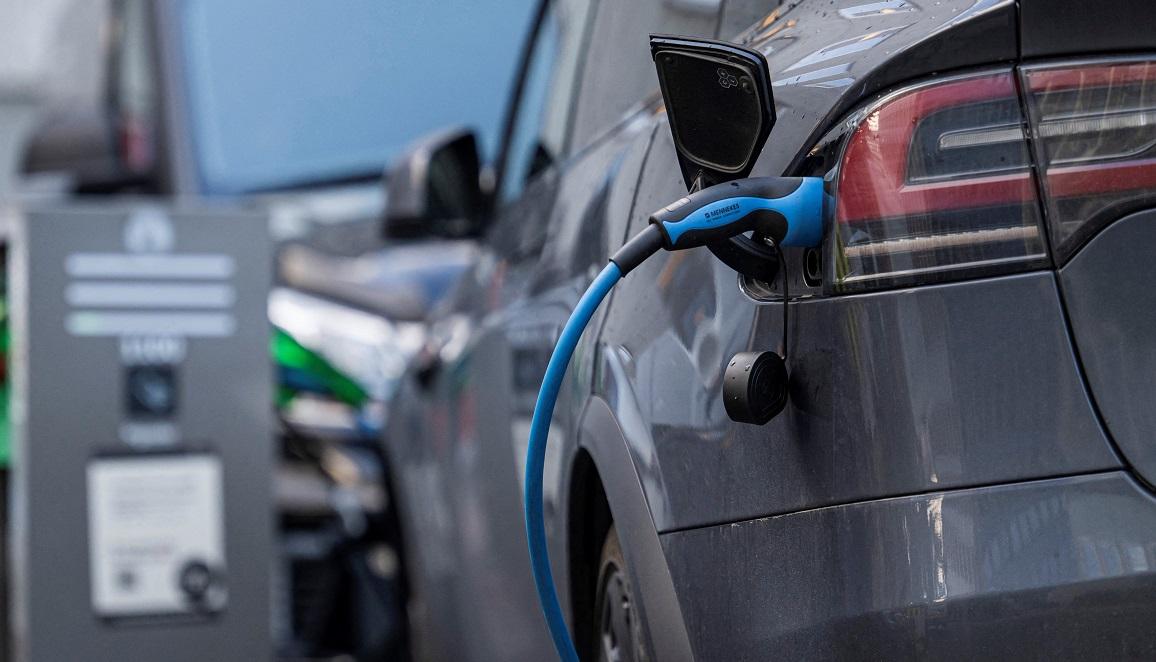
With rising fuel costs due to the Middle East war, as well as increasing electricity rates due to the hot dry season, is shifting to electric vehicles (EVs) worth the hype in terms of savings?
GMA News Online asked ACMobility head of Mobility Infrastructure and Electric Vehicle Association of the Philippines vice president Carla Buencamino to compare the “fuel-to-kilometer” cost of using an EV versus a traditional internal combustion engine car.
“The difference right now is striking, and it actually works in the EV's favor, even accounting for the power rate increase,” Buencamino said.
To illustrate, she said that a typical gasoline sedan getting around 12 kilometers per liter is paying roughly P7.50 to P8 per kilometer just on fuel, citing the Metro Manila average for unleaded gasoline at around P95.59 per liter.
“An EV, say, a BYD Dolphin running at a real-world efficiency of about seven kilometers per kWh (kilowatt-hour) and charged at home at the current Meralco rate of P14.35 per kWh costs approximately P2.05 per kilometer,” she said.
“That's a roughly 75% saving per kilometer versus a gasoline car.”
ACMobility, a subsidiary of the Ayala Group, is the official distributor of BYD, a Chinese multinational manufacturer of full electric and hybrid EVs.
The EVAP official said that even if an EV driver uses public fast chargers, “which Shell Recharge and ACMobility prices at P35 per kWh for their DC fast chargers, you're still at around P5 per kilometer.”
“That's still 35%–40% cheaper than gasoline, at current pump prices,” Buencamino said.
She said that the “structural advantage” of EVs on running costs doesn't disappear even with a P0.53 per kWh power rate hike.
“What it does is slightly compress the margin. Home charging remains the most economical way for owners to go about it. Home is where the math is most compelling,” she said.
However, Buencamino said that power rate hikes could lengthen the “payback period slightly.”
Payback period refers to the time it takes for fuel savings to cover the higher purchase price of an EV.
"Because they reduce the daily fuel savings that would otherwise offset the EV's higher purchase price. At P14.35 per kWh versus the P13.82 it was in March, and assuming a typical driver covering 50 kilometers a day charging at home—that's roughly P4 to P5 more per day," she said.
“Annualized, that's perhaps P1,500 to P2,000 less in annual savings. On a price premium of, say, P300,000 to P500,000, that's a marginal shift in payback, not a structural disruption,” she added.
Still, the sustained spike in gasoline prices, she said, is moving the “payback period” in EVs' favor.
“A driver who previously compared an EV against P65 per liter gasoline is now comparing it against P91 per liter, even after the rollback. That dramatically shortens the payback horizon," Bunecamino said.
"The net effect right now is that the payback period for EVs has actually improved compared to a year ago, despite the power rate increase, because the fuel price shock has been proportionally much larger than the electricity rate increase,” she added. –NB, GMA News

