

 GMA Brandtalk
 Tracking
 Archives

Is now a good time to invest in the stock market?
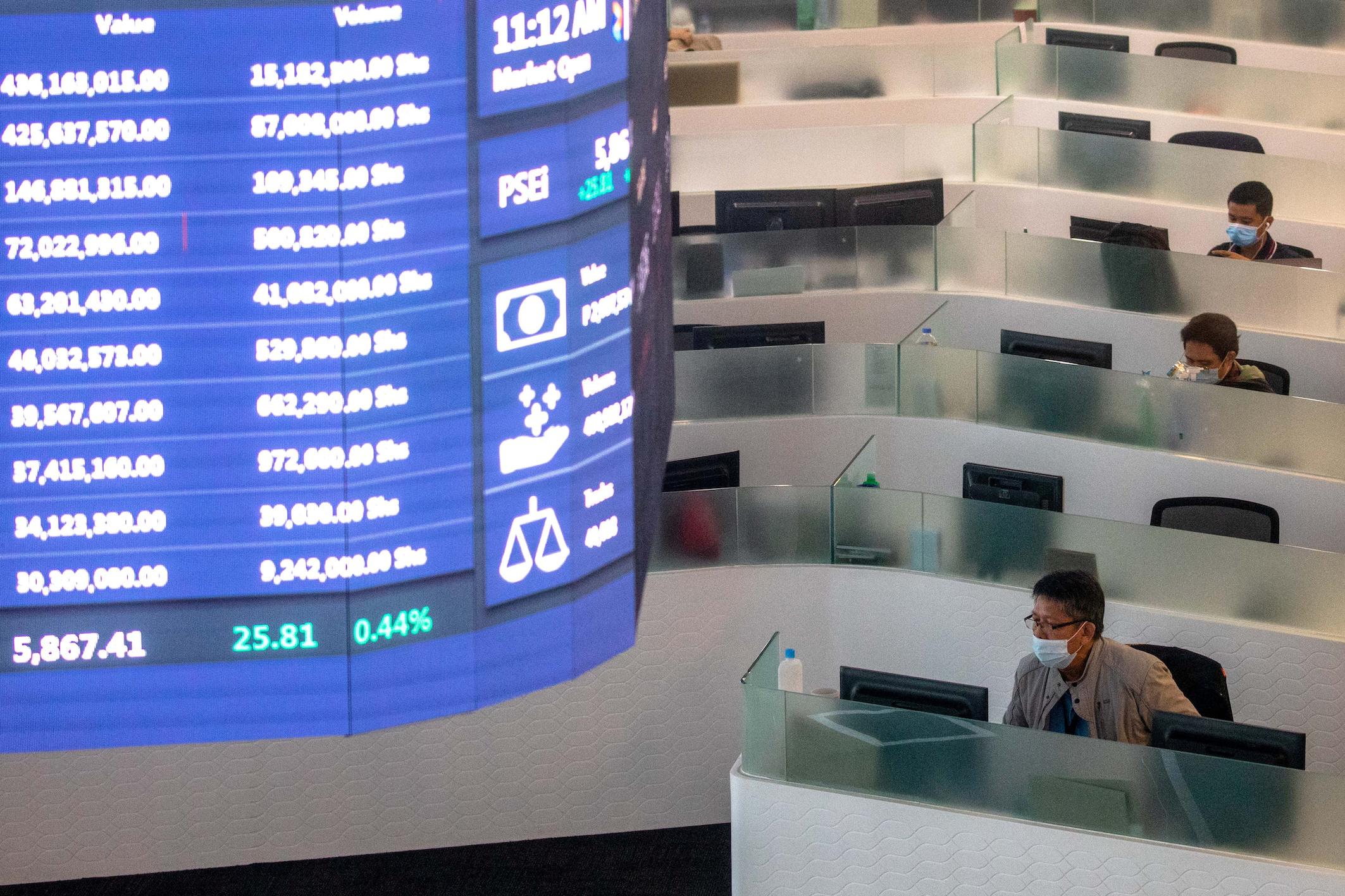
With the global oil price shock amid the Middle East conflict pulling inflation up and dragging purchasing power down, investment decisions, especially in the equities market, could be affected amid assumptions of further economic downturn.
The local bourse barometer, Philippine Stock Exchange index (PSEi), has shed nearly 500 points since the US-Israel-Iran war erupted three weeks ago.
The PSEi, in particular, lost 490.63 points when it closed at 5,936.20 on March 24, 2026 from 6,426.83 on March 2, 2026 – the first trading day following the onset of the Middle East conflict.
GMA News Online asked personal finance experts on wise moves as far as stock market investing is concerned amidst the global petroleum crisis.
Rampver Financials chairman and CEO Rex Mendoza said, “It is the best time to invest and pick up securities at great prices!”
“In these times of war, inflation, and global uncertainty, I would be biased toward defensive, cash-generating, and monopolistic / oligopolistic businesses – not speculative growth,” Mendoza said.
For beginner investors, the Rampver Financials CEO said he would recommend to invest in managed funds such as mutual funds and UITFs (unit investment trust funds), which “will have the strategic asset allocation advantage.”
“Fund managers invest as a full-time job and are trained and equipped to act swiftly in volatile market,” Mendoza said.
Rizal Commercial Banking Corp. (RCBC) chief economist Michael Ricafort said the downward price corrections “present bottom-fishing opportunities for both local and foreign investors since these do happen in cycles and not that often.”
Investing guru and personal finance planner Marvin Germo, for his part, said “it is still really a good idea to invest regardless if there is crisis or not” as investing builds skills, especially for those who are just starting to invest.
“Money and investing is not just about money, it’s about skills and for those who are starting to invest right now… Times of uncertainty allow them to build skills for them to make right decisions,” Germo said.
“Those who are in their 20s, 30s, or 40s have a 20- to 30-year investment window… 2026 is just one drop in the bucket compared to their long term investments of over the next 20, 30 or 40 years,” the personal finance expert said.
Meanwhile, PhilStock Financial Inc. suggested that investors should go for defensive companies amid the Middle East crisis.
“These are companies that provide essential goods and services to customers such as food and utilities. Given the importance of what they are serving, they are less sensitive to the economic cycles,” PhilStock said.
“Hunt for dividends. In a downwardly biased market, going for capital gains would be difficult as many of the stocks are weighed by the bearish sentiment. Thus, we should go for financially stable companies that are able to give consistent dividends to their investors,” it added.
Germo explained that from a macroeconomic standpoint, the escalation of tension in the Middle East will affect oil prices and much more.
“If it affects oil prices, inflation will go up, if inflation goes up, BSP may not lower interest rate or may push interest rates higher which will be detrimental for the market as well.”
During the Economic Journalists Association of the Philippines (EJAP)’s inaugural Sustainability Forum, Securities and Exchange Commission (SEC) chairman Francis Lim said the Middle East crisis will “definitely impact capital markets, especially the stock market.”
“These are the realities… We are vulnerable,” Lim said.
During the EJAP forum, PSE Chief Operating Officer Roel Refran said geopolitical risks are “cyclical” and that the stock market has shown resilience over past adverse events.
“It’s cyclical but we haven’t seen a war of this magnitude in more than 70 years. For us, this is something that is happening… There are also bright spots in the sense that… When you look at, for example, how it will impact other markets also which are similarly situated, we are not the worst impacted,” Refran said.
“They are impacted to higher or lesser degree so relative to that what we look is how we could still use our ecosystem because a lot of companies… Some companies will call this ‘force majeure’ so they have already triggered with their contracts with suppliers force majeure to re-price,” the PSE executive added. — JMA, GMA Integrated News

