

 GMA Brandtalk
 Tracking
 Archives

Exploring the old Hong Kong in the new age: A ‘Biyahe Ni Drew’ itinerary
History books say that Hong Kong used to be a part of mainland China. But in 1997, Hong Kong got their freedom to run their own government in the condition that they’ll maintain the capitalist system. This way, their government does not control their economy.
This probably works best for them; Hong Kong is among the Asian nations that have the most impressive economic activities today. Proof? Hong Kong International Airport is among the 10 busiest international-passenger airports around the world, according to CNN Travel in 2015!
In 2014, they welcomed 60,833,836 tourists, according to the official website of Hong Kong Tourism Commission. Their gross domestic product is pegged at 308-billion USD in 2015. Data from the official website of Hong Kong Trade Development Council show that Hong Kong is the world’s freest and most services-oriented economy. They are also the second largest recipient of foreign direct investment, after mainland China.
It’s no surprise. This special administrative region of China has a lot of tourist destinations and towering skyscrapers that reflect how they embrace the new age. But at the same time, they also have a lot of historic places, food, and practices that remind every local and tourist of the past that this nation holds.
Ride the cable cars and see Lantau Island in 360 degrees!
Our first stop is the Ngong Ping 360 in Lantau Island, where tourists park to check out their famous cable cars! We mean, seriously, cable cars here are a big hit among tourists because you can take selfies 460 meters above sea level! From up here, you can see the whole Lantau Island in 360-degrees.
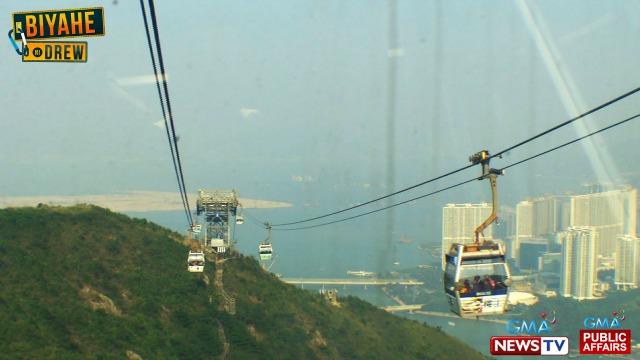
We all know Pinoys’ preferences. Of course, if there’s something odd, that’s what we choose. So when Drew Arellano and his team got to choose which cable car they would ride in, they chose the--wait for it--Hello Kitty cable car!
“Kapag nandito kayo sa Ngong Ping 360, sana makapili nga kayo ng Hello Kitty [cable car] dahil kapag Hello Kitty, transparent [ang] floor niyan,” tips Drew. But make sure that you and any of your companions are not acrophobic! Because the view from up here is really breathtaking, which may be literal if you have a fear of heights. *knocks on wood*
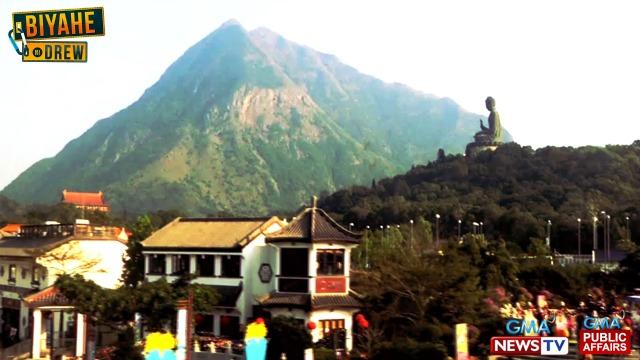
The cable cars at Ngong Ping 360 were first opened in 2006 to provide an easier (and cooler!) way of transportation to the Tian Tan Buddha, or better known as the Big Buddha--which happens to be the biggest outdoor bronze buddha in the world. This was also deemed necessary because of the influx of tourists that come here on a daily basis. In fact, the cable cars can transfer around 3,000 people from the Tung Chung Station all the way up to the Big Buddha in an hour! Wow, that’s a lot of Biyaheros!
While at Ngong Ping 360, Drew realized that the location of Hong Kong International Airport (which can be seen from the cable cars), being in a rural area, is good because traffic congestion is avoided. Lantau Island is also surrounded with mountains, trees, and oceans, so you can definitely inhale some fresh oxygen here. In fact, this particular part of Hong Kong is called “Lung City” or “Lungs of Hong Kong” mainly because the fresh air here helps cleansing your lungs.
Pray at the world’s biggest outdoor Buddha
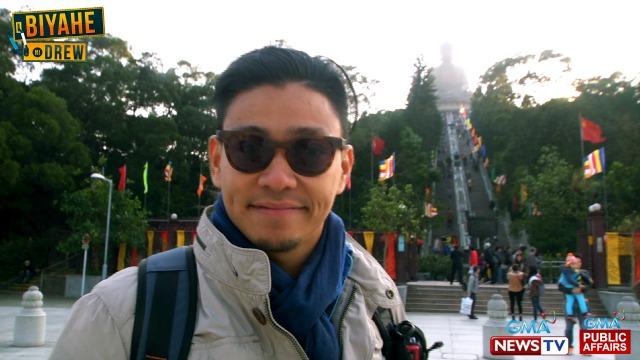
After riding the cable car for about 35 minutes, you’re already at the 34-meter tall Tian Tan Buddha, situated at the top of Mount Muk Yue. Wish you brought a powerbank with you, because although this is a prayer site, picture-taking is allowed in most parts of the area. #SelfiePaMore!
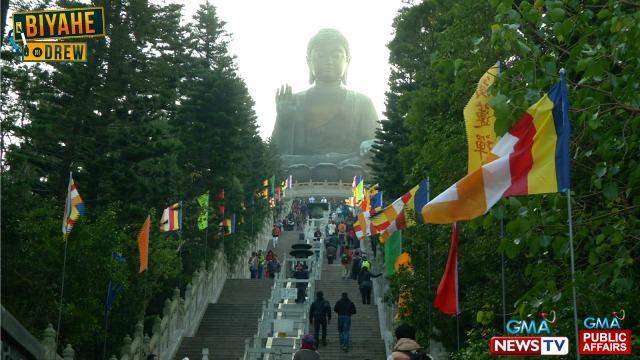
Buddhists from around the world flock here because more than just being a tourist spot, this is also a pilgrimage site, designed as a symbol of giving blessings to locals and tourists, whether they’re Buddhists or not. Tian Tan Buddha was also created to give protection and safety to China and Hong Kong.
Mingle with the local fishermen
The fishermen are the early settlers in Hong Kong. The fishing village in Lantau Island, in fact, is already about 100 years-old. Yep, this particular part of Lantau Island has already been a fishing village even way before Hong Kong became independent from China; this was one of China’s most important fishing ports a century back.
Even this fishing village is commonly visited by tourists who just visited the Tian Tan Buddha because from up there, you can take a 15-minute bus ride and alight at the fishing village. Aside from cultural immersion, tourists also go here for some #chill.
“Ngayon ko lang nalaman kung bakit naa-appreciate dito ng mga turista o tao [from] downtown, which is very fast-paced. Sa lugar na ito kasi, slow-paced eh, medyo relaxed ‘yung mga tao,” says Drew. “Kaya ‘yung mga pace nila, sobrang bagal at ine-enjoy nila ‘yung nature.”
You can also buy your pasalubong items at Lantau Island Fishing Village. There are quite a lot of goodies and food items that are made and sold only here, just like the Chi Puu Tin Kwai, a drink made out of dried seaweeds.
“Apparently, ‘tong drink na ‘to, medyo sweet at medyo sour. It’s an herbal type of drink [that is] good for detoxification,” says Drew. “Isipin ninyo, para siyang sampalok. Tamarind na maasim na may kaunting tamis.”
Have your future predicted
Another way to know more about the history, cultures, and traditions of Hong Kong is by visiting the Old Temple Street, where you can experience traditional practices of palm-reading, face-reading, and card-reading. Take your pick!
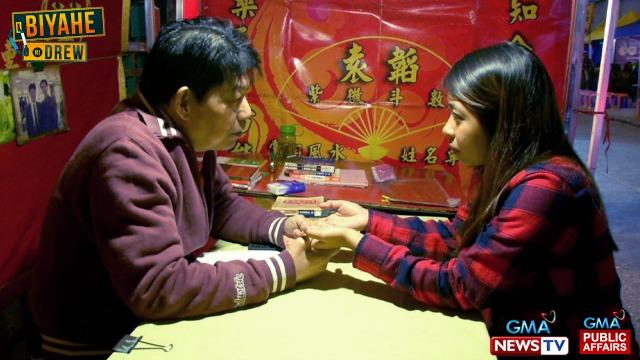
Fortune telling or the art of predicting the future by interpreting signs and symbols from one’s palm, face, or cards is considered as a respected social and business culture for the Chinese.
Taste authentic wonton and dumplings
Although Hong Kong was once colonized by the British, the Chinese presence remains highly evident here. So if you’re looking for some authentic dim sum experience, Hong Kong will not disappoint!
When here, why not try their traditional wonton? “Madalas hinahalo ang wonton sa clear soup. Pero dito sa Hong Kong, sinasamahan ito ng egg noodles para mas malasa,” says Drew. “Kung mayroon mang to-the-max sa sarap na gumawa ng wonton soup, dito ‘yun sa Mak’s Noodle House!”
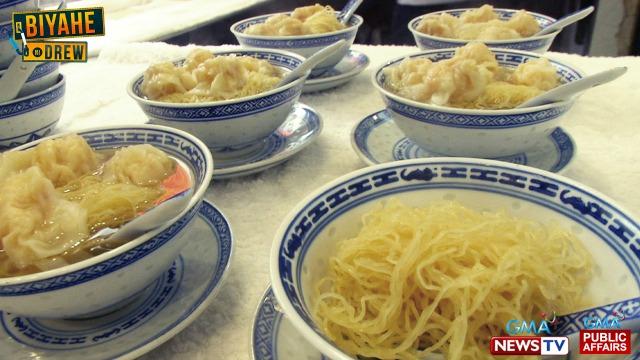
Mak’s started as a small eatery in 1968. So for 48 years now, they remain to be a favorite restaurant among locals and tourists because of their meals made out of their secret recipe. According to them, this recipe came from the place where the best Chinese chefs in history hail from. Hmmmm… it’s very curious what that secret recipe is!
In traditional wonton soup, the wonton noodle should fit in the teaspoon. So that’s why here at Mak’s Noodle House, they prioritize quality over quantity as they’re not one to stray away from tradition.
When here, you should also try out their dumplings! But wait, dumplings are different from wonton. The former is made of thick dough that can be mixed with beef, chicken, or veggies, while the latter is made of thin dough mixed with pork.
In traditional Chinese eateries like Mak’s Noodle House, there’s a trolley that goes around so customers can choose from the food offerings. But take note: Chinese eateries don’t just offer wonton and dimsum. You can go wild and crazy with their wide selections!
Drew, attack!
“Mayroon tayong squid roll [na] may shrimp sa loob. Mayroon tayong parang rice topping… Chicken mushroom with rice,” shares Drew. He adds that instead of being served with spoon and fork, you will be given a pair of chopsticks. And instead of giving you cold water, they will give you hot tea. It’s pretty cool to observe how different their meal practices from ours, right?
Learn the art and history of tea-making
While here, Drew also learned a thing or two about tea, which was unavoidable as tea is part of the traditional Chinese meal.
“Yum cha” or the act of drinking in a teacup is an important part of the Chinese culinary culture. It is said that good food should always be accompanied with tea so the taste of the food will be better. Aside from that, “yum cha” also helps you to behave properly especially when in social gatherings. After all, tea is associated with inner peace, respect for nature, and spirituality.
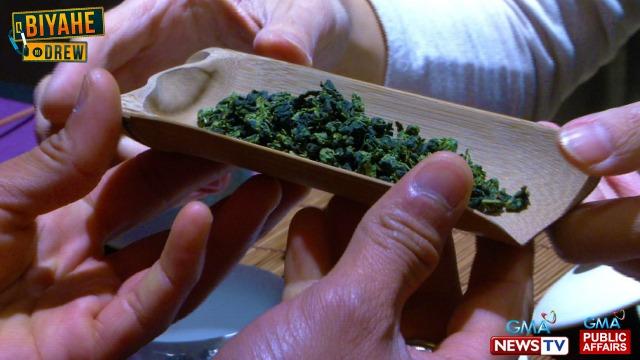
In Hong Kong, there are tea houses where you can join their traditional tea ceremony sessions, where you can learn the proper way of drinking and appreciating tea. Whenever there are special occasions, a tea ceremony is held to give praise and respect to the Royal Family.
Making tea does not end with just water and tea leaves. Making and drinking tea involve a very important and meticulous process; choosing the right tea leaves is important as they vary in health benefits. Even choosing the glassware to be used is just part of the entire detailed process!
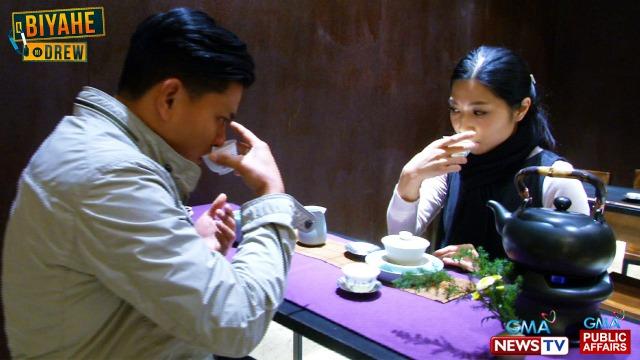
“If you close your eyes, if you smell the aroma of the tea, and then you taste the tea, it’s very flowery,” says Drew. “Be like a tea-ta (tita) whenever you drink it,” says Drew. “Isa siyang hashtag #TitasOfManila experience!”
“Mabusisi ‘yung pag-prepare ng ganitong klaseng old-fashioned tea; so much effort and so much preparation for a single cup or two cups,” he adds. “And preparing depends on the type of tea leaves; the tea leaves should correspond to the certain type of temperature and time or infusion.”
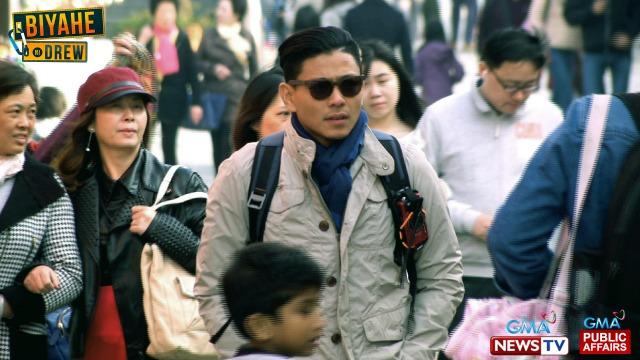
Visiting Hong Kong made Drew and the rest of “Biyahe Ni Drew” team realize how much importance and respect Hongkongers give to their past. “May mga nadiskubre akong bago sa likod ng mga lumang gusali, kaugalian at pati pagkain!” says Drew. “Mga bagay na hindi ko malalaman kung hindi ako nagbalik-tanaw.”
Looking back at a nation’s history must be very important, as what we have just witnessed during our visit in Hong Kong. This can probably be credited to the rich and vibrant culture and economy that this proud nation has today.--Juju Z. Baluyot/BMS, GMA Public Affairs

