

 GMA Brandtalk
 Tracking
 Archives

Brigada Blog: Dano Tingcungco on covering the cybercrime law
While the cybercrime law aims to protect victims of cybersex, child pornography, fraud, and cyberbullying, many netizens have staged both offline and online protests of the law’s provisions on online libel. Even a number of journalists and news organizations, including GMA News Online, broke their usual rule of staying "neutral" on controversial issues to speak against the law, which some say is a threat to press freedom. Is it possible for a journalist to take a stand on an issue, yet still report on it fairly? GMA News reporter Dano Tingcungco, who recently did a story about the cybercrime law for the GMA News TV program "Brigada," shares with GMA News Online his views on the law and the challenges of covering it: 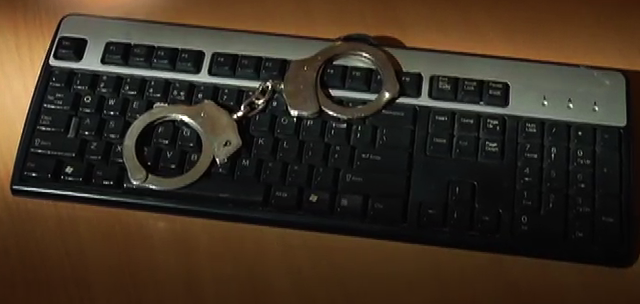 GMA News Online (GNO): How has social media affected your work as a journalist? Dano Tingcungco (DT): Social media has become a lifeline in my daily experience of newsgathering. When stories break, a lot of them first get talked about on Twitter or Facebook—the slightest tips, or even seemingly small matters that suddenly go viral. The various insights shared via social media help journalists like me to look at an issue from a broader perspective, in ways that could help us distill the story. This would not have been possible in traditional newsgathering. Social media for me has become not just a pastime or a way to reconnect, but in many ways, a social barometer and a source of news in itself. GNO: In what ways could the Anti-Cybercrime Law affect your work as a journalist? DT: Careful newsgathering and writing are always involved in responsible journalism. Libel as a criminal offense has always been part of our Revised Penal Code. But when you think about what constitutes libel amidst the anarchy of information that is the Internet, there is that question of context. How do you draw the line between honest commentary and malicious statement? What is the difference between getting the facts wrong and taking something out of context? How do you tell the difference between a government watchdog and a political mudslinger? With the Anti-Cybercrime Law, you tend to ask these questions because some provisions, especially the provision on libel, tend to be vague and general. It has a chilling effect on how we do our job. GNO: Journalists are usually supposed to stay neutral on the issues about which they report, but many news organizations including GMA News Online came out with a stand against the Anti-Cybercrime Law. Did you have a personal stand on the Anti-Cybercrime Law also? DT: Everyone has an opinion on everything. The difference with journalists is that our personal positions take a backseat to our greater responsibility of covering both sides of the debate, and empowering our audience to make an informed choice. I am personally against the libel provision in the law, as well as the powers of the executive department to seize and close computer data based on prima facie evidence. I also personally have a problem with the cybersex provision being harsh to the victims, while hardly, if at all, punishing the patrons. But as a journalist, I believe there's nothing more important than letting the people have their own stand on anything that affects them, remotely or otherwise. And with that, there's likewise nothing more important than delivering information to our audience in an objective way. I need to keep my personal views out of the way and present both sides of the debate. This brings us back to the debate on the cybercrime law. Much of the discussion we observed online and offline revolved around freedom the press and speech. However, we also needed to discuss how the law affects ordinary citizens. Such was the situation with our case study Laverne Castro, a victim of poser accounts on Facebook and blogs, and who believes the Anti-Cybercrime Law could help her. We also interviewed Fina and Janelle, two girls who had their personal gripes against each other published on Facebook. They both approved of the libel clause in the law, but didn't really want to sue each otherl. They made up in person. But we had to wonder, if the Anti-Cybercrime Law had taken effect, might they have actually sued each other over something they could've settled on their own?
  GMA News reporter Dano Tingcungco, left, helps settle a dispute between two friends Fina and Janelle, who had an argument online. GNO: Did your stand on the issue affect your reporting? How did you manage to maintain objectivity, despite your stand? DT: One of the biggest questions we had while doing the segment on the Anti-Cybercrime Law was, “Buo bang naiintindihan ng masa ang batas na ito?” Based on a recent UN agency survey, only three out of 10 Filipinos have access to the Internet. Out of around 100 million Filipinos, that only gives you around 30 million Filipinos with Internet access. That leaves around 70 million Filipinos without Internet access who probably think they law is irrelevant to them. Because the Anti-Cybercrime Law story was so controversial, we all had to, in a manner of speaking, unlearn everything we knew about the law and start from scratch. I've had to do that with other controversial stories I have covered in the past to maintain integrity, balance and fairness in my story. At the same time, staying objective allows me to check if I myself have missed anything that may have affected my understanding of the issue. That disengagement also allows me to keep my views strictly personal. A complete picture of the issue is the only acceptable picture. -Angel Bombarda/PF Follow "Brigada" (@Brigada_GNTV) and Dano Tingcungco (@danotingcungco) on Twitter.

