

 GMA Brandtalk
 Tracking
 Archives

Filipino seafarer turned trainer highlights challenges, rewards of life at sea
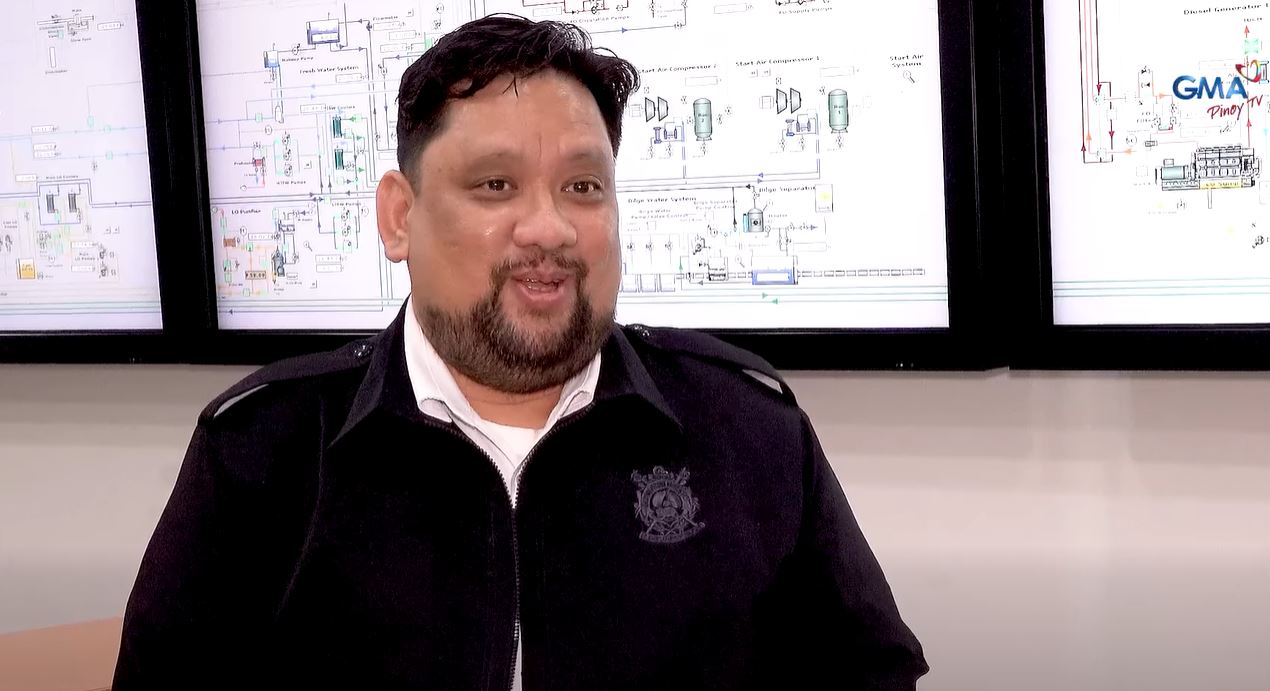
A veteran Filipino seafarer who spent more than two decades navigating oceans is now using his experience to train future maritime professionals, highlighting both the realities and the often unseen role of seafarers in the global economy.
Chief Engineer Mark Phillip Laurilla, now training manager at the Philippine Center for Advanced Maritime Simulation and Training (PHILCAMSAT), shared his journey from humble beginnings to international seafaring in an interview on GMA Pinoy TV’s “Pinoys at Sea” episode.
Laurilla, who began his career in 1997, said his entry into the maritime field was shaped largely by circumstance and opportunity. Coming from a modest background, he pursued a scholarship at the Philippine Merchant Marine Academy (PMMA) after encouragement from a relative, allowing him to ease the financial burden on his family.
“I did not come from a rich family… I was trying to find ways para mas maging magaan para sa parents ko,” he recalled, describing how he seized the opportunity despite not being a top student.
His early days at sea, however, were marked by intense challenges—from culture shock and language barriers to the physical demands of ship life. Joining his first vessel alone at 18, Laurilla had to quickly adapt to working with multinational crews and endure the harsh conditions of long voyages.
“One of the biggest challenges… is adjusting to the motion of the ship. Pero hindi ka naman puwedeng magsabi na hindi mo kaya,” he said, noting that resilience is essential in the profession.
Despite the hardships, Laurilla said the experience of traveling to different countries during shore leave became a major motivation to stay in the industry, which he embraced for over 25 years.
Beyond his maritime career, Laurilla has also taken on the role of educator, teaching as early as 2005 during his time off from sailing. He said his passion for sharing knowledge and mentoring younger seafarers drove him to continue teaching even during vacations.
Now, as a training manager, he emphasizes the importance of lifelong learning, especially as the maritime industry undergoes rapid transformation with the rise of automation, artificial intelligence, and environmentally driven changes such as decarbonization.
“The face of seafaring will change… the skillset of future seafarers will be different,” Laurilla said, urging aspiring mariners to continuously learn and adapt.
He also underscored the often overlooked contribution of seafarers, describing them as “integral to the global economy” despite their work largely going unnoticed by the public.
Through content creation and storytelling, Laurilla has also sought to “humanize” life at sea, giving audiences a glimpse into the lives of workers behind global shipping operations.
For Laurilla, the mission goes beyond personal success. “It has always been to uplift the image of Filipinos… that we are not just followers, but we are also leaders,” he added. —LDF, GMA News

