

 GMA Brandtalk
 Tracking
 Archives


As Europe's Filipino diaspora leaders age, a search for young leaders begins
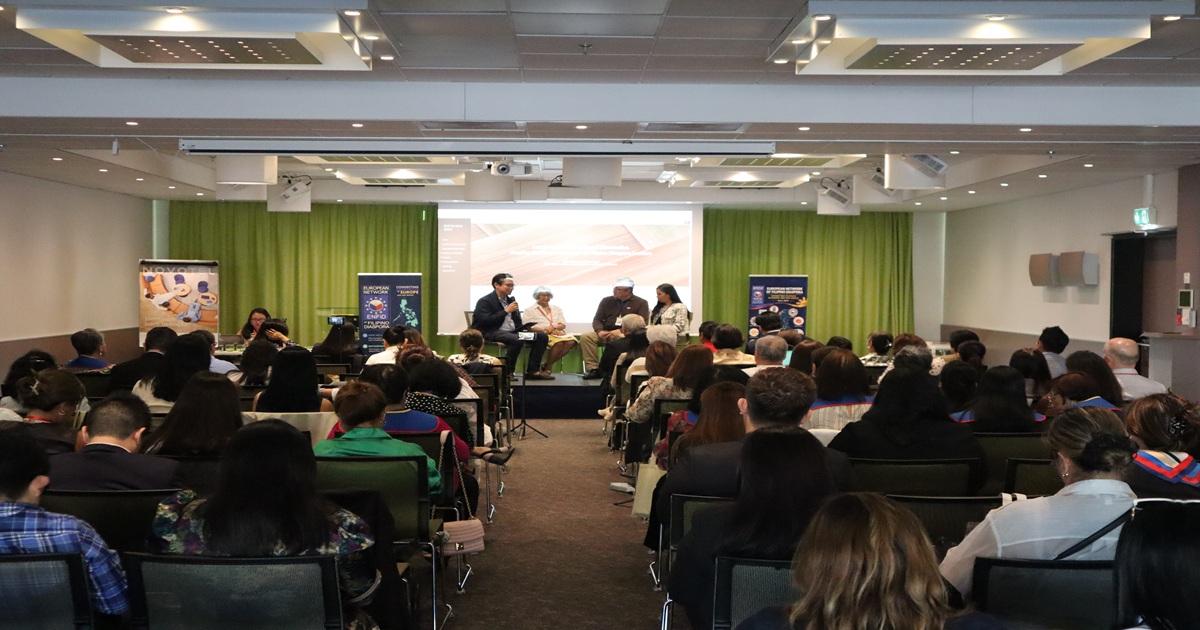
BERN, Switzerland – At a Filipino diaspora conference in Bern, Angel Banaag was called up to share her insights on getting involved in community events. As the 20-year-old incoming university student spoke, her mother, Sarah Aquino, watched tearfully from across the room.
Banaag said that, as a second-generation Filipina, it was inspiring to see Filipino diaspora figures from different European countries “trying to do more and keep our culture alive.”
The gathering also gave Banaag a new appreciation for her mother, whom she had always seen volunteering in community activities alongside her accounting career in Switzerland.
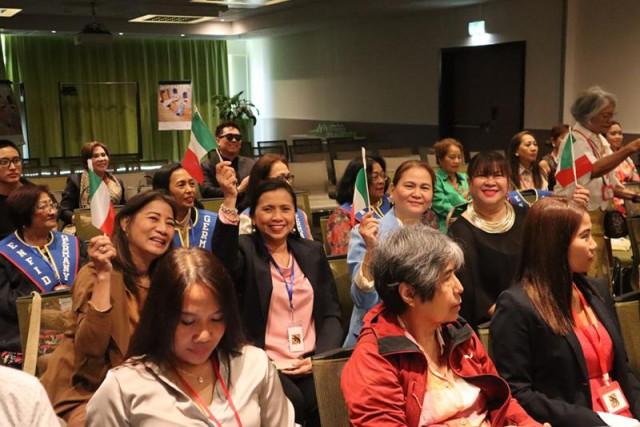
Banaag also shared a reflection that left the audience thinking: she couldn’t sing along to “Lupang Hinirang” as it resounded through the venue.
“Hindi ko po ito [nakanta nang] buo kasi hindi ko po siya naaaral. Hindi po ito itinuturo sa school dito (I hadn’t learned the national anthem because that wasn’t taught in schools here),” she said.
Born and raised in Switzerland, Banaag had grown up in a different educational system. Her only links to Philippine history, national symbols, and language are her family and their immediate Filipino community.
“When everyone stood up with their hands over their hearts, I felt sad and a bit disconnected from my culture. But seeing my mom lead made me curious. I want to know my Filipino side more so I can actively participate in the community.”
Banaag’s experience captured the central challenge facing the nearly 110 Filipino community leaders and delegates from 13 European countries who gathered in Bern for the European Network of Filipino Diaspora (ENFiD) general assembly early this month.
The forum, centered on the theme of “Thriving Together: Well-Being, Wealth and Future of Euro-Pinoys”, tackled one of the most pressing issues for overseas Filipino organizations: leadership succession and intergenerational participation.
The disconnect in purpose
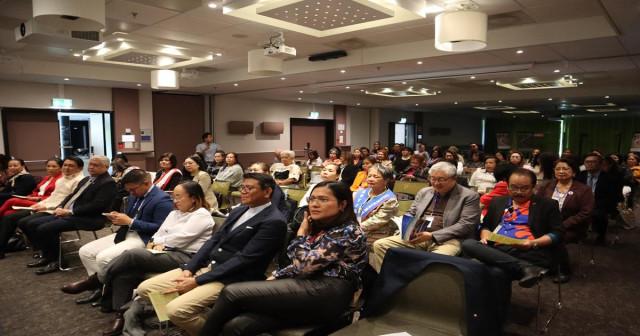
At the gathering’s intergenerational leadership panel discussion, delegates confronted the reality that many established Filipino diaspora groups struggle to attract younger members.
Carleth Rabolen, a 50-year-old community leader based in Milan, Italy, raised this concern, sharing that despite her dedication to helping fellow Filipinos, her adult children rarely took part in her community initiatives.
For five years, Rabolen devoted her evenings to a volunteer movement that assists overseas Filipino workers with complex Italian housing applications, citizenship forms, and legal paperwork at no cost.
Upon returning home to Milan, Rabolen put the forum’s topic to the test: she sat down for an honest conversation with her children, including her 26-year-old daughter, Christia Mortel, a logistics specialist.
What her children revealed reshaped her entire understanding of youth engagement.
For Mortel, young people like her always have “the heart to serve” and the “desire to participate one day”, but struggle to join older organizations whose missions don’t resonate.
“Young adults in our mid-twenties are transitioning into full-time careers, establishing financial independence, and building our lives,” Mortel told GMA News, several days after the conversation with her mother. She pointed out that young people need clear visibility and defined goals before committing their limited free time.
“If an organization lacks social media presence, transparent reporting, or clear accomplishments, we don’t know where we fit in or what the organization actually achieves.”
Strengthening connections
This call for structured, cross-generational connection resonated with insights shared by the Commission on Filipinos Overseas (CFO).
CFO Chairperson Dante “Klink” Ang II emphasized that the challenge for non-resident Filipinos is no longer simply keeping ties with the Philippines alive, but “making that connection stronger across generations”.
The commission highlights Europe as an “established destination for Filipino migration”.
According to the 2024 Philippine Statistics Authority estimates, roughly 232,000 Filipinos worked in Europe, or 10.6% of the global overseas total. The figure doesn’t include hundreds of thousands of permanent residents and second-generation Euro-Pinoys.
Ang outlined the CFO’s evolving strategic direction, which views overseas Filipinos not merely as sources of financial remittances, but as development partners whose specialized knowledge, professional skills, and global networks can directly support progress at home.
“The larger vision goes beyond individual programs. It is about a Filipino diaspora whose younger generations remain connected to their heritage, whose expertise and resources contribute to the homeland and whose organizations can work together across borders,” Ang said.
A dialogue that starts at home
Banaag has been actively exploring her Filipino roots, she told GMA News. Several months ago, she focused her high school thesis on comparing the presidencies of Ferdinand Marcos Sr. and his son, Ferdinand Marcos Jr.
This research paper allowed her to interview her grandfather to understand her family’s memories of martial law.
“I was proud that I chose this topic, and I felt more Filipino ‘cause I just knew more about the Philippines,” Banaag said.
At the same time, seeing her mother in action at the forum in Bern turned that exploration into a personal desire to engage once her university studies in Zurich settle.
Before the conference ended, outgoing ENFiD Chairperson Marison Rodriguez told diaspora leaders to “think beyond ourselves” and ask, “What will we leave for those who come after us?”
“Do not wait for one person to carry the organization. Don't wait for the next generation to ask permission to lead. Invite them in, listen to them. Trust and give them room to grow,” Rodriguez said.
For Aquino and Rabolen, the two leader-mothers, the focus is now on the starting point for intergenerational leadership: “the home and open dialogue between generations.”
“Initiating open dialogues inside our households helps our children understand their roots, so they feel confident stepping into leadership roles when their time comes. We learn both ways. Hindi porque ikaw yung nakatanda, sa’yo lang dapat matuto yung nakababata (Just because you’re older doesn’t mean that young people should learn only from you).”
For Rabolen, listening to her children offered a vital lesson in leadership humility and adaptation.
“We cannot just stay inside our own circles and assume the youth aren’t interested. We need to lay out our achievements clearly, adapt to modern communication platforms, and create meaningful spaces where the next generation feels welcomed and inspired to lead.” — BAP, GMA News

