
 GMA Brandtalk
 Tracking
 Archives


DMW hopes for strong ASEAN declaration for safe recruitment amid scam hubs
Human trafficking remains one of Southeast Asia’s most pressing challenges, with criminal syndicates continuing to lure workers into illegal scam operations through deceptive overseas job offers, often leaving victims trapped in dangerous and abusive conditions.
Among the most widespread schemes are cryptocurrency investment and online romance scams, commonly known as “love scams,” where trafficked individuals is forced to defraud people online under threats, intimidation, and other forms of abuse.
The Philippines remains particularly vulnerable, with Filipino workers recruited into scam compounds in neighboring countries, including Myanmar, Cambodia, and Laos.
Recently, former Presidential Anti-Organized Crime Commission (PAOCC) Director Winston Casio estimated that 900 to 1,500 Filipinos remain trapped in scam hubs in Myanmar alone, excluding possible victims in Cambodia and Laos.
However, the Philippines is not merely a source of trafficking victims. It have also become a destination for foreign nationals recruited into illegal scam operations.
In a recent operation in Pasay City on November 3, Philippine authorities rescued and profiled 166 foreign nationals, including 138 Indonesians, 16 Vietnamese, 10 Chinese, and two Malaysians, who were reportedly coerced into cyber-fraud activities.
These cases underscore the increasingly complex nature of human trafficking in Southeast Asia, where individuals of different nationalities can be exploited as victims of forced labor while criminal networks operate across borders.
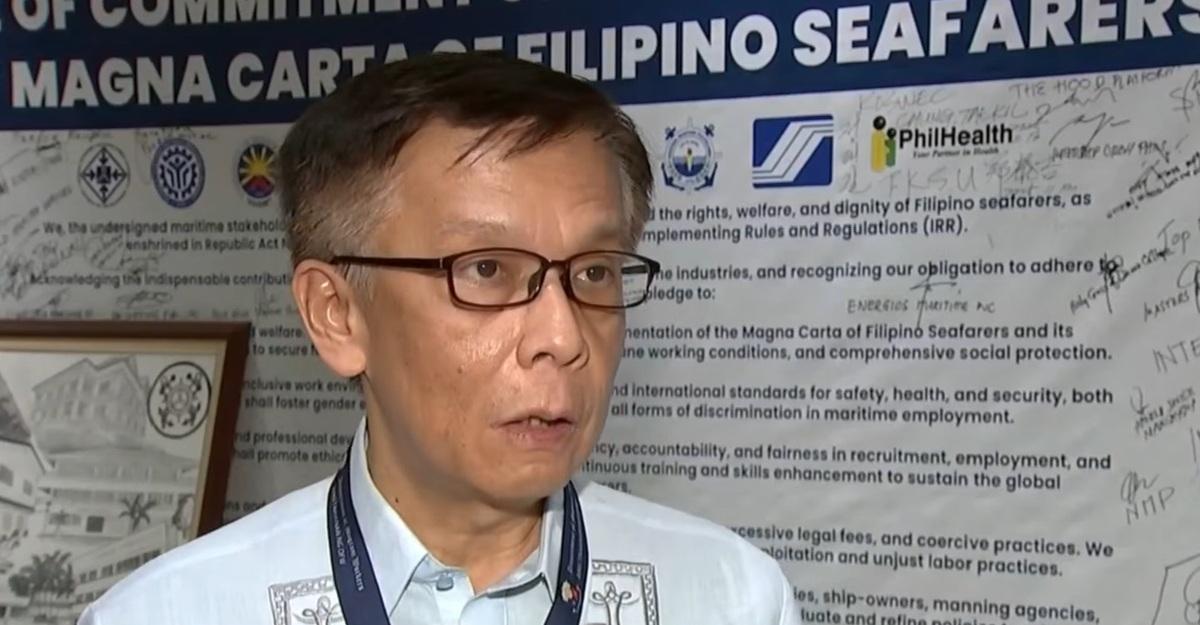
Against this backdrop, Department of Migrant Workers (DMW) Secretary Hans Leo Cacdac expressed optimism that ASEAN leaders will adopt a proposed regional declaration aimed at strengthening fair, ethical, and safe recruitment practices.
In an interview with GMA News, Cacdac said the proposed ASEAN Declaration on Fair, Ethical, and Sustainable Recruitment for Empowered Migrant Workers has already passed several levels of review within ASEAN, including discussions among migrant worker committees, labor ministers, and other senior officials.
While he declined to preempt its formal adoption, Cacdac said the declaration is particularly relevant given the continued exploitation of migrant workers across the region.
“But we are hopeful kasi kailangan talagang ipahiwatig muli ang [because we must have] fair, ethical, safe recruitment across ASEAN. I mean, we're seeing this in terms of [the] scam hubs. We're seeing this in terms of continued sex trafficking of women workers.”
Cacdac also identified the abuse of visa-free travel arrangements among ASEAN countries as another concern.
While these arrangements facilitate legitimate travel, criminal recruiters have exploited them to move unsuspecting jobseekers across borders without undergoing proper employment processing and verification.
“Unfortunately, [there are] those who take advantage of the visa-free opportunities [that are used as a tool for] na ginagamit na tool ng human trafficking and illegal recruitment,” he said.
Under the proposed declaration, ASEAN member states would be encouraged to strengthen their respective recruitment systems, exchange best practices, and improve coordination in identifying legitimately recruited workers and potential victims of illegal recruitment and human trafficking.
For the Philippines, this would include sharing its existing overseas employment documentation and verification procedures with other ASEAN countries to help authorities distinguish legitimate employment arrangements from potentially fraudulent recruitment.
Cacdac hopes the declaration will be adopted during the 49th ASEAN Summit and Related Summits in Manila, with leaders' meetings beginning Sunday, November 15.
Filipino seafarer safety
Beyond Southeast Asia, the DMW is also strengthening measures to protect Filipino seafarers amid continuing attacks on commercial vessels in the Middle East, particularly around the Persian Gulf and Strait of Hormuz.
The risks were highlighted by the November 5 attack on the Marshall Islands-flagged tanker MT Velos Sapphire in the Persian Gulf, which resulted in the death of a Filipino seafarer.
Amid growing concerns over maritime security, the DMW signed a Memorandum of Understanding (MOU) with the International Transport Workers' Federation (ITF) and the Associated Marine Officers' and Seamen's Union of the Philippines (AMOSUP).
According to Cacdac, the agreement establishes a framework for closer cooperation in protecting Filipino seafarers and their families, particularly those affected by maritime emergencies, labor disputes, and other employment-related concerns.
“So it's a framework for cooperation in protecting the rights, safety and welfare of Filipino seafarers and their families in general. But of course coordination in terms of case handling, welfare assistance, cases involving unpaid wages, employment-related violations, abuse,” he said.
The agreement is expected to strengthen coordination among the DMW, AMOSUP, and ITF in handling cases involving distressed Filipino seafarers, including those requiring emergency assistance or repatriation.
Cacdac emphasized the importance of ITF's international network, which maintains representation at major ports worldwide.
Through this network, Filipino seafarers facing emergencies abroad could receive assistance through local port representatives, including coordination for repatriation, welfare support, and intervention in employment-related disputes.
“So we need the cooperation of the seafarers groups, especially the ITF who have representatives at port and in terms of coordinating to provide welfare protection, to provide repatriation assistance, to provide welfare assistance for seafarers who will need such protection and assistance,” he said.
Cacdac said this cooperation would be particularly valuable in Middle Eastern ports, where Filipino-crewed vessels may need immediate assistance amid continuing geopolitical tensions.
“Pag halimbawa you're speaking of Middle Eastern ports kung saan pwede dumaan ang mga barko na may tripulanteng Pilipino na nangangailangan ng tulong, nandoon ang presensya ng ITF,” Cacdac added.
(For example if you're speaking of Middle Eastern ports where ships that have Filipino crewmembers who need assistance, the ITF is there.)
The DMW said coordination with international maritime labor organizations is essential to ensuring that Filipino seafarers and their families have access to assistance, particularly during emergencies and periods of heightened maritime security risks. — BM, GMA News
Follow facebook.com/gmanewsonline for real-time news and developments in the Philippines and around the world.

