

 GMA Brandtalk
 Tracking
 Archives

Philippines, ICMPD discuss new measures to safeguard, empower OFWs
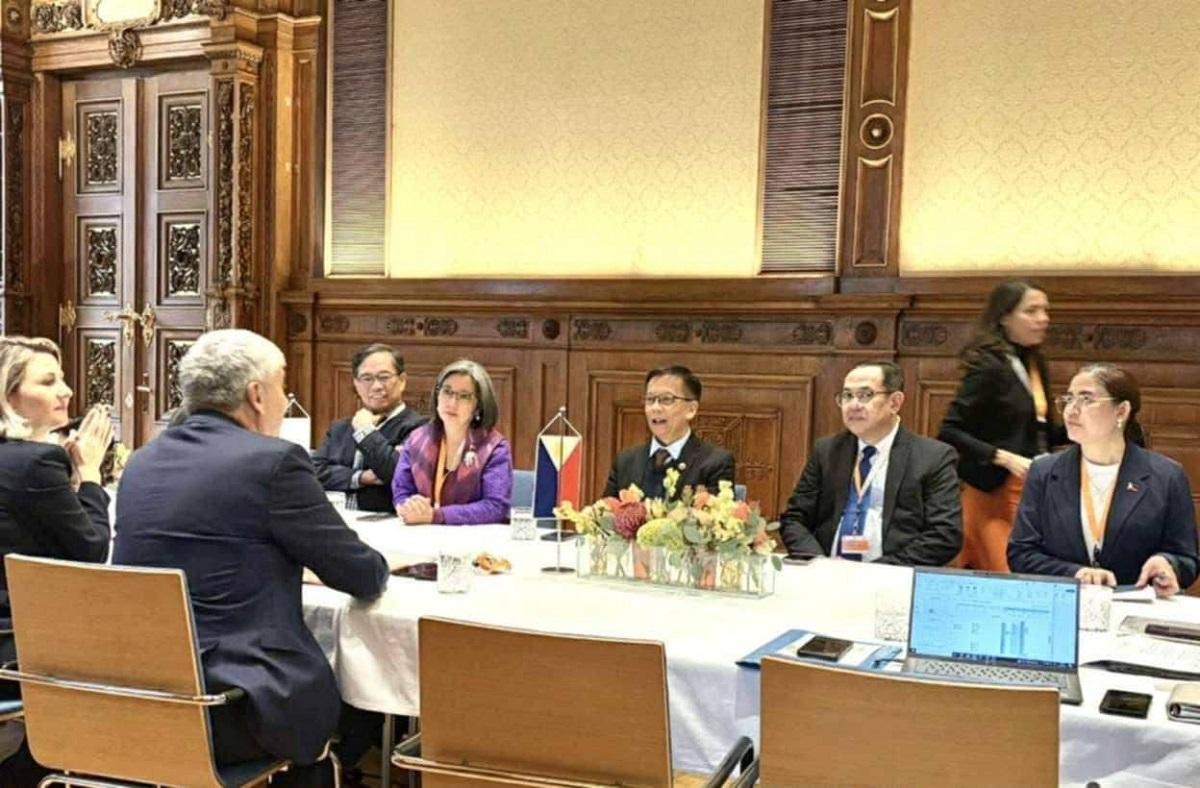
The Philippine government is in discussions with the International Centre for Migration Policy Development (ICMPD) to further strengthen the protection and welfare of Filipino workers in key areas such as labor information systems, skills recognition, and quick welfare response mechanisms.
The talks took place during the 10th Vienna Migration Conference, according to the Department of Migrant Workers (DMW).
In a statement, the DMW said the collaboration between the Philippines and the ICMPD includes the holding of the Labor Practitioner Network and joint action research on safe seasonal work, pension and social benefits, and migrant return programs.
These collaborative efforts were discussed, according to the DMW, on the sidelines of the Vienna conference between Migrant Workers Secretary Hans Cacdac and ICMPD Director General Michael Spindelegger, along with Director General-elect Susanne Raab and other members of the Philippine delegation.
The DMW said these initiatives are “in line with President Ferdinand Marcos Jr.’s directive to further strengthen our efforts on labor diplomacy at the bilateral and multilateral level” to ensure that host countries share responsibility in promoting “safe, ethical, regular, and transparent recruitment processes, as well as just and humane conditions” for Filipino workers overseas.
The Philippines has also established itself, according to the DMW, as a “global leader in ethical and strategic labor migration governance,” and has “received widespread international praise” for its comprehensive, innovative, and rights-based approach to managing overseas employment.
During a high-level panel at the Vienna conference focusing on “Migration as an Engine of Development in Countries of Origin – What Is Needed?,” Cacdac highlighted the Philippines’ strong and comprehensive labor migration framework, underscoring the country’s “steadfast dedication to protecting, empowering, and supporting overseas Filipino workers (OFWs),” the DMW added.
In his remarks, Cacdac said, “Exporting labor is not our development policy. Rather, it is the worker who creates employment opportunities abroad.”
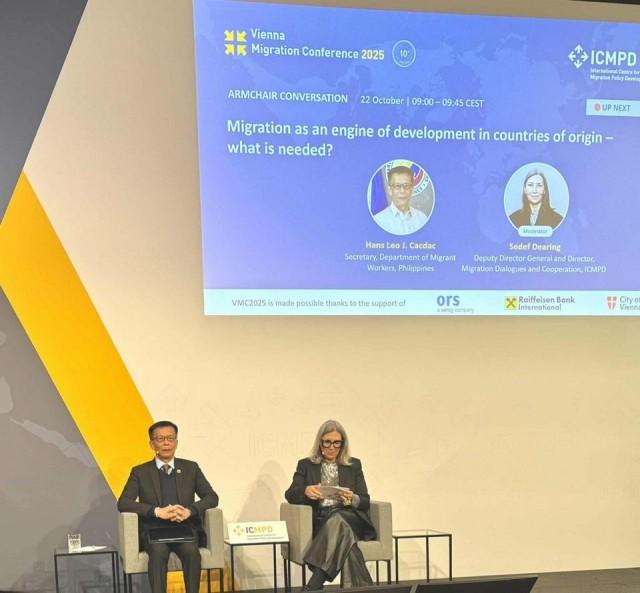
The DMW said Cacdac emphasized that “when labor mobility is responsibly and strategically managed, it serves as a catalyst for inclusive growth, international cooperation, and the preservation of migrant dignity.”
The department added that these initiatives highlighted by the Philippine government in Vienna are “closely connected with reintegration programs that assist returning OFWs in transitioning smoothly back into the local workforce, starting their own businesses, or applying their overseas experience to new opportunities at home.”
Filipinos remain among the most highly deployed and sought-after workers globally, with millions contributing to key sectors such as healthcare, maritime, engineering, and domestic services globally. — BM, GMA Integrated News

