

 GMA Brandtalk
 Tracking
 Archives

PH Embassy in Rome stresses Rule of Law at Festival della Diplomazia 2025
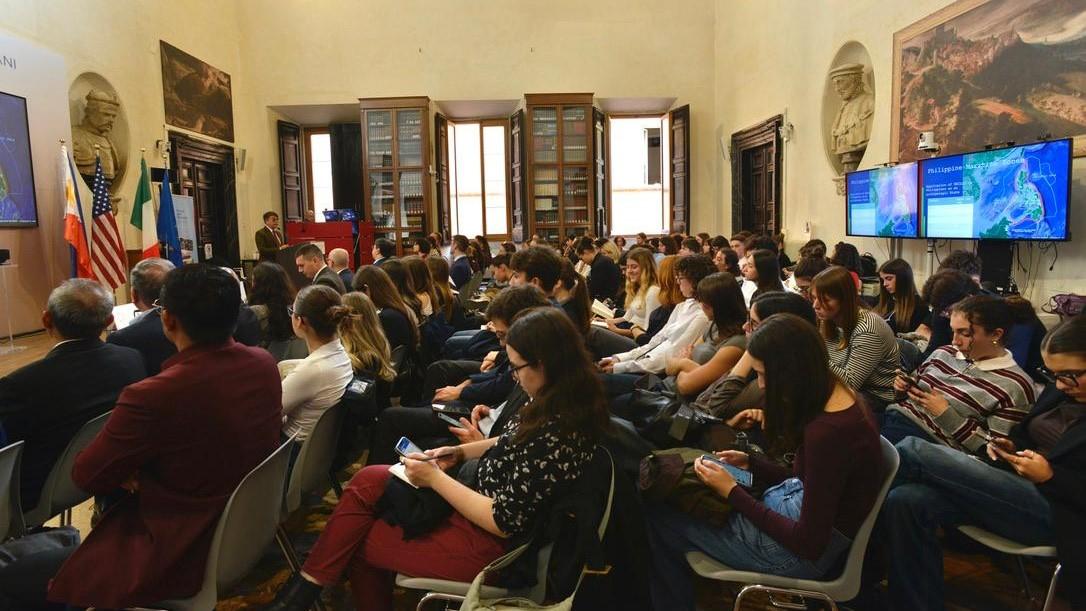
ROME, Italy — The Embassy of the Republic of the Philippines in Rome hosted a lecture by Filipino maritime law expert Jay Batongbacal on the South China Sea territorial dispute during the Festival della Diplomazia 2025 in Rome.
The event provided a platform for the Philippines to reaffirm its commitment to international law, dialogue, and cooperation amid growing regional and global challenges.
In his lecture delivered on October 24, Batongbacal underscored the significance of the 2016 Arbitral Award under the United Nations Convention on the Law of the Sea (UNCLOS). He emphasized that China's activities in the West Philippine Sea (WPS) continue to undermine the rules-based international order, stressing the importance of a collective commitment to international law and multilateral cooperation.
He said the 2016 Arbitral Award reaffirmed the Philippines' sovereign rights within its Exclusive Economic Zone (EEZ) and invalidated China's so-called "nine-dash line" claim, which the Tribunal ruled as inconsistent with the UNCLOS.
The issue extends beyond sovereignty and security, Batongbacal stressed, encompassing the sustainable management of environmental and economic resources and the protection of vital sea lines of communication in the region. He noted that the West Philippine Sea serves as a crucial source of food, livelihood, and energy for millions of Filipinos and other coastal communities.
He said safeguarding it through lawful, cooperative, and sustainable means is essential to ensuring regional stability, ecological preservation, and long-term economic development.
The Festival della Diplomazia, held annually in October, gathers diplomats, policymakers, academics, and experts to foster dialogue and cooperation on global issues. This year's festival examined how current geopolitical tensions are testing core principles such as democracy, human rights, multilateralism, and solidarity.
Through its participation, the Philippine Embassy in Rome reaffirmed the Philippines' steadfast commitment to peaceful dispute resolution, respect for international law, and the strengthening of multilateral partnerships in pursuit of a secure, stable, and rules-based Indo-Pacific region.
'Multilateralism in Crisis'
According to Philippine Ambassador to Rome Neal Imperial, "It is an honor and a privilege for the Philippines to be invited to this year's Festival della Diplomazia, under the subtheme 'Multilateralism in Crisis,' to organize a roundtable discussion dedicated to promoting a deeper understanding of the situation in the West Philippine Sea. The Philippines is proud to share its views and experiences in championing right over might and in believing that regional and international peace and stability can be achieved through trust in multilateral institutions, adherence to international law, and commitment to a rules-based international order."
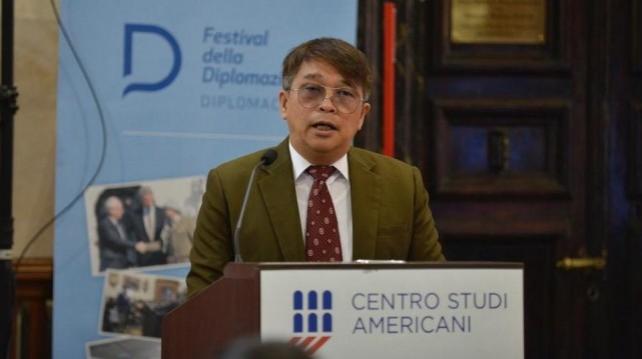
Also speaking at the event were Dr. Stefano Pelaggi, research fellow at the Department of History, Anthropology, Religions, Art, and Entertainment at Sapienza University of Rome, and Dr. Lorenzo Termine of the European University Institute.
Pelaggi discussed the complex challenges facing maritime governance and the geopolitical implications of overlapping territorial claims. On the other hand, Termine highlighted Italy's growing engagement in the Indo-Pacific region, as reflected in recent G7 and European Union statements.
Both speakers provided academic perspectives on multilateral diplomacy and geopolitical shifts in the Indo-Pacific, emphasizing the importance of inclusive dialogue and regional cooperation in safeguarding international stability and a law-based maritime order.
To Filipinos worldwide
Following the panel, students and members of the Filipino community actively participated in the open forum, raising questions and sharing insights about the ongoing maritime dispute.
One participant, Demetrio Rafanan, stressed that a mandate of the United Nations is to ensure that international law is respected and upheld. Since UNCLOS is part of the UN framework, he asked whether or not the UN has the authority and capability to address violations such as those in the West Philippine Sea.
In response, Batongbacal said that although the UN plays a crucial normative and institutional role, its influence is often limited by the political will of member states.
"It's a work in progress. The international community continues to evolve and learn. The UN has had many successes, but also failures—and that is part of its existence. After all, it is an institution trying to represent the interests of different nations and to build a community of cooperation. Despite its flaws, it remains the only system we have through which we can make things work," Batongbacal said.
In an interview after the event with GMA Integrated News, Batongbacal emphasized the importance of support and awareness among Filipinos worldwide regarding the West Philippine Sea issue.
He said that "continued public understanding, dissemination of correct information, and active engagement are crucial in strengthening the Philippines' position and ensuring that the matter remains at the forefront of international attention." — VDV, GMA Integrated News

