

 GMA Brandtalk
 Tracking
 Archives

What's next after Philippines' guest of honor role at Frankfurt Book Fair?
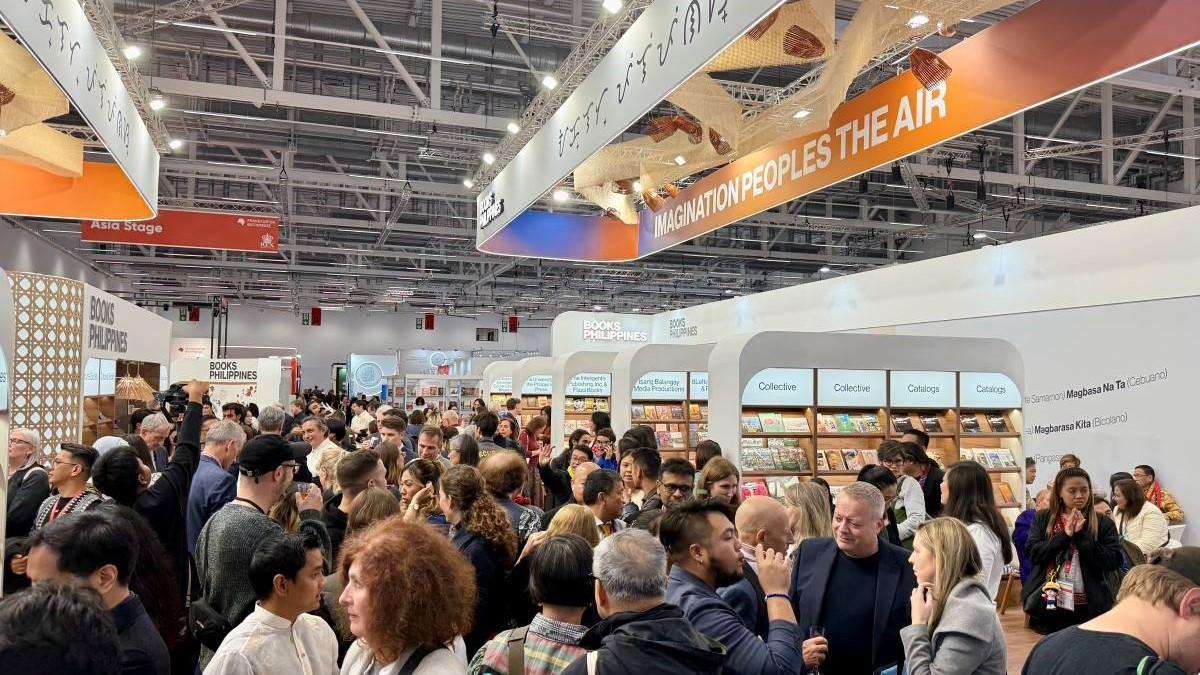
FRANKFURT – It's been a month since the Frankfurt Book Fair concluded, with the Philippines' distinction as guest of honor this year raising the country's profile in the publishing world.
For many participating Filipino authors and publishers, the real work should now happen at home, with some urging the National Book Development Board (NBDB) to extend the same energy and exposure to local readers and young people.
Award-winning poet Merlie Alunan told GMA News Online that she acknowledged the "great job" of fellow delegates, although she felt saddened by "being here."
"Our people—the ordinary teacher, the young people who are looking for something to look up to and models to follow—do not experience this. That's what I feel so sad about. And I'm thinking of the neighborhood schools in my country, the kids who have never seen a book or touched a book in all their lives. It hurts."
Alunan was among the dozens of Filipino authors, artists, publishers, and cultural workers who comprised the official delegation. They put up nearly 200 literary, cultural, and artistic events over five days that drew the admiration of organizers and non-Filipino audiences.
Despite this, Alunan and other participating Filipinos hoped the event would spotlight issues faced by Filipino readers.
"My challenge to the NBDB is to awaken the readership and the book industry in the Philippines. We are trying to sell ourselves to the world, but we have not sold ourselves to our own people," Alunan said.
PH 'crisis in reading'
The Philippines' representation at the Buchmesse, as the fair is called in German, was seen as the country's "most ambitious and largest effort" to project cultural diplomacy.
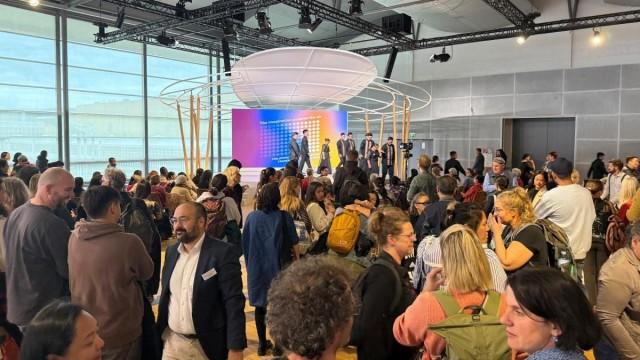
Children's book author Dr. Luis Gatmaitan said the event allowed key figures in Philippine literature and the publishing industry to gather and reflect on the issues back home.
"Ang ganda nu'ng pagsasama-sama [ng mga taga-industriya]. Dito sa Frankfurt Book Fair, para kaming isang malaking pamilya. And then we get to talk about the problems na kinakaharap ng bansa in terms of reading, literacy, at iba pa," Gatmaitan told GMA News Online.
(This gathering of industry members was beautiful. Here at the Frankfurt Book Fair, we are like a big family and we get to talk about the problems faced by Filipinos in terms of reading, literacy, and others.)
For Gatmaitan, the "crisis in reading" in the Philippines is caused by children and adults not reading or not understanding what they are reading. He also noted that many parents no longer read regularly, spending more time on phones and video content instead.
"Kaya sa tingin ko, ang magiging role ng children's literature ay maging tagapagtawid. Kung hindi pa nakakabasa [nang maayos], o 'yung reading comprehension ay kulang pa, 'yung illustrated storybooks will help them na mag-cross over [at matulungan sila] pagdating ng high school para makabasa sila ng longer form of literature."
(That's why I think children's literature will be a bridge. Illustrated storybooks can help the youth who cannot read well or have inadequate reading comprehension cross over to longer forms of literature in high school.)
NBDB Executive Director Charisse Aquino-Tugade also acknowledged the literacy issues at home, noting that the agency still prioritizes "local readers first."
"International is secondary, [and] we try to close the loop and make sure our children are empowered," Aquino-Tugade told GMA News Online. "You need them to learn how to read, and then give them books that excite them, so they will read more."
Aquino-Tugade said the agency is giving manuscript, publication, and translation grants so authors and publishers "can keep on creating."
"We provide a marketplace so that the Department of Education and institutional buyers can purchase Filipino-authored books and distribute them to schools," she added.
Investing on reading
Aquino-Tugade said the fair gave Filipino delegates the "opportunity to network and collaborate with the world."
"The fair is really the entry point to meet with the biggest of the world's publishers and to really connect our stories," she added.
The Philippines' participation at the Buchmesse comes at a price tag. GMA News Online has requested details from the Aquino-Tugade on the cost of the country's representation at the Buchmesse, although she has yet to provide the figures as of posting time.
Based on the Philippine exhibit press kit, the figure disclosed by the NBDB was that P60 million would be invested over the next five years for "translation and rights support" programs.
"This is both for Philippine languages, as well as international (translations)," Aquino-Tugade said of the investment. "The agency focuses on saturating the local market with our own titles in our language (and) entering the international market through rights sales and distribution."
"The NBDB's mandate is to grow the Philippine book publishing industry. We're like the DTI (Department of Trade and Industry) for books," she added.
Senator Loren Legarda, who had advocated the country's bid since 2015, said in a speech that her office supported the NBDB's expanded funding in 2021.
"Ang kanilang budget, na-doble, hindi lamang para sa Frankfurt, kung hindi para rin sa Bologna at London," Sen. Legarda said, adding that, "Para ito sa mga publishers, sa ating mga manunulat, sa ating mga comics writers, artists, at marami pang iba."
(The NBDB's budget has been doubled, not just for this book fair in Frankfurt but also for the ones in Bologna and London. This is for publishers, authors, comics writers, artists, and many more.)
Andrea Pasion-Flores, president of the Book Development Association of the Philippines, defended the country's appearance in the Buchmesse, saying it was an opportunity for publishers to "step up" amid literacy issues back home. She also called for critics to "look at the bigger picture."
"[Amid] all the noise around this thing, I want to say, 'Hey, you're looking at one small part.' I feel whatever was spent on this will come back. It [won't be] tomorrow when we go home, right? Anything worth having will take a while and some work. But we just have to do what we have to do."
Calls for solidarity
While the Philippines' cultural showcase drew praise, the fair itself was not without controversy. The Buchmesse itself had faced criticism over its handling of political tensions surrounding the Middle East.
In the Philippines, some groups called for a boycott and expressed concerns about the country's participation in the fair.
Inside the Buchmesse complex, the Philippines' program included a poetry reading session calling for peace and solidarity with Palestine, as well as a panel exploring solidarity in Filipino and Palestinian literature.
Meanwhile, at a forum, award-winning journalist Patricia Evangelista called on institutions and book fairs "that purport to champion free speech and the freedom to publish should condemn the killing of those who could've told the story."
"The dead do not publish. The dead do not speak. For us to say, 'We defend the freedom to speak,' we defend the people who would've told the story. Dead journalists tell no story."
Outside the event space, Publishers for Palestine organized the Palestinian Liberatory Book Fair, a counter-event featuring titles by authors, journalists, and activists from Palestine and other countries.
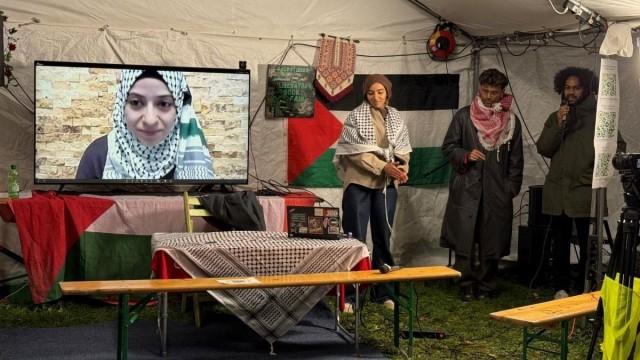
In a session, the Berlin-based Filipino diaspora group Alpas Pilipinas spoke about how discussions on fighting coloniality often overlook "the struggle for liberation of the Filipino and Palestinian people."
Alpas member Jas Wenzel said the act of boycotting was a "powerful tool" not only to "show solidarity with the ones who have been excluded" but also to reveal the "complicity of the Philippines" that bought weapons from Israel.
"We stand in solidarity for voices that have been left out, but also want to highlight that the culture and rich history of the Philippines stem from a strong resistance," Wenzel added.
"It makes me proud that the Philippines was a Guest of Honor at the Buchmesse, but I feel even prouder that I am in solidarity with the Palestinian people, which is on the right side of history."
Passing the baton
The Philippines' Guest of Honor distinction was "overwhelming for all Germans," said Dr. Torsten Casimir, the Buchmesse's vice president for communications and content.
"You celebrated literature and your way of life. You let us show, let us see what sort of spirit in the Philippines is with you."
Next year, it's the Czech Republic's turn to be the fair's Guest of Honor, leading events under the theme of "A Country on the Coast"—a quote attributed to Shakespeare.
"It was one of the greatest mistakes made by Shakespeare because he wrote in one of his plays that the Czech countries are on the seacoast," Dr. Tomaš Kubicek, director of the Czechia 2026 Guest of Honor team, told GMA News Online.
"Of course, they are not. But [we] like this metaphor because if you are at the coast, you are always somewhere in between the sea and countries. It's a place for appointments and for having practically two lives—on the sea and in the country."
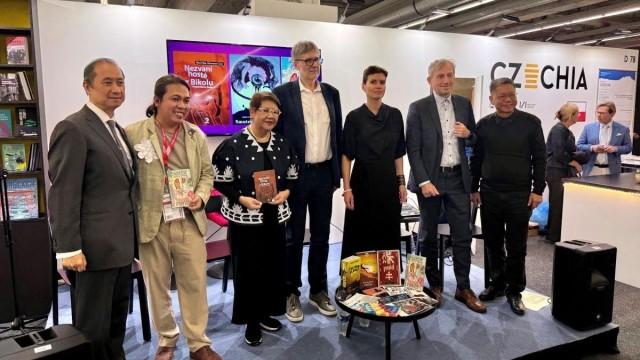
At the closing ceremony, the Philippines handed over the role of Guest of Honor to the Czech Republic. Three days later, in the Czech capital, the Philippine Embassy in Prague hosted a book signing event featuring Filipino publications translated into Czech and vice versa.
Meanwhile, back home, several Filipino authors felt galvanized by the experience at the Buchmesse.
Before leaving Frankfurt, Ian Casocot, who writes speculative fiction and queer literature, told GMA News Online that while the "adrenaline is running out," the fair allowed writers to see the business side of writing.
He and his colleagues are also preparing for "whatever comes next", including having his hometown of Dumaguete as a UNESCO Creative City of Literature.
On October 30, UNESCO announced Dumaguete as one of 58 new global Creative Cities, including Quezon City, which received the distinction for film.
"We worked hard for it," Casocot told GMA News Online after the Buchmesse closing ceremony. "This is an introduction of Dumaguete to the world of literature. So, I'm hoping that my Frankfurt experience will kind of help out in what we will do soon."
Aquino-Tugade also shared her agency's plans to expand reading centers nationwide, currently numbering 133 from Ifugao to Tawi-Tawi, especially in indigenous areas.
"We [are trying] to put books [in these centers] in their own language so that children will be able to see themselves in the books that they read. With reading, it's a whole-of-nation endeavor. The parents have to read. The teachers have to teach the kids to read, as well as their parents. These books need to be available through book nooks, libraries, and stores." — VDV, GMA Integrated News

