

 GMA Brandtalk
 Tracking
 Archives

Filipinos in Czechia, Germany celebrate Sinulog in Prague
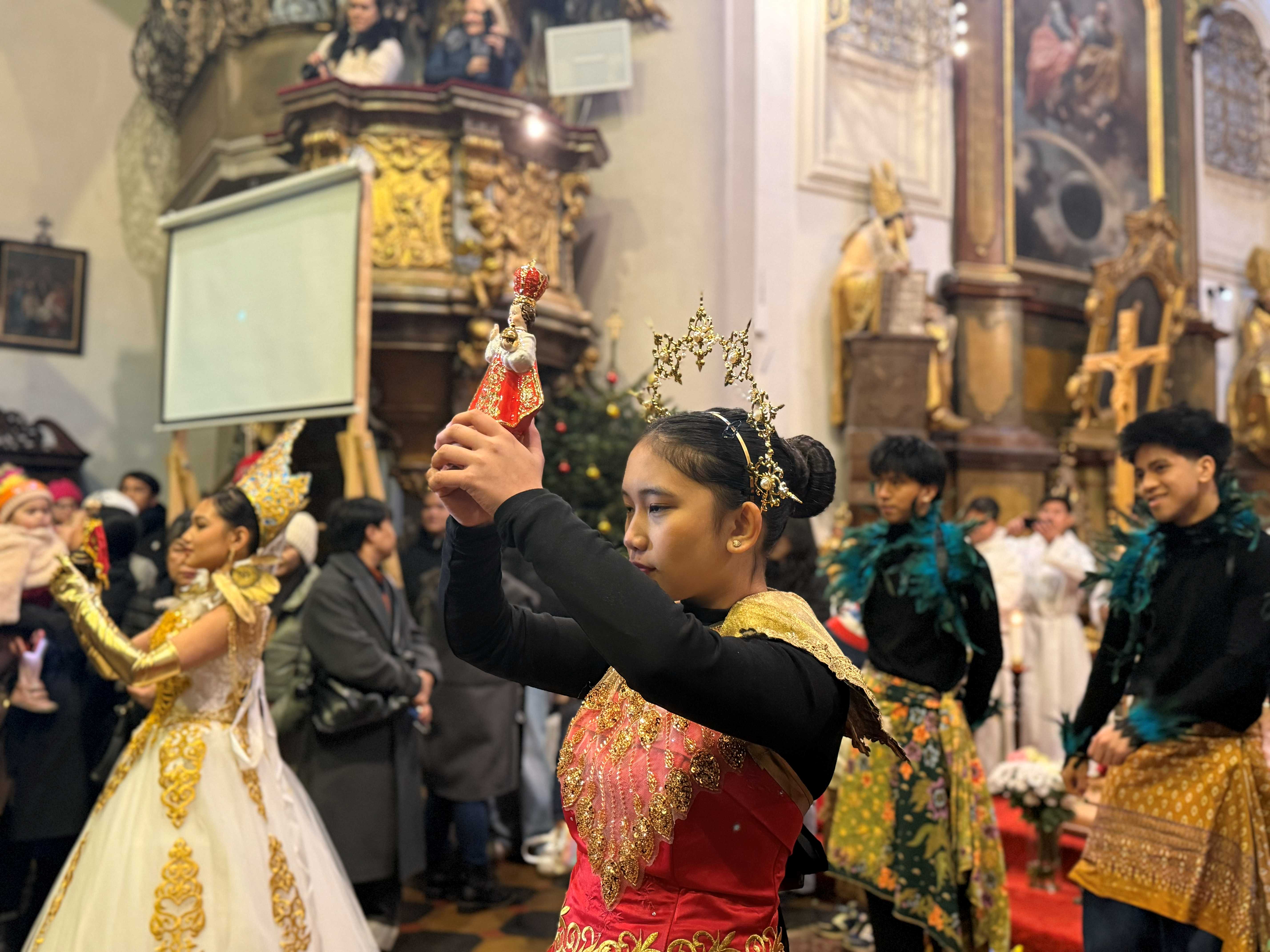
PRAGUE – Cheers of “Pit Señor” reverberated at St. Thomas’ Church in Prague as Filipino community groups from the Czech Republic and Germany celebrated the Sinulog Festival.
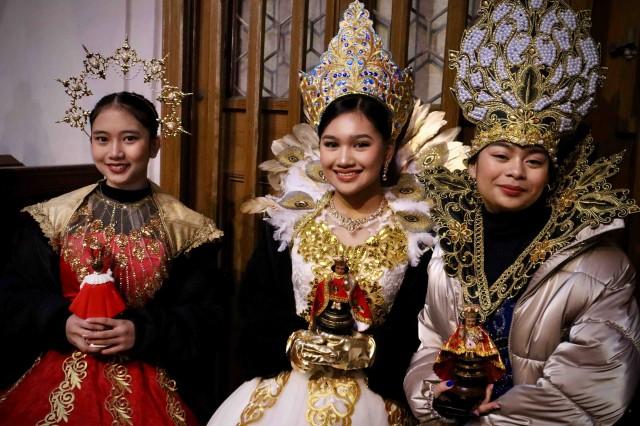
Four performing troupes of Filipino migrants from Prague and the German city of Dresden staged street-dance inspired numbers inside the church, bringing with them images of the Sto. Niño.
Some of the dancers, who hail from the Visayas, said it was a privilege to bring the culture behind the Sinulog Festival to Europe.
“It’s a great honor to be chosen to play Queen Juana for the second year in a row, and I’m overwhelmed with great emotions that we have an opportunity to hail Sto. Niño, even if we are in Prague,” Aileen Obejero Vejmolova, a 51-year-old kindergarten school owner in Prague, told GMA News Online.
She has lived in Prague for 25 years and recently received accreditation from the Czech Ministry of Interior as a Czech-Filipino translator, helping new Filipino migrants to integrate and adapt to their new host country.
She said she still couldn’t believe that the Sinulog could be celebrated in a faraway country.
“I can’t imagine, magagawa pala ang Sinulog dito! I remember the first time attending it in Cebu, and [seeing it here] is really something. I can’t explain the feeling.”
“A big gift”
Approximately 500 people attended the Mass and watched the cultural performances, according to Vidalena Javarez Murdoch, the chairperson of this year’s Sinulog Festival at St. Thomas Church. Many of the Mass attendees, she said, were Filipino migrants who traveled to Prague from Brno, Plzen, Karlovy Vary, and other Czech towns.
“Dumayo pa sila sa Prague para mag-Sinulog. Yung iba, dumating nang maaga at naghintay sa labas ng St. Thomas kahit hapon pa yung Misa,” she told GMA News Online.
(These Filipino migrants had to travel their way to Prague just to join the Sinulog Festival. Some others arrived early and waited in front of St. Thomas’ Church, even if the Mass was scheduled in the afternoon.)
The concelebrated Mass was led by Apostolic Nuncio to the European Union, the Most Reverend Bernardito Cleopas Auza, who remarked in his homily that “Sto. Niño has become a Filipino.”
“The celebration of the Feast of Sto. Niño reminds us of our cultural and historical roots – of who we are,” Most Rev. Auza said, referring to how Filipino migrants continue honoring the Child Jesus, as well as their faith and culture wherever they are in the world.
After the Mass and the Sinulog performances, Filipino community groups hosted a potluck dinner of Philippine cuisine at the church’s cloister.
For Javarez Murdoch and their group, Cofradia Prague Chapter, cultural and religious events like this are always a good way for Filipino migrants to meet compatriots and seek spiritual help.
During their outreach activities, Javarez Murdoch said many Filipinos appreciate being seen and given advice by Filipino priests and community leaders.
“Many of our kababayans need advice. The new ones here don’t know what to do, and sometimes, they don’t have anything. Even if we can’t help in other aspects, at least we’re able to give them spiritual advice. And for me, that’s already a big gift,” she said.
As for Vejmolova, a longtime Filipina migrant in Europe, “everyday remains a battle”, but she keeps her devotion to the Sto. Niño for “good health, happiness, peace of mind, a lasting relationship.”
“Nandito tayo sa lugar [malayo sa] atin, so, it’s a struggle. Matagal na ako dito, at kahit papaano, nao-overcome ko yung hardships. Lakasan pa rin ng loob. And I will continue dancing for the Sto. Niño hanggang kaya ko,” she said.
(We are here in a faraway place, so living abroad is a struggle. I’ve overcome hardships in my stay here. It still takes a strong will. And I will continue dancing for the Sto. Niño, as long as I can.)
The Czech Republic also hosts a centuries-old image of the Child Jesus, now known as the Infant Jesus of Prague or the Santo Niño de Praga. Now housed at the Church of Our Lady of Victories in central Prague, the Santo Niño de Praga is a major Catholic pilgrimage icon donated to what was then the Kingdom of Bohemia in 1628 by a Czech princess.
The original image of the Señor Santo Niño de Cebu, brought to the Philippines by a Spanish expedition led by Ferdinand Magellan in 1521, predates Prague’s Sto. Niño by 107 years. — JMA, GMA Integrated News

